A religious phrase from a downed airman triggered intense alarm in Washington, leading officials to fear a deadly Iranian trap before a successful rescue.
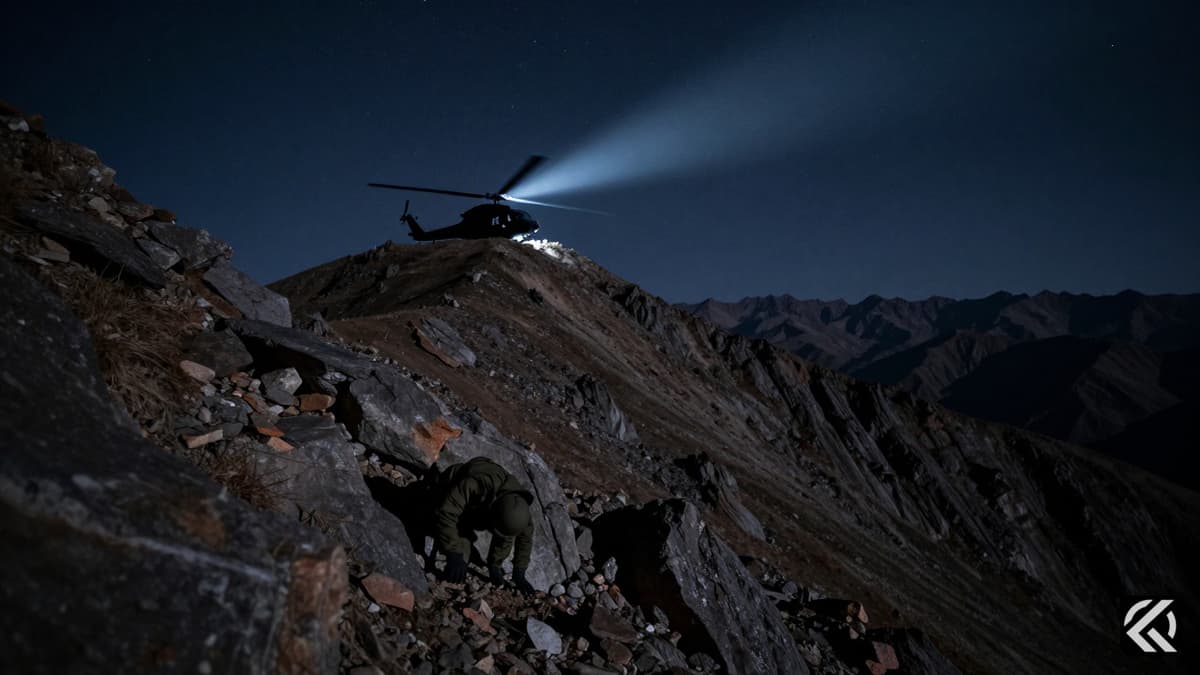
US President Donald Trump revealed on Sunday that a brief radio transmission from a downed F-15 airman initially triggered deep alarm within Washington. Officials were terrified that the message was a sophisticated Iranian ploy designed to lure American forces into a deadly trap. The United States subsequently carried out a high-risk F-15 rescue mission deep inside the territory of Iran to retrieve the stranded airman. Under the cover of darkness, nearly 100 special operations forces were inserted into rugged terrain south of Tehran, scaling a 7,000-foot ridge to reach the injured man. The weapons specialist had been hiding in a rocky crevice with a sprained ankle after his jet was shot down.
Trump described the operation as one of the most daring rescue operations in US history. The airman, trained in survival and evasion techniques, managed to establish contact and authenticate himself to US command. Simultaneously, the CIA ran a deception campaign to mislead Iranian forces about the specific location of the stranded pilot. This complex sequence of events was driven by a misunderstanding of a brief radio signal that nearly derailed the entire operation. The initial fear stemmed from a specific phrase used by the airman which raised questions about authenticity in the eyes of some intelligence officials.
Speaking to Axios on Sunday, President Trump explained the gravity of the initial reaction to the communication. "What he said on the radio sounded like something a Muslim would say," Trump told the outlet. He added that the airman said, "Power be to God." This specific utterance caused significant hesitation among command officials, who feared a ruse. A US defense official later backed Trump's version of events but clarified the exact words used. The official stated that the airman actually said, "God is good." Defense Secretary Pete Hegseth also used the same phrase, "God is good," in a post on the social media platform X, aligning with the corrected account.
The confusion over the religious nature of the remark was addressed by those familiar with the officer's character. Trump added that those who knew the officer said he was deeply religious, meaning the remark was in line with his established character. An Axios-quoted defense official elaborated on the uncertainty faced by the command structure. "It was not completely clear early on, but we stuck with it and verified he was alive and not captured. And those who knew him said he is religious," the official said. This verification process was critical before authorizing the massive deployment of troops into hostile territory.
The stakes of the operation were incredibly high, involving a direct incursion into Iran to save a single life. The rescue team had to navigate a 7,000-foot ridge to reach the injured weapons specialist. The airman had been hiding in a crevice, a testament to his training in survival and evasion techniques. The successful completion of the mission required precise coordination between the ground teams and the intelligence agencies managing the deception campaign. The CIA's effort to mislead Iranian forces about his location was a crucial component of the plan's success. Without this deception, the Iranian forces might have anticipated the rescue attempt.
President Trump's recounting of the event highlights the thin line between success and failure in covert operations. The initial fear that the airman was captured or that the signal was a trap nearly caused a withdrawal or a failure in judgment. However, the verification of his religious nature and the confirmation that he was alive allowed the operation to proceed. The mission stands as a testament to the resilience of the US military and the importance of verifying intelligence before taking action. The use of special forces in such a hostile environment demonstrates the extreme lengths to which the US government will go to retrieve its personnel.
The interaction between the airman and his captors or the local environment remains a focal point of the story. The airman's ability to establish contact and authenticate himself was the turning point that validated the rescue plan. His sprained ankle made the situation more precarious, requiring the special operations forces to scale a difficult ridge in darkness. The success of this operation has added a new chapter to the history of US military rescues, described by the President as one of the most daring in history. The clarification of the radio message by defense officials ensures that the public record reflects the accurate sequence of events.
This high-stakes operation underscores the critical need for rapid verification of intelligence in hostile environments. The confusion over the radio phrase "God is good" versus "Power be to God" suggests that future rescue protocols will place an even higher premium on biographical verification of personnel. Given the involvement of a 100-strong special operations team and CIA deception tactics, the margin for error remains slim. As global tensions evolve, the lessons learned from this specific F-15 rescue in Iran will likely influence how command structures assess religious or cultural signals in future hostile territory engagements. The event serves as a stark reminder that even in the face of overwhelming odds, thorough intelligence analysis is the linchpin of successful military intervention.
Jun 8, 2026 02:17 UTC
Magnitude 7.8 Quake Shakes Philippines, Urging Immediate Evacuations
Jun 8, 2026 00:51 UTC
Trump Claims Iran Nuclear Deal Imminent Despite Diplomatic Fractures
Jun 8, 2026 00:47 UTC
Iran Fires Missiles at Israel After Beirut Strike
Jun 7, 2026 22:00 UTC
US, Iran Peace Hops Fade 100 Days Into War
Jun 8, 2026 04:15 UTC
Trump Urges Netanyahu to Halt Iran Strike for Peace


