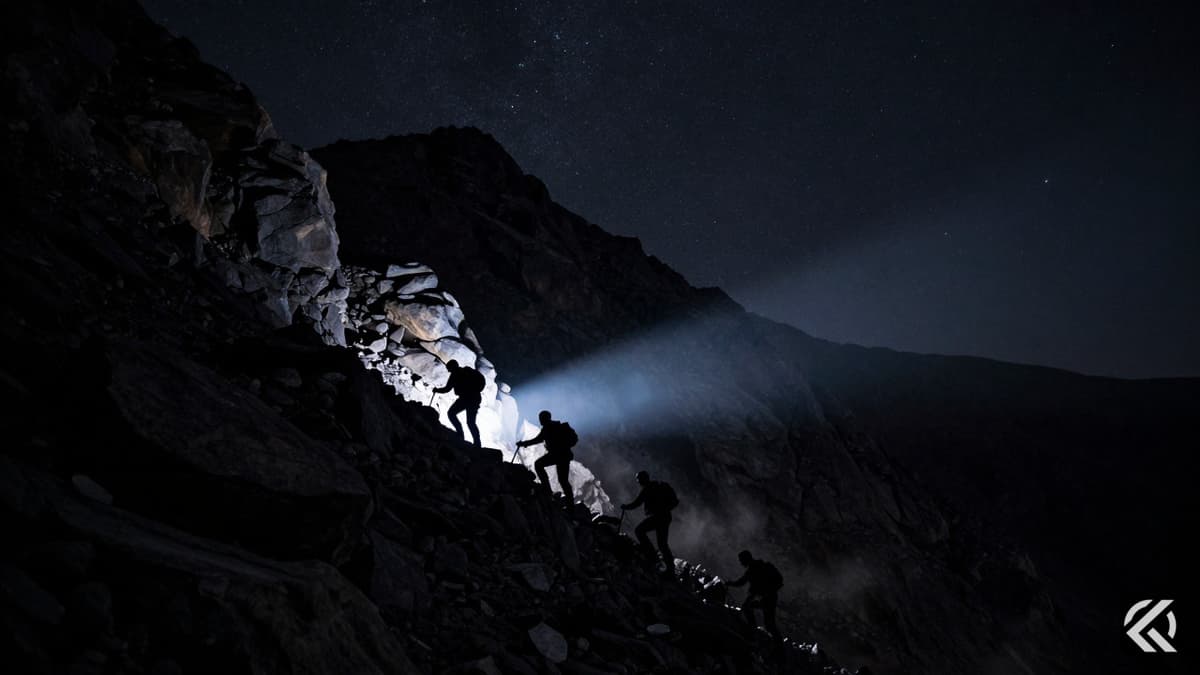
A brief radio transmission triggered a false alarm of an Iranian trap, nearly derailing a daring special ops mission to save a stranded F-15 pilot.
In a revelation regarding a high-stakes operation, US President Donald Trump disclosed that a brief radio transmission from a downed F-15 airman initially triggered severe alarm in Washington. Officials feared the message indicated a sophisticated Iranian ploy designed to lure American forces into a deadly trap. The United States subsequently executed a high-risk mission deep within Iranian territory to retrieve the stranded pilot, who had been hiding in a crevice after his jet was struck.
The initial spark of doubt arose from the content of the voice transmission. President Trump told Axios on Sunday that the pilot's radio message sounded suspicious to US intelligence. "What he said on the radio sounded like something a Muslim would say," the President explained, quoting the specific phrase: "Power be to God." However, a US defense official later clarified that the exact words used were "God is good," a phrase also echoed by Defense Secretary Pete Hegseth in a post on X.
Despite the linguistic confusion that nearly derailed the operation, US officials eventually confirmed the airman's identity and status. "It was not completely clear early on, but we stuck with it and verified he was alive and not captured," a defense official stated, citing that colleagues of the officer confirmed he was deeply religious. This verification was crucial before proceeding with the extraction of the injured weapons specialist, who had sustained a sprained ankle while hiding.
The successful extraction required a massive and complex military effort. Under the cover of darkness, nearly 100 special operations forces were inserted into rugged terrain located south of Tehran. The team faced significant physical challenges, including scaling a steep 7,000-foot ridge to reach the injured man. The airman, who had been trained extensively in survival and evasion techniques, managed to establish contact with the rescue team and authenticate himself despite the hostile environment.
While the ground team executed the physical extraction, the Central Intelligence Agency (CIA) simultaneously ran a sophisticated deception campaign. This psychological operation was designed to mislead Iranian forces about the airman's actual location, ensuring the rescue was not intercepted. The combination of the CIA's intelligence work and the special forces' physical prowess allowed the mission to succeed where a simple radio verification initially caused significant hesitation.
President Trump has since characterized this event as one of the most daring rescue operations in US history. The operation was launched in response to the incident where an Iranian missile destroyed the F-15E aircraft. The tension of the moment was palpable, as the wrong interpretation of a religious phrase could have led to a catastrophic failure or a loss of American lives.
The sequence of events began with the destruction of the F-15E aircraft by an Iranian missile. Once the airman ejected, he faced the immediate danger of capture in hostile territory. The pilot's initial radio contact became the focal point of a critical intelligence crisis. The phrase he used, while genuine, raised immediate red flags due to the linguistic similarity to potential trap messages. The US response required a delicate balance between caution and action.
The verification process involved consulting with those who knew the officer well. His religious character was a known factor, which helped explain the terminology used in the radio message. The defense official noted that while the situation was "not completely clear early on," the decision to proceed was driven by the confirmation that the airman was alive. This decision-making process highlights the high stakes involved in modern asymmetric warfare, where a single phrase can alter the course of a military operation.
The rescue mission itself was a testament to the capabilities of US special operations forces. Inserting nearly 100 personnel into a 7,000-foot ridge in the rugged terrain south of Tehran required precise planning and execution. The airman's training in survival and evasion played a critical role in his ability to remain hidden until the extraction team arrived. The CIA's deception campaign was equally vital, creating a false narrative that drew Iranian forces away from the true extraction point.
The successful execution of this mission underscores the complexity of modern rescue operations in hostile environments. The initial near-miss caused by the radio message highlights the critical role of cultural and linguistic context in intelligence analysis. As military strategies evolve, the interplay between psychological operations and ground extraction will likely become even more integrated.
Looking forward, the success of this operation may serve as a benchmark for future rescue missions. The combination of rapid verification, psychological deception, and elite tactical execution demonstrates a refined capability to handle high-risk scenarios. The US military's ability to adapt quickly to the "trap fears" and proceed with the mission suggests a high level of resilience. Future operations may see similar reliance on CIA deception tactics to counter sophisticated enemy traps, ensuring that American forces can extract personnel even when initial signals are ambiguous. The experience gained here will likely inform future protocols for handling downed personnel in adversarial territories, reinforcing the importance of verifying religious and cultural markers in real-time intelligence gathering.
Jun 8, 2026 04:15 UTC
Trump Urges Netanyahu to Halt Iran Strike for Peace
Join 50,000+ readers getting the global briefing every morning.
No spam. Unsubscribe anytime.
Jun 8, 2026 02:28 UTC
Trump Walks Out of Meet the Press After Rejecting Evidence Demands
Jun 8, 2026 02:17 UTC
Magnitude 7.8 Quake Shakes Philippines, Urging Immediate Evacuations
Jun 8, 2026 00:51 UTC
Trump Claims Iran Nuclear Deal Imminent Despite Diplomatic Fractures
Jun 8, 2026 00:47 UTC
Iran Fires Missiles at Israel After Beirut Strike


