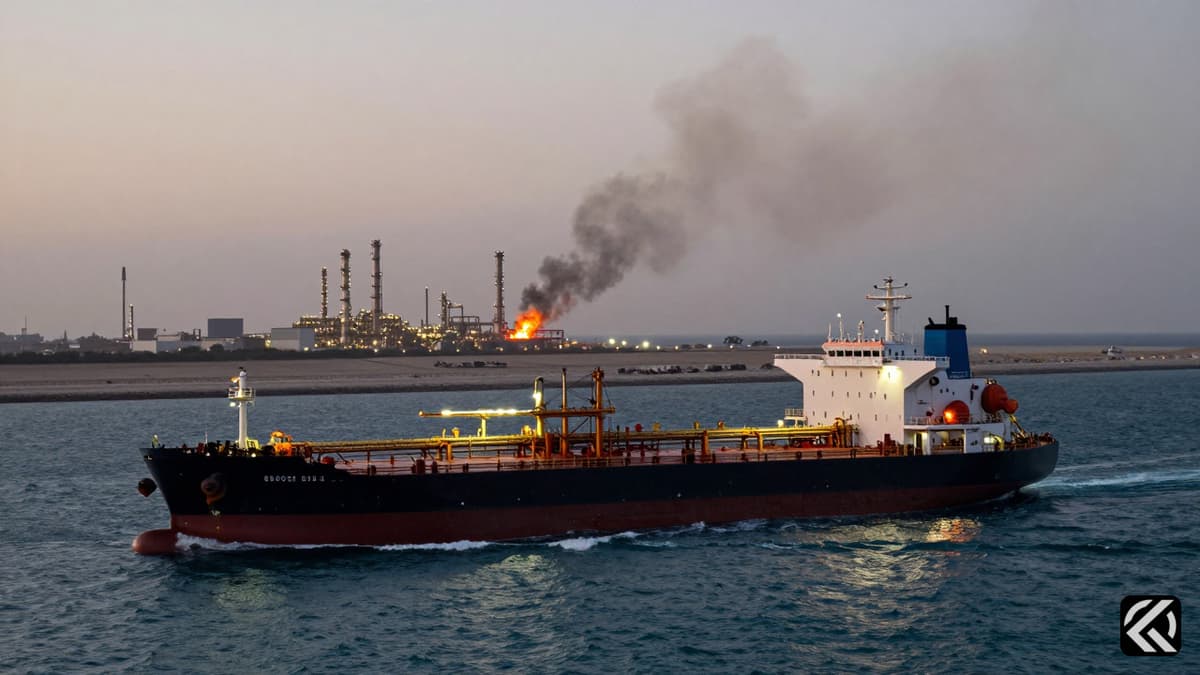
The White House confirms President Trump has rejected a 45-day Iran ceasefire deal, while strikes on energy infrastructure and nuclear sites intensify the regional conflict.
The White House confirmed on April 6, 2026, that while a 45-day ceasefire proposal with Iran is under consideration, President Donald Trump has not signed off on the deal. Consequently, the conflict continues with "Operation Epic Fury" still in full effect.
A U.S. official stated that the president is reviewing various ideas but maintains that the war is ongoing. This comes as a mediators' proposal was received by Washington. Meanwhile, Israel has claimed responsibility for a powerful strike on Iran's South Pars petrochemical complex in Asaluyeh, a facility responsible for roughly half the country's petrochemical output. The attack, which sparked a fire, is being assessed by operators who say the situation is currently "under control," though damage investigation continues.
Amidst the escalating violence, Israel's military reported killing Asghar Bagheri, a commander of Iran's Quds Force Special Operations Unit, in a strike on Tehran. Bagheri had been targeted for his involvement in attacks against Israeli and American individuals. The conflict's reach extends to civilian populations and critical infrastructure. In Haifa, a missile strike on a residential building killed four people, while an attack east of Beirut killed a Lebanese Forces Party official and his wife.
The Strait of Hormuz has become a focal point of the economic and military crisis. Iran's Islamic Revolutionary Guard Corps (IRGC) declared that the waterway has undergone "irreversible strategic changes" and will never return to its previous status. Iran has effectively closed the route in retaliation for U.S.-Israeli strikes. This closure has sent oil prices soaring, prompting Taiwan to redirect ships to bring crude oil from Saudi Arabian Red Sea ports. Taiwan, which relied on West Asia for 70% of its oil imports in 2025, is now adjusting shipping routes to avoid the disruption.
In the nuclear sector, fear for the nuclear safety Bushehr power plant has reached a fever pitch. Rafael Grossi, director of the International Atomic Energy Agency (IAEA), warned that strikes near the plant pose a "very real danger." Recent impacts, including a strike just 75 meters from the plant's perimeter, could trigger a severe radiological accident. The IAEA confirmed impacts on satellite imagery but stated the plant itself was not damaged. However, Iran's atomic energy chief, Mohammad Eslami, accused the IAEA of emboldening aggression due to inaction.
The geopolitical fallout extends to regional and global economic stability. The White House indicated that President Trump will address the conflict further in a press conference, though no decision on the ceasefire has been made. The European Council's Antonio Costa condemned the targeting of civilian energy infrastructure, calling it illegal and unacceptable, noting that the Iranian civilian population remains the main victim of both the regime and potential widening of the military campaign.
The human cost of the conflict is rising sharply. Iran has executed Ali Fahim, a 23-year-old convicted of involvement in a protest attack, marking the third execution in a series of hangings related to the January nationwide protests. Rights groups note that four other men sentenced to death are at imminent risk. The Kremlin has also weighed in, with spokesperson Dmitry Peskov describing the entire West Asia region as "on fire" due to U.S. and Israeli aggression, warning of dangerous negative consequences.
The instability has forced global actors to adapt their strategies. Pakistan's Finance Ministry reported that despite the volatility, its refineries are operating at optimal levels, and the supply of petrol and diesel remains stable. However, the disruption in the Gulf has already triggered sharp price adjustments for consumers. Taiwan's Industrial Development Administration confirmed that while they are using spot purchases to make up differences, the long-term shift in supply chains is a direct result of the blockade.
The destruction of the South Pars facility in Asaluyeh represents a significant blow to Iran's energy sector, which also includes joint work with Qatar on the world's largest natural gas field. Israel's Defence Minister, Israel Katz, confirmed the strike, describing it as a "central target." This attack follows an earlier strike in March that sparked major Iranian retaliations against oil and gas infrastructure across Gulf Arab States.
The threat to nuclear facilities has drawn international condemnation. Grossi emphasized that the attacks could cause harmful consequences for people and the environment beyond Iran. Iran's response has been equally severe, with the IRGC asserting that the closure of the Strait of Hormuz has ended foreign hegemony in the region. The situation remains volatile, with the White House monitoring the situation as the president prepares to speak on the matter.
The current trajectory suggests a deepening of the Israel-Iran war with severe long-term consequences for global stability. With the Strait of Hormuz declared permanently altered by Iran's IRGC, the immediate future points to sustained economic disruption and higher global energy costs. The IAEA's warning regarding the nuclear safety Bushehr plant indicates that the risk of a radiological accident remains high as long as strikes continue in the vicinity.
The refusal of President Trump to sign off on the ceasefire, combined with the continued execution of individuals and targeted strikes on civilian infrastructure, indicates that de-escalation is not imminent. The EU's condemnation and Russia's assessment that the region is "on fire" highlight a lack of international unity in stopping the violence. As nations like Taiwan and Pakistan scramble to reroute supply chains, the global economy faces a prolonged period of uncertainty. The strategic changes to the Strait of Hormuz may lead to a permanent restructuring of global trade routes, with lasting impacts on energy security for years to come. Unless the attacks cease, the risk of a broader, more catastrophic conflict involving nuclear facilities remains a critical concern for the international community.
Jun 8, 2026 00:51 UTC
Trump Claims Iran Nuclear Deal Imminent Despite Diplomatic Fractures
Jun 8, 2026 00:47 UTC
Iran Fires Missiles at Israel After Beirut Strike
Jun 7, 2026 22:00 UTC
US, Iran Peace Hops Fade 100 Days Into War
Jun 7, 2026 20:57 UTC
Iran Strikes Israel: IRGC Promises Week of Continuous Offensive
Jun 8, 2026 02:28 UTC
Trump Walks Out of Meet the Press After Rejecting Evidence Demands


