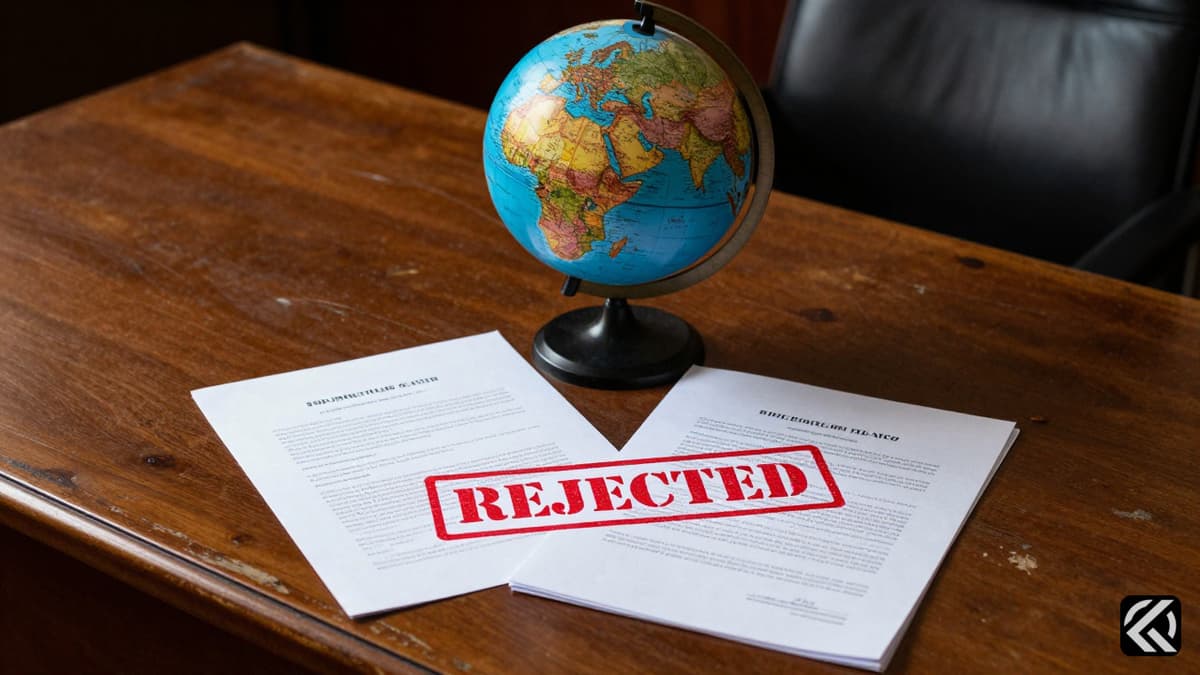
President Donald Trump has firmly rejected Iran’s latest peace proposal, calling it unacceptable as tensions escalate with oil markets reacting to the ongoing regional conflict.
President Donald Trump has unequivocally declared the most recent peace proposal from Iran as "totally unacceptable," marking a significant setback in efforts to end the monthslong war between the two nations. This sharp rejection comes as diplomatic channels remain strained and military tensions continue to mount across the Middle East, with global markets reacting swiftly to the uncertainty.
The deterioration of negotiations occurred early Sunday morning when Iran submitted its latest proposal through Pakistani mediators, according to Iranian state media. In response, President Trump took to social media to criticize Tehran’s longstanding stance, stating that Iran has been "playing games with the United States, and the rest of the World, for 47 years." He emphasized a delay in progress, adding that Iran "will be laughing no longer," signaling a hardened American stance in the ongoing diplomatic standoff.
Simultaneously, Israeli Prime Minister Benjamin Netanyahu engaged in direct talks with the US president to coordinate strategy. According to Israeli officials, Benjamin Netanyahu spoke with Donald Trump on Sunday evening, shortly after Iran delivered its response. Video circulated on social media showed Benjamin Netanyahu excusing himself from a meeting with Druze and Circassian community leaders to join the call, highlighting the urgency of the moment. In a separate interview with CBS’ 60 Minutes, Benjamin Netanyahu noted that there is still "work to be done" regarding Iran, emphasizing that Tehran has not dismantled its nuclear sites or stopped supporting regional proxies. He confirmed that Donald Trump agrees on the critical importance of removing Tehran’s stockpile of highly enriched uranium.
The US position has been firmly articulated by US Ambassador to the United Nations Mike Waltz, who stated that President Donald Trump has established a "very clear red line": Iran will never be allowed to possess a nuclear weapon and cannot hold world economies hostage. Despite this firm stance, Iranian President Masoud Pezeshkian adopted a defiant tone, writing on X that Iran will never bow to the enemy and that dialogue does not equate to surrender.
Diplomatic avenues beyond the US and Israel are also being explored. Iran’s ambassador to Beijing, Abdolreza Rahman Fazli, suggested on social media that China could serve as a guarantor for any potential agreement, urging that any deal be raised in the United Nations Security Council. This aligns with previous discussions where Pakistan’s Foreign Minister Ishaq Dar floated China’s role during talks in Islamabad.
The conflict continues to exert pressure on regional security and global economics. The United Arab Emirates reported that its air defenses intercepted two drones launched from Iran earlier Sunday, with no casualties reported. Kuwait also confirmed that hostile drones entered its airspace. Since the escalation began in February, the UAE’s air defenses have engaged hundreds of ballistic missiles and thousands of drones. In Lebanon, the Israeli military announced new strikes against Hezbollah targets.
Economic repercussions are becoming increasingly tangible. US National Economic Council Director Kevin Hassett acknowledged that consumers and businesses will face higher costs in the short run as the war drives up oil and gas prices. Brent crude closed at approximately $100 per barrel, up significantly from pre-war levels, while US gas prices averaged $4.52 a gallon. Hassett predicted that if the Strait of Hormuz is fully opened, a "gusher of oil" could lower prices ahead of the midterm elections, though securing safe passage remains a key negotiation point.
Amidst the geopolitical maneuvering, humanitarian issues within Iran are worsening. Nobel Peace Prize laureate Narges Mohammadi was granted bail and transferred to a hospital in Tehran after ten days in a Zanjan hospital. Her husband, Taghi Rahmani, warned that Mohammadi’s life hangs in the balance due to catastrophic health failure, urging that she never be returned to the conditions that previously broke her health. Furthermore, an internet blackout imposed by the Iranian government has entered its third month, surpassing 1704 hours according to NetBlocks, with no indication of when it will end. These internal crises, combined with the external diplomatic impasse and rising energy costs, suggest that a quick resolution remains elusive, with long-term economic and security implications for the region and global markets.
May 10, 2026 21:39 UTC
Trump Rejects Iran's Unacceptable Peace Terms
Join 50,000+ readers getting the global briefing every morning.
No spam. Unsubscribe anytime.
May 10, 2026 19:45 UTC
Iran’s Tiered Internet Access Fuels Public Anger and Regime Divides
May 10, 2026 19:04 UTC
Vijay’s Unscripted Tamil Nadu CM Oath Signals New Era
May 10, 2026 17:28 UTC
PM Modi Advocates Restrained Fuel Use and Energy Security Measures
May 10, 2026 17:14 UTC
Iran’s Digital Divide Deepens as IRGC-Linked Internet Pro Expands


