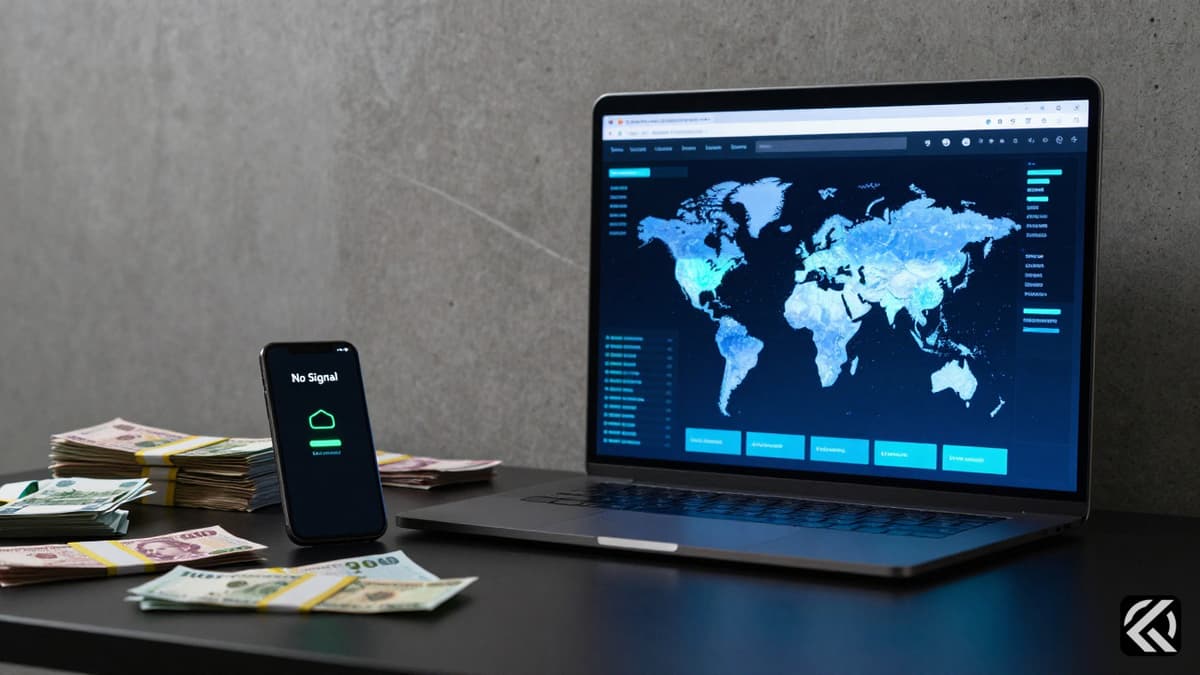
A two-month-old blackout fuels anger as privileged elite gain unrestricted global connectivity, widening the divide between Tehran’s ruling class and struggling citizens.
The longest Iranian internet blackout in history is now over two months old, devastating millions who rely on online connectivity for their livelihoods. This prolonged disruption has exposed deep fractures within the regime, particularly regarding who gets to access the global web.
While state media claims unity, a new program called Internet Pro is fueling widespread public criticism. Launched earlier this year, this service provides privileged users with stable, unrestricted access to international sites, creating a stark contrast to the heavy filtering and black-market VPN costs faced by ordinary citizens.
The disparity is visceral for those left behind. Faraz, a 38-year-old resident of Tehran, described the frustration of scraping together 500,000 to 1 million tomans (about $13) for gigabytes of black-market VPN service to access platforms like X or Telegram. This cost is significant given that the average monthly wage in Iran ranges only between 20 million and 35 million tomans ($240 to $420).
“Imagine dealing with unemployment and crazy inflation... And then, in the middle of all this stress and frustration, when you finally manage to open X or Telegram, you see people with unrestricted access acting like everything is normal, it honestly feels like a punch to the gut,” Faraz told CNN.
The introduction of Internet Pro has exacerbated this sense of injustice. Administered by the Mobile Communications Company of Iran (MCI), a consortium with close ties to the IRGC, the program began sales in February following complaints from businesses about restricted access during January protests. The service requires users to pass verification and hold a business, academic, or scientific role.
Independent publication Khabar Online described the outcome as a division of Iranian society into two classes: a “digital elite” enjoying fast, unfiltered channels, and “digital subjects” confined by heavy filtering and high VPN costs. Mohammad-Hamid Shahrivar, a lawyer, noted that the core issue is no longer just filtering, but the “redefinition of the right to access the internet.”
The financial toll of the shutdown is immense. Human Rights Activists in Iran (HRA) estimates that losing internet access has cost Iranians approximately $1.8 billion over the past two months, a figure corroborated by Iran’s Chamber of Commerce. The newspaper Ettela’at highlighted that the shutdown has destroyed livelihoods for virtual businesses, creating a “dire and complicated situation.”
Pricing structures further highlight the inequality. Internet Pro offers a one-year 50-gigabyte package for roughly 2 million tomans, plus activation fees, while ordinary restricted internet costs 8,000 tomans per gigabyte. This price gap forces many to turn to the black market or risk legal consequences by smuggling in illegal Starlink satellite receivers.
The policy has laid bare significant divisions within the Iranian government. While the plan was approved by the Supreme National Security Council in February, President Masoud Pezeshkian’s office has declared opposition to tiered access, calling the restrictions unfair and criticizing government agencies for failing to provide a rationale.
Communications Minister Sattar Hashemi asserted that high-quality internet is every Iranian’s right and stated that “tiered internet or a ‘whitelist’ system has no validity.” His office claimed the ministry had no involvement in Internet Pro, which was designed to help businesses maintain stability but is now “misused.”
However, hardline officials support the policy. Mohammad Amin Aghamiri, who runs the cyberspace governance authority and was sanctioned by the US and UK in 2023 for human rights abuses, backs the system. An unidentified official cited by Fars news agency claimed the restrictions are necessary to prevent cyberattacks and provide minimal disruption to specific professions.
The response from civil society has been sharp. Labor organizations, including the 300,000-member nurses’ union and various lawyers’ groups, have rejected the use of Internet Pro in solidarity with workers. The Iranian Psychiatric Association warned that unequal access leads to increased psychological stress and a decline in public trust.
Public anger has intensified as Internet Pro SIM cards began appearing on the black market. Judiciary head Gholamhossein Mohseni Ejei called it “unacceptable” for unqualified individuals to exploit the platform for financial abuse.
Reformist groups, such as the Iran Reform Front, view this as a key issue for gaining public support. They argue the “discriminatory approach” sustains the black market and exploits hardship, intensifying the sense of injustice.
As the regime attempts to project a united front against the US and Israel, this digital schism threatens to undermine that image. The disparity between the privileged few and the restricted many continues to widen, suggesting that without policy reversal, social unrest linked to digital inequality will likely persist.
May 10, 2026 13:00 UTC
Iran Delays Response to US War-Ending Proposal
Join 50,000+ readers getting the global briefing every morning.
No spam. Unsubscribe anytime.
May 10, 2026 15:47 UTC
PM Modi Calls for Fuel Conservation and Energy Security Measures
May 10, 2026 15:01 UTC
Kristin Smart Case: Search at Paul Flores Family Home Concludes Without Remains
May 10, 2026 13:03 UTC
M. K. Stalin Urges TVK to Continue Welfare Schemes
May 10, 2026 13:00 UTC
Iran Delays Response to US War-Ending Proposal


