Prime Minister Narendra Modi has issued urgent appeals for citizens to curb petroleum usage and delay international trips to ensure national energy security amidst rising global tensions.
NEW DELHI: Prime Minister Narendra Modi has launched a significant national appeal on Sunday, calling for immediate and stringent measures to manage energy resources during a period of global instability. Addressing a gathering in Secunderabad, Hyderabad, the Prime Minister urged the public to use petrol, diesel, and gas "with great restraint." This urgent directive comes amid the ongoing conflict in West Asia, which has triggered rising concerns regarding global energy supplies and pricing. Modi emphasized that reducing dependence on imported fuel is no longer just a policy goal but a "national necessity."
The Prime Minister highlighted that the current geopolitical climate requires a unified national response. "In this time of global crisis, we have to make a resolution keeping duty paramount and fulfil it with complete dedication," he stated. He framed the reduction of petroleum consumption as a collective civic duty, stating, "A big resolution is to use petrol and diesel sparingly. We must curb our use of petrol and diesel." This call for action is part of a broader strategy to mitigate the adverse impacts of the war on India's economy and infrastructure.
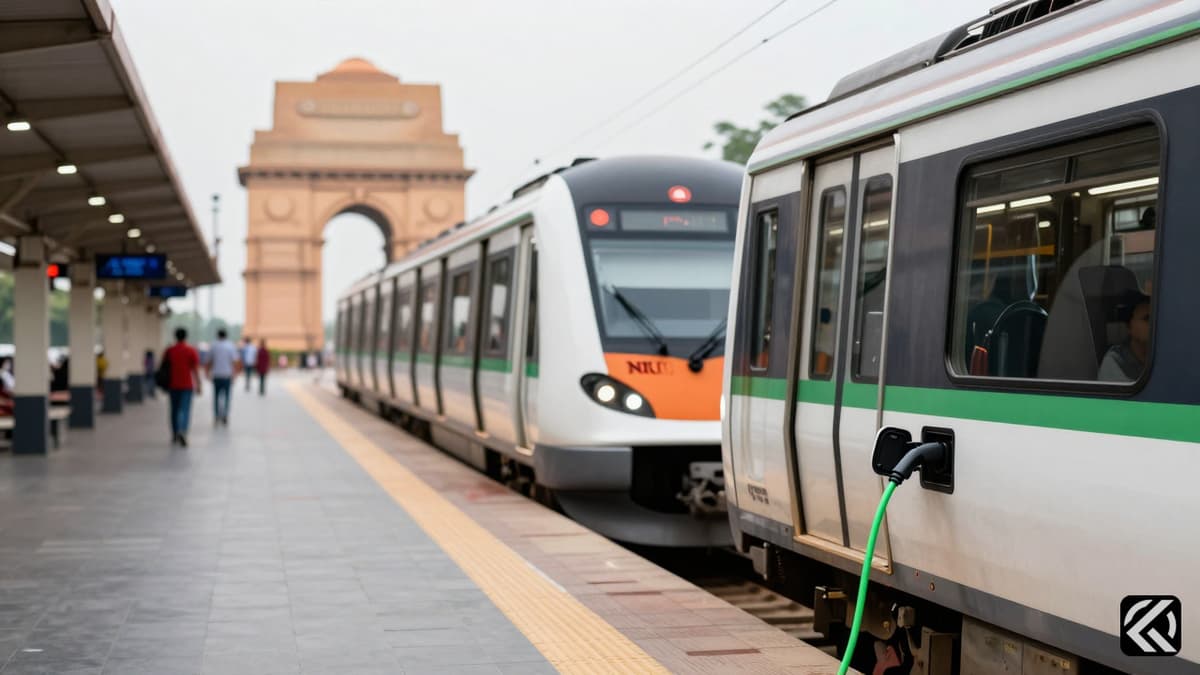
To achieve these goals, PM Modi outlined specific lifestyle and operational changes for citizens and businesses. He suggested that residents in cities with metro connectivity should prioritize public transport over private vehicles. Where private transport is unavoidable, he encouraged carpooling to maximize efficiency. Additionally, he urged owners of electric vehicles to maximize their usage, reinforcing the shift toward cleaner alternatives. The Prime Minister recalled the successful adoption of remote work protocols during the pandemic, suggesting a revival of these practices. "We must prioritize work from home, online conferences, and virtual meetings again," he declared, emphasizing that such measures are in the "national interest."
Beyond personal behavior changes, the Prime Minister addressed macro-economic concerns, specifically focusing on foreign exchange reserves. He noted a "growing culture" among the middle class regarding overseas weddings, travel, and vacations. To address this, he proposed a temporary but strict moratorium on such activities. "We must decide that during this time of crisis, we should postpone travelling abroad for at least a year," Modi asserted. This measure aims to reduce the outflow of foreign currency, thereby strengthening the nation's financial buffer during uncertain times.
Earlier in the day, while virtually inaugurating and laying the foundation stone for projects worth approximately Rs 9,400 crore in Telangana, PM Modi underscored the critical importance of energy security. He explained that the relevance of this issue is felt globally, stating, "What is the importance of energy security... every person in the world is feeling it today." He announced that the Central Government is making "unprecedented investments" in India’s energy sector to build resilience against future shocks. These investments include expanding solar power capacity, increasing ethanol blending in petrol, expanding LPG coverage, improving piped gas infrastructure, and enhancing CNG-based transport systems.
The infrastructure projects unveiled in Telangana reflect this strategic pivot. Initiatives included the four-laning of National Highway-167 on the Hyderabad-Panaji Economic Corridor, development works in the Zaheerabad Industrial Area, and sections of the Kazipet-Vijayawada railway multi-tracking project. A notable highlight was the inauguration of the PM MITRA Park at Warangal, described as the country’s first fully operational textile park of its kind. Another key development was the Greenfield Petroleum, Oil and Lubricants terminal in Hyderabad, designed to streamline logistics and supply chains.
PM Modi reiterated that the current strategy is not merely about immediate relief but long-term structural stability. "Today, the need of the hour is also to use petrol, gas, diesel and such things with great restraint. We have to use imported petro products only as per need," he said. He explained that this dual approach of reduced consumption and increased domestic production capacity will "not only save foreign exchange but reduce the adverse impact of war." The government’s focus on cleaner and alternative energy sources signals a definitive move away from vulnerability to global energy shocks.
The Prime Minister’s message was clear: national duty must override individual convenience during a global crisis. By combining immediate behavioral changes with long-term infrastructure development, India aims to safeguard its economy. The push for fuel conservation is therefore not just an environmental imperative but a critical component of national defense and economic stability. As the West Asia conflict continues, the resilience of India’s energy grid and the financial health of its citizens will depend heavily on the successful implementation of these directives.
The inauguration of multi-billion rupee projects in Telangana marks a tangible step toward realizing Modi’s vision of economic and energy independence. By integrating advanced textile parks like the one in Warangal with robust transportation and petroleum infrastructure, the region is positioned to withstand global market volatility. The expansion of solar capacity and ethanol blending in the coming months is expected to further decrease the nation's reliance on imported crude oil. Analysts suggest that if citizen adherence to the curfew on foreign travel and reduced fuel use remains high, the immediate pressure on foreign exchange reserves will lessen. However, long-term success will hinge on the sustained execution of these energy security policies and the continued scaling of alternative energy sources to meet the country's growing demands without straining the balance of payments.
May 9, 2026 21:40 UTC
Russia Cuts Heavy Armor From Victory Day Parade Amid War
May 9, 2026 19:32 UTC
Hardliners Sabotage Iran-US Negotiations Amidst Fractured Regime
May 9, 2026 17:43 UTC
Moscow's Stripped-Down Victory Day: A Shift in Military Display
May 8, 2026 19:28 UTC
Iran Transforms Destroyed B1 Bridge Into Symbol of Resistance
May 10, 2026 17:28 UTC
PM Modi Advocates Restrained Fuel Use and Energy Security Measures


