New investigations suggest US error caused school deaths while markets react to escalating tensions in the Strait of Hormuz.
As the conflict between the United States and Iran enters its twelfth day, fresh reports are illuminating a complex web of military miscalculations, economic instability, and political friction within Washington. The New York Times recently revealed preliminary findings suggesting the U.S. military bears responsibility for a devastating strike on a girls' school in southern Iran. This revelation has sparked intense debate regarding command protocols and the human cost of Operation Epic Fury.
According to the Times, officers at U.S. Central Command utilized outdated data from the Defense Intelligence Agency when creating target coordinates for the Feb. 28 strike on the Shajarah Tayyebeh elementary school. The investigation indicates this targeting mistake resulted in the deaths of 165 people, including many children. While CBS News previously suggested the U.S. was likely responsible, President Trump has offered contradictory statements. He claimed he would accept probe findings yet also suggested without evidence that Iran orchestrated the attack. White House Press Secretary Karoline Leavitt stated the administration would not be harassed by media outlets into a swift conclusion regarding responsibility. New video footage showing a Tomahawk cruise missile striking an adjacent naval base adds to the evidence that an American missile likely hit the school, as the U.S. military is the only force involved that utilizes such weapons.
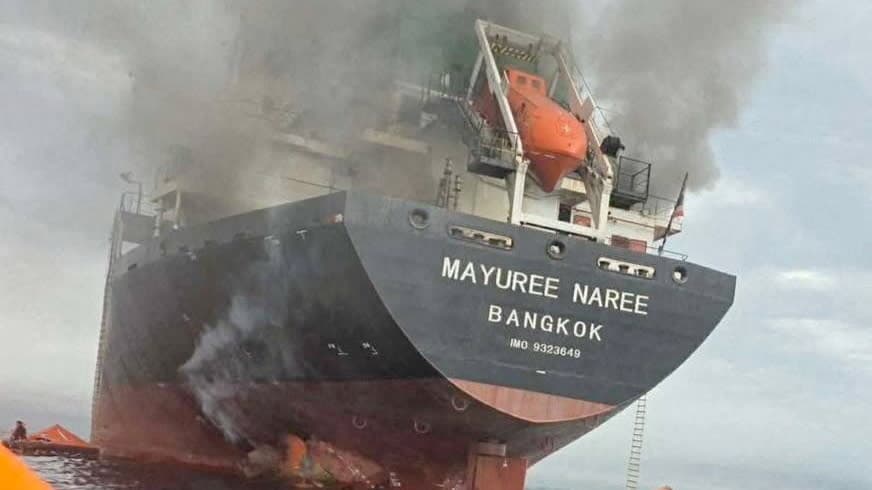
The war has triggered immediate economic repercussions, with crude oil prices skyrocketing before settling near $87 per barrel. AAA reports the average U.S. gas price has risen to $3.58 per gallon, up from $2.90 prior to the strikes. In response to the instability, the International Energy Agency announced the release of 400 million barrels of oil, marking the largest emergency stock release in its history. Meanwhile, Trump asserted on Truth Social that his military had completely destroyed ten Iranian mine-laying vessels. However, Leavitt clarified that the U.S. Navy has not yet escorted any tankers through the Strait of Hormuz, contradicting a deleted post by Energy Secretary Chris Wright. During an interview, Trump stated the war will end soon because there is practically nothing left to target, contradicting earlier claims he had not won enough.
Senate Democrats have expressed significant frustration following classified briefings on the war. Senator Richard Blumenthal described his dissatisfaction as unmatched in his fifteen years in the Senate, citing a lack of clarity on costs and escalation risks. They sent a letter demanding Defense Secretary Pete Hegseth and Secretary of State Marco Rubio testify under oath. Conversely, Republican House Speaker Mike Johnson argued against U.S. involvement in nation-building, noting a lack of resources. This clashes with Trump’s earlier comment that the operation marks the beginning of building a new country.
On the Iranian side, confirmed reports indicate Supreme Leader Mojtaba Khamenei was wounded during the Feb. 28 airstrike that killed his father, Ayatollah Ali Khamenei. Mojtaba, 56, has remained out of public view since assuming leadership earlier this week. Tehran’s ambassador to Cyprus confirmed he is hospitalized with injuries to his legs, hand, and arm. While Israeli officials suggest injuries occurred at the war's start, family members claim he remains safe.
As the conflict continues, the administration faces pressure to define success metrics while managing public concern over casualties and economic impacts. With conflicting statements from leadership on both sides, the path forward remains uncertain as global markets brace for further instability.
May 1, 2026 03:50 UTC
Trump Administration Declares Iran Conflict Terminated
Join 50,000+ readers getting the global briefing every morning.
No spam. Unsubscribe anytime.
May 1, 2026 03:50 UTC
Trump Administration Declares Iran Conflict Terminated
Apr 25, 2026 01:38 UTC
Iranian FM Araghchi Heads to Islamabad for Critical US-Iran Talks
Apr 25, 2026 01:13 UTC
Calm Suspect in Delhi Rape-Murder Case Faces Mental Evaluation
Apr 24, 2026 23:24 UTC
Raghav Chadha joins BJP, Shaking AAP’s Rajya Sabha Strength