President Donald Trump suggests hostilities with Iran could conclude shortly, citing massive damage inflicted on Tehran’s military assets while global markets brace for instability.
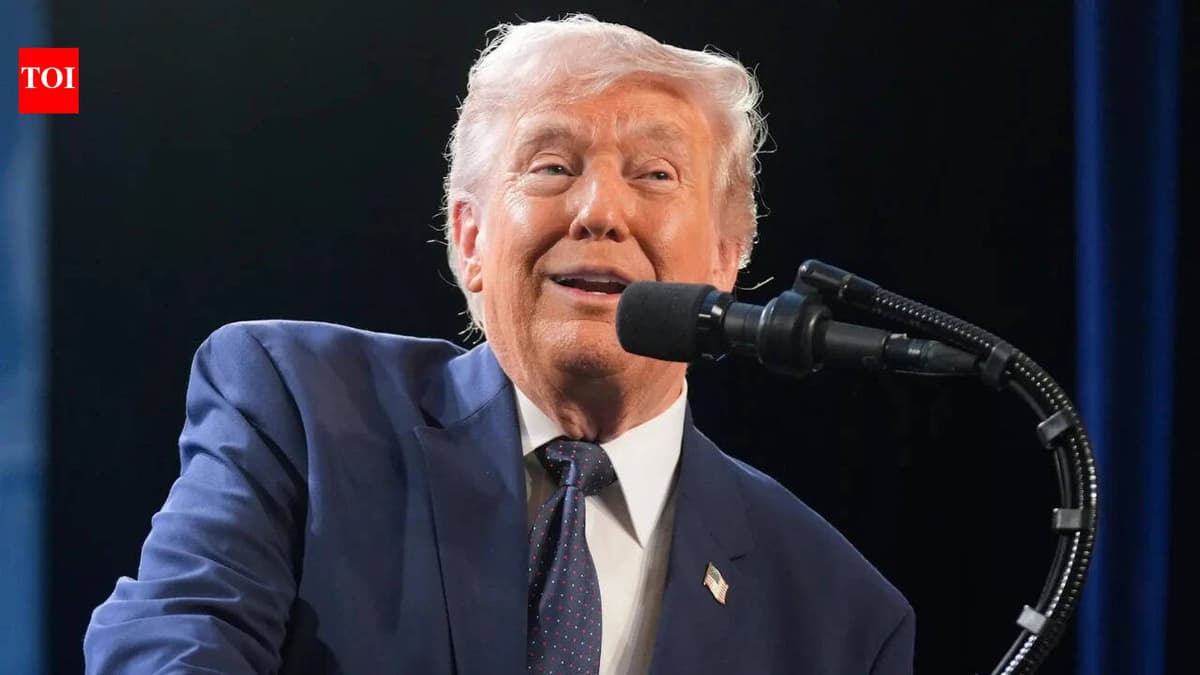
In a recent development regarding the ongoing conflict between the United States and Iran, US President Donald Trump has suggested that hostilities could conclude very soon. Speaking during a brief phone interview with Axios, the President indicated that American forces have already inflicted massive damage on Tehran’s military capabilities. Trump asserted that there is practically nothing left to target in Iran, describing the situation as a matter of timing rather than capability. He stated, Any time I want it to end, it will end, signaling a belief that the United States holds complete control over the duration of the engagement.
Despite the President’s optimistic tone regarding the war's progress, significant uncertainty remains among military leadership and allied officials. Trump claimed the conflict is going great and that US forces are way ahead of the timetable established for the initial six-week period. However, US and Israeli officials indicate there has been no formal directive on ending the fighting yet. Preparations are reportedly underway for at least two more weeks of strikes. War Secretary Pete Hegseth clarified that it is ultimately up to Trump to decide whether the conflict marks the beginning, the middle, or the end of the war. Meanwhile, Admiral Brad Cooper, commander of United States Central Command, confirmed in a video message that American forces are steadily weakening Iran’s ability to operate in the region while combat power builds against the Iranian regime.
A critical flashpoint remains the Strait of Hormuz, one of the world’s most crucial oil shipping routes. US intelligence recently detected that Iran had begun laying mines in this vital waterway. Trump confirmed that US strikes successfully destroyed 16 Iranian mine-laying boats on Tuesday, disrupting Tehran’s plans to threaten shipping lanes. Despite these successes, roughly 20 per cent of the world’s oil typically passes through the Strait of Hormuz, which remains effectively closed to commercial shipping amid the escalating tensions. The Islamic Revolutionary Guard Corps has vowed Tehran would not allow a single liter of oil to pass through the strait until the United States halts its bombing campaign. Consequently, rising oil prices and economic uncertainty are becoming immediate concerns for global markets affected by the disruption.

Domestic political pressure is increasingly shaping the narrative surrounding the conflict. Recent surveys by Quinnipiac and Fox News found that only about three in ten Americans believe the military action has made the country safer. A CNN poll suggested many fear the strikes could make Iran an even greater threat to the US, according to AP. Analysts note that observers believe the president may seek a quick declaration of victory to limit economic fallout, especially rising oil prices ahead of upcoming US elections. Conversely, Israeli leaders have signalled they may continue operations longer. Israeli defence minister Israel Katz said the war would continue without any time limit, for as long as necessary, until they achieve all the objectives and decisively win the campaign.
The current geopolitical landscape presents a stark contrast between the White House’s rhetoric of imminent victory and the operational reality of continued military engagements. While President Trump emphasizes that the war is progressing faster than expected, the strategic implications regarding oil security and domestic political pressures suggest a complex endgame. As global markets react to the potential closure of the Strait of Hormuz, the decision on when to conclude the hostilities remains under intense scrutiny from both international allies and the American public.
May 1, 2026 03:50 UTC
Trump Administration Declares Iran Conflict Terminated
Join 50,000+ readers getting the global briefing every morning.
No spam. Unsubscribe anytime.
May 1, 2026 03:50 UTC
Trump Administration Declares Iran Conflict Terminated
Apr 25, 2026 01:38 UTC
Iranian FM Araghchi Heads to Islamabad for Critical US-Iran Talks
Apr 25, 2026 01:13 UTC
Calm Suspect in Delhi Rape-Murder Case Faces Mental Evaluation
Apr 24, 2026 23:24 UTC
Raghav Chadha joins BJP, Shaking AAP’s Rajya Sabha Strength