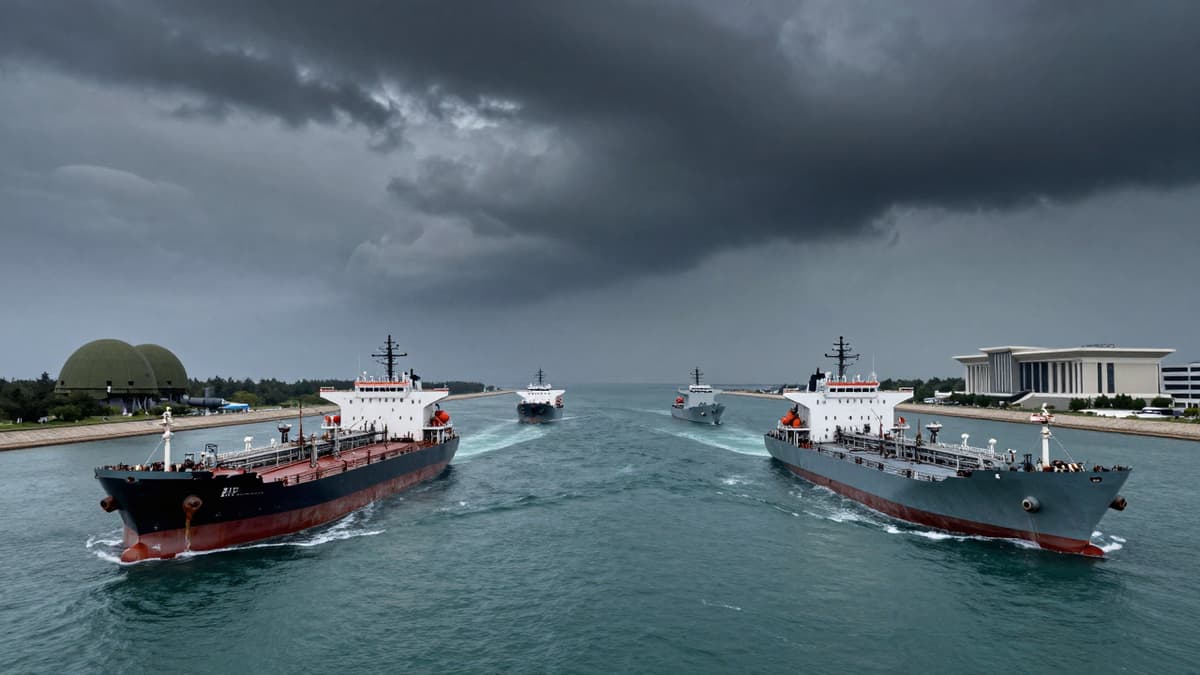
President Trump declares US objectives are nearly met, but Iran denies ceasefire requests and launches new missile attacks, escalating the conflict over the vital Strait of Hormuz.
President Donald Trump announced on Wednesday, April 1, 2026, that the United States is approaching the completion of its strategic goals in the ongoing war against Iran. Speaking to the public, the President hailed American forces for securing "swift, decisive, and overwhelming victories" in the theater of operations. Despite these claims of success, the President also warned that US military actions would continue to hit Iran "extremely hard" for the subsequent two to three weeks. This assertion comes as the administration attempts to rally domestic support and signal resolve to international allies.
Earlier in the day, the President made a startling claim that the President of Iran had requested a ceasefire. However, he immediately placed a strict condition on this alleged offer, ruling out any truce until the vital Strait of Hormuz was fully reopened to facilitate crucial energy shipments. This diplomatic maneuver was swiftly rejected by Tehran. Esmaeil Baqaei, the spokesman for Iran's Foreign Ministry, flatly dismissed Trump's assertion as "false and baseless." The Iranian government maintains a firm stance that there are no ongoing negotiations to end the hostilities.
As the day progressed on Wednesday, the conflict intensified. Iran launched fresh missile attacks targeting Israel and US-allied Gulf nations. Visual reports from AFP journalists on the ground indicated massive explosions occurring within the Iranian capital, signaling a significant escalation in the intensity of the fighting. By Thursday, April 2, 2026, Tehran officially characterized Washington's demands as "maximalist and irrational," refusing to engage in the framework proposed by the American administration.
The conflict has sparked fierce rhetorical exchanges between the leadership of the two nations. President of Iran questioned the populace of the United States, asking if the West Asia conflict was truly aligning with the promise of putting "America First." He leveled serious accusations against the United States, claiming war crimes were being committed. Furthermore, the Iranian leadership suggested that Washington was not acting independently but was instead a proxy for Israel, arguing that the US was being "influenced and manipulated" by the Israeli regime. These comments highlight a deepening distrust and the complex proxy dynamics that continue to fuel the regional instability.
The strategic implications of this war are already being analyzed by experts. The Johns Hopkins professor Vali Nasr has noted that the US appears to be at a "strategic dead end" regarding its approach to Iran. According to Nasr, the ongoing war is destined to fundamentally reshape the security architecture of the Gulf region. The intensity of the attacks and the refusal of either side to back down suggests a prolonged period of instability. While the US claims victories, the launch of new missiles and the rejection of ceasefire talks indicate that the war is far from concluded.
Meanwhile, the situation in the Strait of Hormuz remains critical. The US stance that no truce will be considered until the waterway is open for energy shipments places immense pressure on the region's economic lifeline. As transatlantic ties fray, the United Kingdom has suggested it could lead efforts in opening the Strait, with Prime Minister Keir Starmer commenting on the matter. This diplomatic maneuvering underscores the global stakes involved, as the world watches to see if the conflict can be de-escalated or if it will spiral further into a broader regional conflagration.
The tension is palpable, with the US continuing to assert dominance while facing fierce resistance from an Iranian leadership that feels cornered. The narrative of "overwhelming victories" contrasts sharply with the reality of ongoing missile barrages and the denial of any diplomatic breakthroughs. As the two-week window of "extremely hard" hits continues, the region remains on a razor's edge. The interplay between military action and diplomatic posturing suggests that the path to peace remains obscured by a lack of trust and a deepening commitment to continued hostilities.
The current state of affairs suggests a grim trajectory for the Middle East. With the US claiming victory while simultaneously preparing for more intense strikes, and Iran rejecting all ceasefires as irrational, the immediate future points to continued aggression rather than negotiation. The assertion that the US is a proxy for Israel, as claimed by Iranian leadership, indicates that the war will likely continue to be viewed through the lens of regional alliances rather than just bilateral conflict. Experts like Vali Nasr warn that the war is already reshaping the Gulf's security architecture, implying that post-war dynamics will look significantly different from the status quo prior to 2026. Unless the US can resolve the demands regarding the Strait of Hormuz without further escalation, or unless the Iranian leadership alters its stance on "maximalist" demands, the conflict is likely to persist. The refusal of Tehran to engage in talks while launching attacks suggests a strategy of attrition, while the US insistence on "swift victories" hints at a desire to force a regime change or total capitulation. The coming weeks will be critical in determining whether the "strategic dead end" becomes a point of escalation or a catalyst for a new geopolitical order.
Jun 8, 2026 00:51 UTC
Trump Claims Iran Nuclear Deal Imminent Despite Diplomatic Fractures
Jun 8, 2026 00:47 UTC
Iran Fires Missiles at Israel After Beirut Strike
Jun 7, 2026 22:00 UTC
US, Iran Peace Hops Fade 100 Days Into War
Jun 7, 2026 20:57 UTC
Iran Strikes Israel: IRGC Promises Week of Continuous Offensive
Jun 8, 2026 02:28 UTC
Trump Walks Out of Meet the Press After Rejecting Evidence Demands


