Escalating drone attacks on oil infrastructure have triggered market volatility while President Trump declares victory in the ongoing conflict.
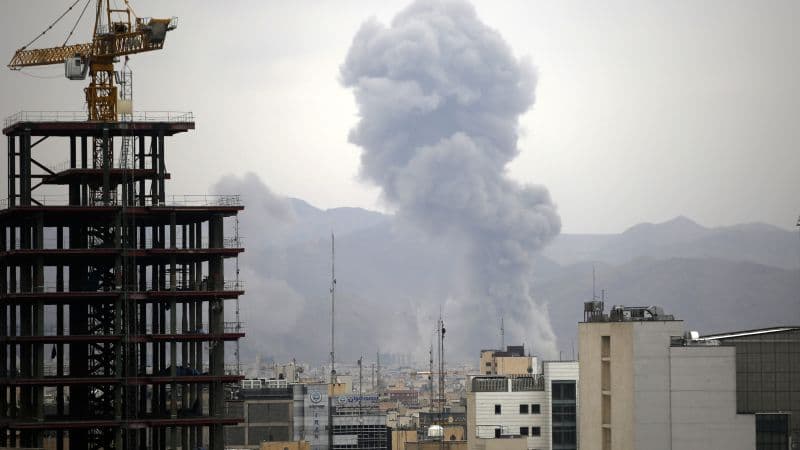
The geopolitical landscape has shifted dramatically following coordinated assaults across the Middle East. Early Thursday morning marked a critical escalation as Gulf nations intercepted waves of Iranian drones and missiles targeting vital energy assets. This surge in aggression has placed the Strait of Hormuz firmly in the crosshairs of conflict, disrupting global supply chains and prompting immediate military responses from regional allies.
Iraq reported that two foreign oil tankers were attacked by Iranian drones within its territorial waters. At least one person was killed while 38 others were rescued during the incident involving the Maltese-flagged Zefyros and the Marshallese-flagged Safesea Vishnu. Iran claimed responsibility for an underwater drone attack that blew up the vessels, causing flames to spread into the surrounding water.
Saudi Arabia’s Ministry of Defense stated it had intercepted and destroyed more than 20 drones in the eastern parts of the country, which houses the kingdom’s oil fields. Bahrain warned residents in four nearby towns to remain indoors due to smoke and fire from attacks on fuel tanks in the Muharraq Governorate. Similarly, the United Arab Emirates and Kuwait confirmed their air defenses were responding to hostile missile and drone threats. In Oman, emergency crews battled a fire at the fuel storage tanks of the Port of Salalah after an Iranian Shahed drone reportedly struck a tank there.
President Donald Trump addressed the escalating situation by telling reporters traveling back to Washington, DC, that the United States has already won the war with Iran. He stated, “We won, in the first hour it was over, but we won,” though his administration offered inconsistent messaging on the timeline for operations. Despite these claims, the Energy Department authorized the release of 172 million barrels from the Strategic Petroleum Reserve beginning next week to manage market stability.
Domestically, unverified claims suggest Iran may desire to conduct surprise drone attacks against California from a boat offshore. President Trump confirmed he has been briefed on potential Iranian sleeper cells within the United States. FBI memos sent to local law enforcement contained this unvetted information for their awareness, though California Governor Gavin Newsom later clarified there was no imminent threat at that time.
The financial implications of the conflict are already visible, with oil prices climbing 38 cents in the last week and 64 cents in the last month. This reaction stems from the virtual closure of the Strait of Hormuz, a crucial channel for 20% of the world’s oil, alongside retaliatory attacks on neighbor facilities. The Pentagon told US lawmakers that preliminary estimates suggest the war cost at least $11 billion in the first six days alone.
Simultaneously, Iran’s Islamic Revolutionary Guard Corps announced a joint operation with Lebanon’s Hezbollah involving five hours of sustained fire against Israel. They claimed to strike more than 50 targets across the occupied territories, including bases from Haifa to Beersheba. In response, the Israeli military carried out a wide-scale wave of strikes on Hezbollah infrastructure in Beirut’s south. The UN Security Council adopted a Bahrain-led resolution demanding Iran immediately stop its attacks on Gulf countries.
The ongoing conflict has triggered widespread military responses and economic instability across the Middle East. While political leaders assert control, the reality on the ground involves continuous drone attacks and significant financial costs. The situation remains fluid as international bodies demand an end to hostilities while markets react to the disruption in vital energy supplies.
May 1, 2026 03:50 UTC
Trump Administration Declares Iran Conflict Terminated
Join 50,000+ readers getting the global briefing every morning.
No spam. Unsubscribe anytime.
May 1, 2026 03:50 UTC
Trump Administration Declares Iran Conflict Terminated
Apr 25, 2026 01:38 UTC
Iranian FM Araghchi Heads to Islamabad for Critical US-Iran Talks
Apr 25, 2026 01:13 UTC
Calm Suspect in Delhi Rape-Murder Case Faces Mental Evaluation
Apr 24, 2026 23:24 UTC
Raghav Chadha joins BJP, Shaking AAP’s Rajya Sabha Strength