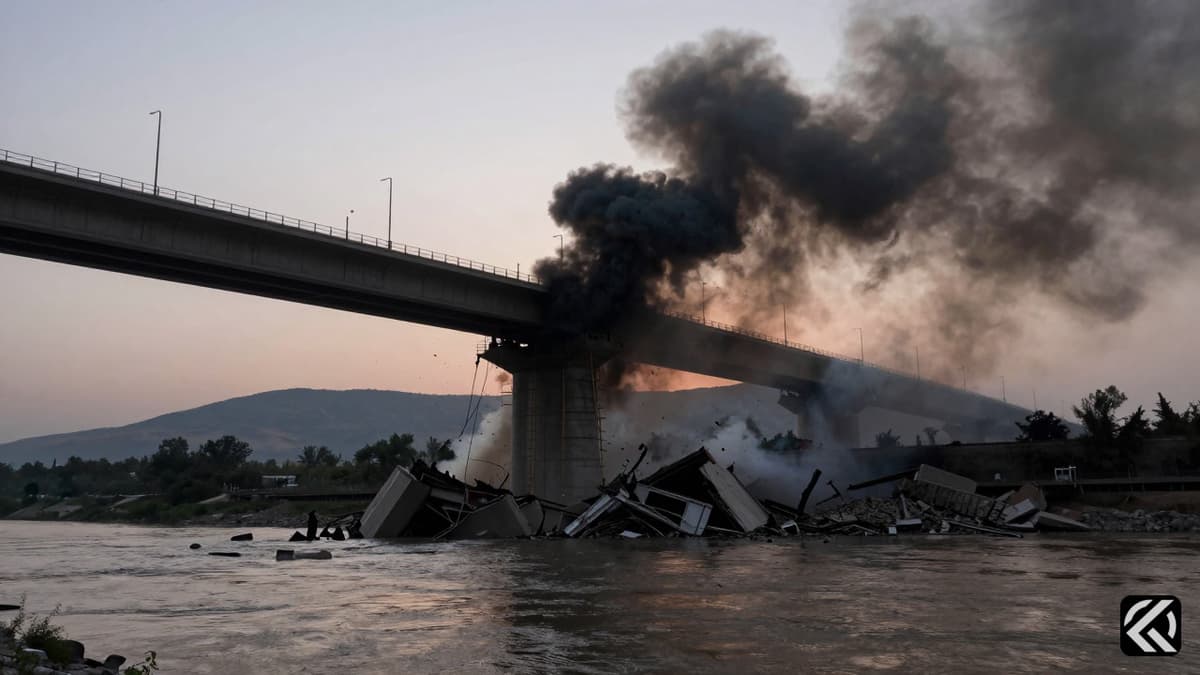
In a dramatic escalation of the Middle East conflict, President Trump announced the destruction of Iran's tallest bridge, threatening further devastation unless Tehran negotiates peace.
U.S. President Donald Trump stated on Thursday that the tallest bridge in Iran has been destroyed. This announcement follows hours of threats to bomb the country "back to the Stone Ages" amidst the ongoing conflict.
Ghodratollah Seif, Deputy Governor of Alborz Province, confirmed the devastating toll of the strike on the B1 bridge. State TV and the Fars news agency reported that eight people were killed and 95 others wounded during the attack. Due to reporting restrictions, AFP was unable to access the site or independently verify these tolls.
Following his announcement, Mr. Trump posted footage on social media showing smoke rising from the B1 bridge in Karaj, located approximately 20 miles southwest of Tehran. He warned that further destruction would occur unless Iran comes to the table to end the five-week war. "The biggest bridge in Iran comes tumbling down, never to be used again - Much more to follow!" Trump declared, urging the nation to "MAKE A DEAL BEFORE IT IS TOO LATE."
Iranian Foreign Minister Abbas Araghchi responded sharply to the event on social media platform X. He stated that striking civilian structures, including unfinished bridges, would not compel Iranians to surrender. Instead, he argued that such actions "only convey the defeat and moral collapse of an enemy in disarray." Iranian state television had previously reported two U.S.-Israeli strikes on the location.
According to state TV, the American-Zionist enemy targeted the B1 bridge in Karaj again. An initial strike caused two civilian casualties, but a later attack occurred just as emergency teams were deployed to help victims of the first incident. This second wave of bombing further compounded the tragedy at the site.
The B1 bridge, which was still under construction at the time of the strike, holds the distinction of being West Asia's tallest structure. According to Fars and other Iranian media outlets, the column stands at 447 feet, or 136 meters. The strategic targeting of this specific infrastructure underscores the intensity of the Trump Iran war efforts.
Prior to this announcement, Mr. Trump delivered a speech on Wednesday, April 1. In this address, the President argued that the war launched by the United States and Israel on February 28 was almost over. However, he simultaneously threatened to bomb Iran "extremely hard" if the regime did not bow to his demands. In his first prime-time address to the nation regarding the war, he stated, "Over the next two to three weeks, we are going to bring them back to the Stone Ages, where they belong."
The destruction of this massive infrastructure project represents a significant escalation in the conflict. The site of the strike, the B1 bridge in Alborz Province, was a symbol of unfinished national development. Its destruction by air power, accompanied by a specific death toll, signals a shift in the conflict's tactics toward severe physical dismantling of national assets.
The narrative of the attack, as described by local officials and state media, highlights a continuous pattern of violence. The timing of the second strike, occurring when rescue efforts were underway, suggests a targeted approach to maximize disruption. As Mr. Trump reiterated in his social media post, the message to Iran is clear: without a deal, more destruction will follow, leaving "NOTHING LEFT OF WHAT STILL COULD BECOME A GREAT COUNTRY."
The strategic decision to target the tallest bridge in Alborz Province reflects a new intensity in the Trump Iran war. By destroying critical infrastructure that was still under construction, the administration is signaling that the war aims to fundamentally alter the physical landscape of Iran. The high casualty count and the explicit threat to return the nation to the "Stone Ages" suggest a continuation of this aggressive posture.
The international reaction, particularly from Iranian officials like Minister Araghchi, frames these actions as evidence of an enemy's moral collapse rather than a deterrent. However, the U.S. President's rhetoric and subsequent actions indicate a belief that such devastation is the only path to forcing a negotiated end to the five-week conflict. The coming weeks will likely determine if this strategy compels Iran to the table or if the destruction continues, further erasing the remnants of the country's infrastructure.
Jun 8, 2026 00:51 UTC
Trump Claims Iran Nuclear Deal Imminent Despite Diplomatic Fractures
Jun 8, 2026 00:47 UTC
Iran Fires Missiles at Israel After Beirut Strike
Jun 7, 2026 22:00 UTC
US, Iran Peace Hops Fade 100 Days Into War
Jun 7, 2026 20:57 UTC
Iran Strikes Israel: IRGC Promises Week of Continuous Offensive
Jun 8, 2026 02:28 UTC
Trump Walks Out of Meet the Press After Rejecting Evidence Demands


