Questions mount over the Trump administration's technical understanding of nuclear fuel as US and Israel intensify conflict with Iran, threatening a path to war.
President Trump has demanded Iran surrender its enriched uranium stores as a condition for ending the war, a stance that has drawn sharp criticism from nuclear arms experts regarding the administration's technical understanding. The President's rationale for the conflict has frequently cited these uranium stockpiles, yet recent claims made by his lead negotiator, Steve Witkoff, and the President himself raise significant doubts about their grasp of nuclear physics. This confusion culminated in military action, with the US-Israel attack Iran occurring just days after high-level negotiations that experts argue were based on flawed premises.
The debate over the terminology used by the White House has become a focal point of the crisis. President Trump has repeatedly referred to the material as "nuclear dust," a term that does not exist in the nuclear energy industry. Furthermore, Witkoff, a former real estate developer co-leading talks with Trump's son-in-law Jared Kushner, has made statements that experts say betray a lack of nuclear expertise. These comments include a confusion between nuclear reactors, which utilize fuel for power, and the centrifuge facilities where the actual enrichment process occurs. Witkoff was reportedly particularly concerned about a research reactor in Tehran, claiming it was being used to stockpile highly enriched uranium, a detail that experts say reflects a misunderstanding of the facility's function.
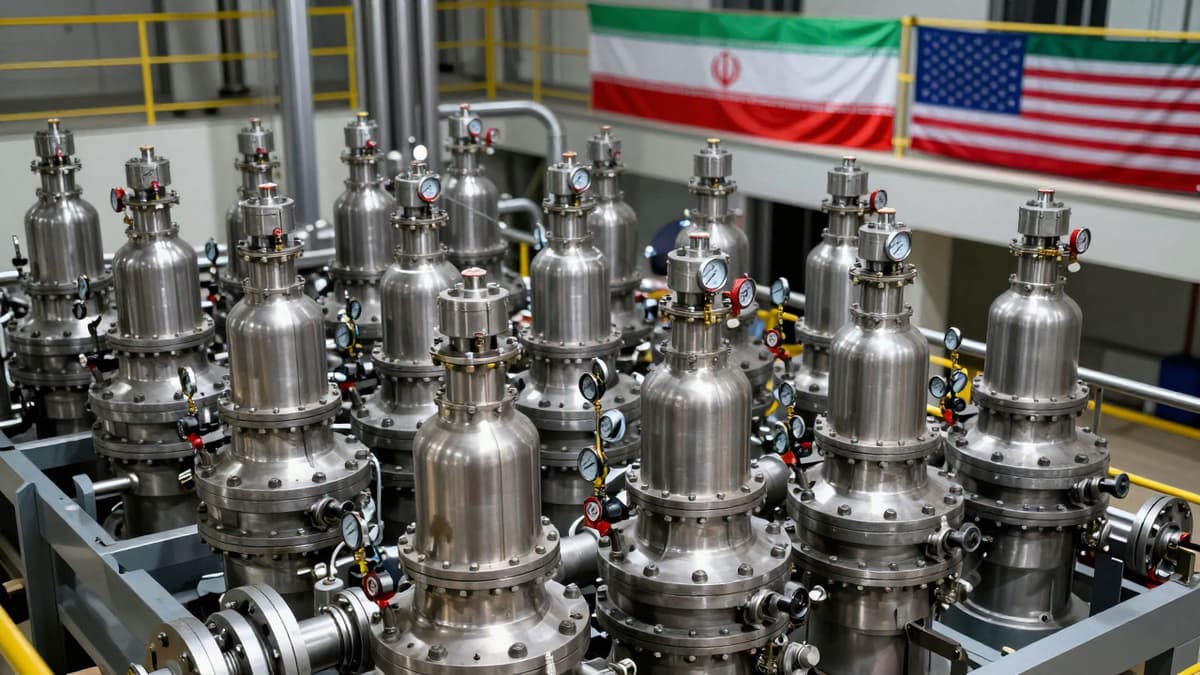
The technical reality of enriched uranium is far more complex than the "nuclear dust" narrative suggests. When scientists split the atom, they applied the term "enriched" to radioactive fuel made more susceptible to fission. Natural uranium is composed of 99% uranium-238, a fission-resistant isotope, and only 0.7% uranium-235, which is required for chain reactions. To make uranium suitable for fuel or weapons, the concentration of uranium-235 must be increased through a process primarily using gas centrifuges. In this cascade, the heavier uranium-238 moves to the periphery, allowing the lighter uranium-235 to be collected in the center and re-spun repeatedly until the desired concentration is reached.
Different levels of enrichment carry vastly different strategic implications. Uranium enriched up to 20% is considered low-enriched and used for civilian purposes, such as commercial reactors or research for medicine. However, uranium enriched beyond 20% is classified as highly enriched, with levels above 90% designated as weapons-grade. The higher the enrichment level, the less material is required to produce a bomb. While 20% enriched uranium requires about 400 kilograms to create a crude, inefficient weapon, the critical mass drops to 42 kilograms at 60% enrichment. At 90%, only 28 kilograms are needed, which is small enough to fit into a missile warhead. Experts note that once uranium reaches 20%, the vast majority of the work required to reach weapons-grade is effectively completed.
Despite Iran's official proclamation of a religious prohibition against building nuclear weapons, the country has been enriching uranium closer to weapons-grade since the US withdrew from the Iran nuclear deal during Trump's first term. Prior to the recent conflict, the International Atomic Energy Agency (IAEA) estimated Iran held 440 kilograms of uranium enriched up to 60%. Kelsey Davenport of the Arms Control Association notes that Witkoff seemed surprised by this stockpile size, even though international inspectors had documented these figures well in advance. Davenport also highlighted that the uranium stored in the Tehran reactor's fuel assemblies amounted to only 45 kilograms of 20% enriched material, which is insufficient for a single bomb without further processing.
The complexity of the situation was further highlighted by Iran's offer to dilute its 60% enriched uranium to lower percentages, a proposal Francois Diaz-Maurin, editor for nuclear affairs at the Bulletin of the Atomic Scientists, called a sound non-proliferation measure. Experts suggest US negotiators did not take this proposal seriously, likely due to a lack of understanding regarding its meaning and impact on risk. Connor Murray of the Center for Arms Control and Non-Proliferation observed a significant gap in the administration's comprehension, suggesting that a military decision may have been made based on a flawed understanding of the discussions taking place.
The immediate US-Israel attack Iran has severely diminished Iran's capacity to physically enrich uranium, according to analysts. However, experts warn that the strike has not eradicated the nation's technical know-how or political will to develop nuclear weapons. Francois Diaz-Maurin emphasizes that one cannot bomb away an idea, a program, or knowledge. Consequently, a suspicion that Iran is advancing its nuclear capabilities will likely persist, and the administration's reliance on force may inadvertently provide a stronger incentive for the regime to accelerate its program. As hardliners in Iran's parliament call for full nuclear armament in response to the attacks, the path to a diplomatic resolution appears increasingly narrow, leaving the region facing a prolonged and dangerous strategic standoff.
Jun 8, 2026 00:51 UTC
Trump Claims Iran Nuclear Deal Imminent Despite Diplomatic Fractures
Jun 8, 2026 00:47 UTC
Iran Fires Missiles at Israel After Beirut Strike
Jun 7, 2026 22:00 UTC
US, Iran Peace Hops Fade 100 Days Into War
Jun 7, 2026 20:57 UTC
Iran Strikes Israel: IRGC Promises Week of Continuous Offensive
Jun 8, 2026 02:28 UTC
Trump Walks Out of Meet the Press After Rejecting Evidence Demands


