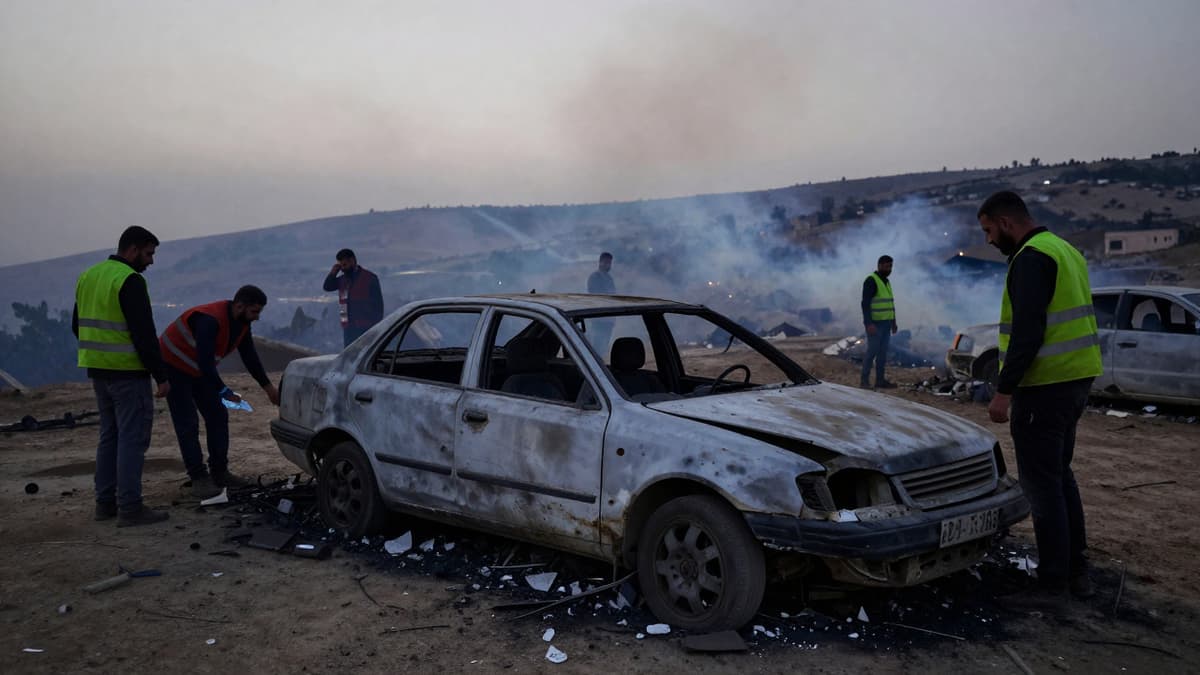
Three journalists, including Ali Shuaib of Al Manar, were killed in an Israeli strike. Israel labels him a terrorist, while Lebanon condemns the act as a war crime.
In a devastating incident occurring on March 28, 2026, an Israel strike in southern Lebanon killed three journalists, including Ali Shuaib, a reporter for the Hezbollah-run Al Manar television network. The attack has ignited immediate condemnation from Lebanese leadership and international press groups, who view the targeting of media workers as a blatant violation of international humanitarian law.
The Hezbollah-owned Al Manar network confirmed that its journalist Ali Shuaib was killed when an Israeli strike targeted the vehicle he was occupying. In a report describing the deceased reporter, Al Manar honored Ali Shuaib as an "icon of resistance media." Conversely, the Israeli military issued a statement accusing Ali Shuaib of operating under the "guise of a journalist" while functioning as a terrorist who was exposing locations of Israeli soldiers in southern Lebanon.
Two other journalists, siblings Fatima and Mohammad Ftouni, were also killed in the same strike, according to the pro-Iran and pro-Hezbollah Al Mayadeen channel. The Lebanese presidency immediately characterized the event as a "blatant crime," asserting that the aggression violated the most basic rules of international laws and the laws of war. The presidency emphasized that targeting press reporters, who are civilians performing professional duties, constitutes a breach of these fundamental legal standards.
While the Israeli statement detailed accusations against Ali Shuaib, it notably failed to mention the other two journalists killed in the incident. This omission stands in stark contrast to the statements from the victims' colleagues and family members, who focused on the loss of civilian lives and the failure of protective measures.
Lebanon's information minister, Paul Morcos, addressed the situation at a press conference, declaring that the government would file a formal complaint with the UN Security Council. Morcos described the incident as a "deliberate and blatant war crime against the media and the mission of journalism." He reiterated that Lebanon adheres to international agreements prioritizing the positive distinction for journalists, ensuring their protection and neutrality during times of war.
The Committee to Protect Journalists (CPJ) has launched an investigation into the attack. In a statement, the CPJ affirmed that "journalists are not legitimate targets, regardless of the outlet they work for." The organization highlighted a disturbing trend, stating, "We have seen a disturbing pattern in this war and in the decades prior of Israel accusing journalists of being active combatants and terrorists without providing credible evidence."
The human toll of the strike was brought into sharp focus by survivors and colleagues at the scene. Jamal Al-Gharabi, a colleague of the Ftounis on Al Mayadeen, stood next to the charred remains of the vehicle where the three journalists died. Al-Gharabi identified the vehicle as a civilian car that had been struck by multiple missiles.
Holding up a torn bullet-proof vest marked "press" in Arabic, Al-Gharabi spoke with visible emotion. "This vest was supposed to protect my colleagues," he said, his voice breaking as he shouted, "Yes, this vest was supposed to protect them!" He then picked up another vest belonging to Fatima Ftouni, questioning the utility of such protection against such force. "What can this vest do in the face of Israel's aggression?" Al-Gharabi asked, calling out for the international laws that are supposed to protect journalists and civilians.
This scene mirrored a tragic event from two years prior. Fatima Ftouni had survived an Israeli strike in October 2024 that hit a compound housing 18 journalists in southern Lebanon, killing two journalists and a media worker. In a video from that time, she had stood before a destroyed car, holding her helmet, press vest, and microphone, stating, "This is what remains of my vest, my helmet... and the weapon that we carry."
The father of the Ftouni siblings also appeared in footage posted by Al Mayadeen, expressing his pride despite his grief. "As a father to them, I hold my head up high," he said. Although his heart was in pain and he was filled with tears, he declared that they would not be defeated or broken. He affirmed that the walk continues despite the tragedy.
The incident occurs within the context of an escalating Israeli offensive against the Iran-allied Hezbollah militant group in southern Lebanon. The military's assertion that Ali Shuaib was a terrorist operating under a journalist's guise adds a contentious layer to the ongoing conflict. The accusation of journalists serving as intelligence assets for militant groups has been a recurring theme in the region, often leading to severe diplomatic friction and claims of targeted killings.
The divergence in narratives is stark: while the Israeli military justifies the strike by alleging combatant status for the reporter, the Lebanese government and international press organizations maintain the absolute civilian status of the victims. The call for a UN Security Council complaint signals that Lebanon intends to seek international legal recourse, potentially further straining diplomatic relations between the involved parties.
As the investigation by the Committee to Protect Journalists proceeds, the focus remains on whether the pattern of accusations without credible evidence will continue to define the security environment for media workers in the region. The destruction of the protective gear and the loss of experienced reporters like Ali Shuaib and the Ftounis serve as a grim testament to the dangers faced by those documenting the conflict.
Lebanon's Commitment to UN Security Council Action Lebanon's decision to file a formal complaint with the UN Security Council signals a potential escalation in diplomatic efforts to hold Israel accountable for alleged war crimes against the press. Given the stated "disturbing pattern" cited by the CPJ and the repeated accusations of targeting without evidence, future UN resolutions may increasingly focus on the protection of media workers in conflict zones. If international consensus fails to materialize quickly, the region could see a continued rise in targeted attacks on journalists, further eroding the safety of news gathering and potentially leading to a de facto censorship of the conflict's realities. The long-term impact suggests that without stronger enforcement of international humanitarian law, the environment for journalism in southern Lebanon may become untenable for local and international reporters alike.
Jun 8, 2026 02:17 UTC
Magnitude 7.8 Quake Shakes Philippines, Urging Immediate Evacuations
Join 50,000+ readers getting the global briefing every morning.
No spam. Unsubscribe anytime.
Jun 8, 2026 02:17 UTC
Magnitude 7.8 Quake Shakes Philippines, Urging Immediate Evacuations
Jun 8, 2026 00:51 UTC
Trump Claims Iran Nuclear Deal Imminent Despite Diplomatic Fractures
Jun 8, 2026 00:47 UTC
Iran Fires Missiles at Israel After Beirut Strike
Jun 7, 2026 22:38 UTC
Congress Party Claims Unity for INDIA Bloc Delhi Meeting


