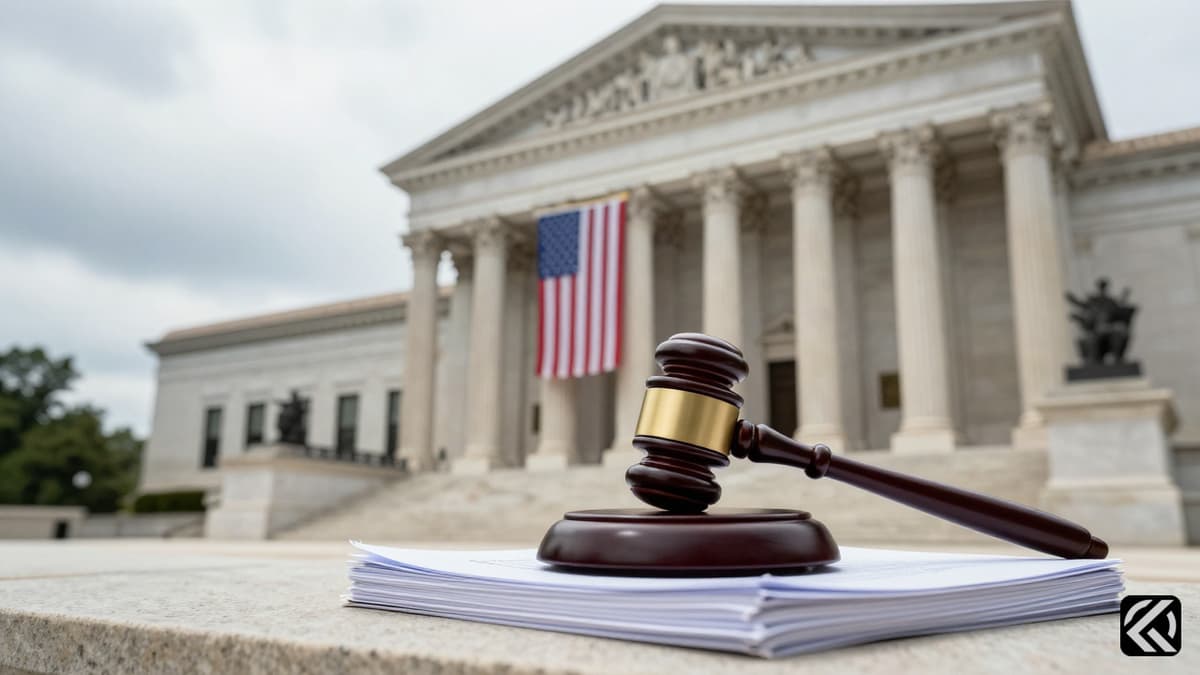
Liberals seek to extend their hold on Wisconsin's highest court as Judge Chris Taylor faces conservative Maria Lazar in a pivotal race defining the state's future.
One year after Elon Musk's high-profile but unsuccessful intervention, Democrats are attempting to secure another victory for their cause in the Wisconsin Supreme Court election. The contest on Tuesday features liberal Judge Chris Taylor and conservative Judge Maria Lazar competing to replace retiring Justice Rebecca Bradley. While the race is nonpartisan, the outcome will determine if liberals can extend their current 4-3 majority to a 5-2 hold on the state's highest court.
The election has garnered less attention than the previous spring 2025 contest, which became the most expensive judicial race in U.S. history. However, local leaders warn that the stakes remain high. Devin Remiker, chair of the Wisconsin Democratic Party, emphasized the need for a pro-democracy majority on the bench through the upcoming presidential election and into 2030. This election serves as a critical test of Democratic enthusiasm and Republican turnout capabilities in a battleground state without President Donald Trump on the ballot.
Top figures in the Democratic Party have actively supported Taylor's campaign. Former US Ambassador to Japan Rahm Emanuel visited the state, while former Transportation Secretary Pete Buttigieg, Senators Mark Kelly and Chris Murphy, and former President Barack Obama have either campaigned or issued fundraising appeals. Despite this high-profile backing, the race remains competitive in the polls. A Marquette Law School poll from mid-March found 53% of voters undecided, with Taylor leading Lazar 23% to 17%.
Financial resources have played a decisive role in the Maria Lazar vs Chris Taylor dynamic. Taylor, a former state legislator and policy director for Planned Parenthood of Wisconsin, entered the race in May and raised more than $5.6 million. In contrast, Lazar, a former assistant state attorney general who defended the Scott Walker administration's Act 10, raised nearly $900,000 after entering the race in the fall. Total spending in this race has topped $6 million, a figure significantly lower than the $80 million poured into the previous year's contest. GOP strategist Mark Graul noted that the resource disparity is a major warning sign for conservatives.
The candidates clashed directly during their lone debate regarding sensitive social and legal issues. The discourse focused heavily on abortion rights following the state Supreme Court's recent strike down of the state's 176-year-old abortion ban. Lazar, who supports a 20-week ban, argued that the decision should be left to the legislature rather than the courts, labeling her stance a compromise. Taylor condemned this position as tragic, highlighting the risks for victims of rape and incest and women who have died due to lack of access to care.
Beyond reproductive rights, the candidates also discussed election integrity just days after President Trump signed an executive order targeting mail-in voting. Taylor expressed concern over potential vote suppression efforts, advocating for a strong Supreme Court to hold the federal government accountable. Lazar, conversely, pledged to uphold the state's voter ID law, which was approved by Wisconsin voters last year. She maintained that Wisconsin elections are safe and secure, though she disagreed with certain federal efforts to restrict early and mail-in voting.
The Wisconsin Supreme Court election comes amidst a liberal winning streak in the state's judicial races that began in 2020. With conservative Justice Annette Ziegler also announcing her retirement, a seat will be up for grabs in 2027. If Taylor wins, liberals would solidify their control, potentially cementing their hold on the court through the end of the decade. Conversely, conservative strategists like Graul suggest that future candidates must better appeal to suburban voters to reverse the trend.
Bradley's Departure Signals Critical Political Shifts
Retiring Justice Rebecca Bradley warned of an "alarming shift" toward "bitter partisanship" as she left the bench, urging the conservative movement to address its failures. Her successor's retirement and the ongoing contest between Lazar and Taylor suggest that the court's composition will remain a central point of contention. If Taylor secures victory, the liberal majority will expand to 5-2, likely insulating their decisions from conservative challenges for years. This shift implies that future rulings on social and legal issues in Wisconsin will lean heavily toward liberal precedents, potentially forcing Republicans to recalibrate their judicial strategy for the 2027 election to regain influence. The trajectory set by this Tuesday's vote will likely dictate the judicial landscape of the state for the remainder of the decade.
Jun 8, 2026 02:17 UTC
Magnitude 7.8 Quake Shakes Philippines, Urging Immediate Evacuations
Jun 8, 2026 00:51 UTC
Trump Claims Iran Nuclear Deal Imminent Despite Diplomatic Fractures
Jun 8, 2026 00:47 UTC
Iran Fires Missiles at Israel After Beirut Strike
Jun 7, 2026 22:00 UTC
US, Iran Peace Hops Fade 100 Days Into War
Jun 8, 2026 04:15 UTC
Trump Urges Netanyahu to Halt Iran Strike for Peace