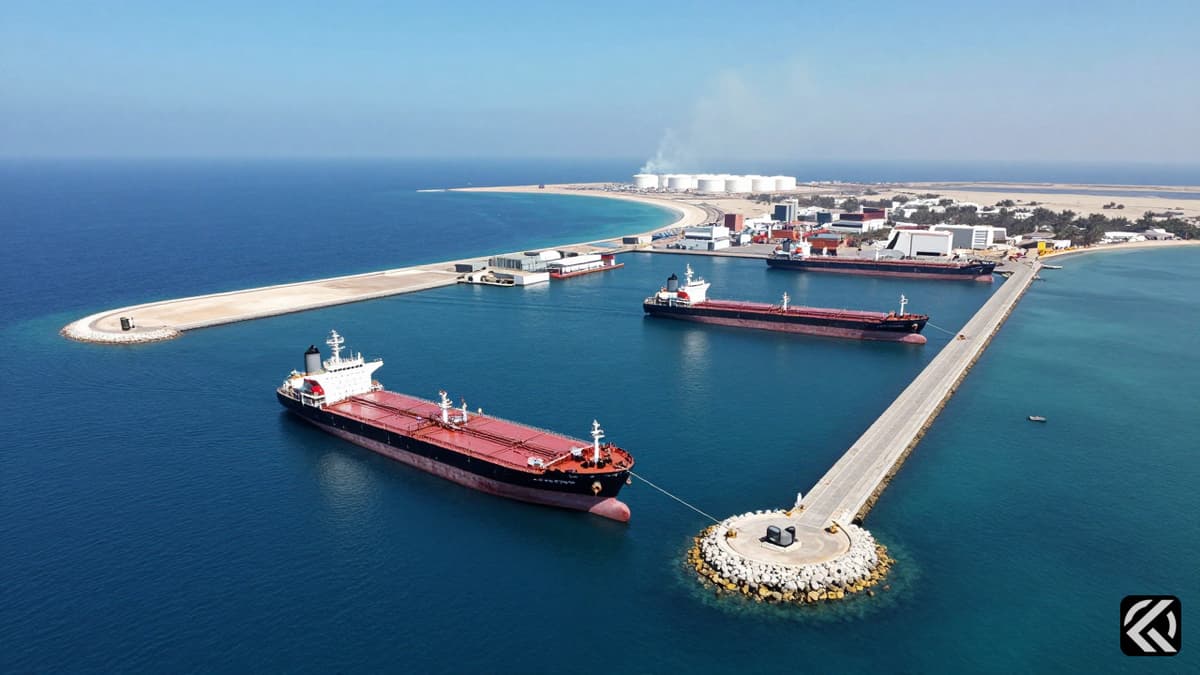
US forces targeted military assets on Kharg Island without damaging oil infrastructure, intensifying geopolitical stakes as Tehran prepares defenses against potential escalation.
US forces executed strikes against military targets on the critical Iranian oil export hub of Kharg Island, though officials clarify that the specific oil facilities were not hit. This action occurred just days before President Donald Trump set an 8 p.m. ET deadline for Iran to open the Strait of Hormuz, heightening regional anxieties. While the US aims to pressure Tehran, Vice President JD Vance acknowledged the strikes but insisted they do not represent a shift in strategy regarding the upcoming ultimatum.
In response to the bombing, Iranian state-affiliated media reported that the island's infrastructure remains largely operational. Citing local sources, reports indicate that maritime facilities, which are vital for the nation's economy, suffered little damage. Despite the US claiming hits on 90 targets during a previous strike in March, including naval mine storage and missile bunkers, current assessments suggest the core export capabilities are preserved.
The island of Kharg serves as the primary economic lifeline for Tehran, processing approximately 90% of the country's crude oil exports. This five-mile stretch of land, roughly a third the size of Manhattan, features deep-water jetties capable of accommodating massive oil supertankers. A declassified CIA document from 1984 previously labeled these facilities as "the most vital in Iran's oil system," noting that their continued operation is essential for the nation's economic well-being.
Iran has taken significant steps to prepare for potential US aggression. Parliament Speaker Mohammad Bagher Ghalibaf warned in March of enemies preparing to occupy one of the country's islands. Consequently, intelligence sources report that Iran has laid traps and moved additional air defenses and personnel to the island. The region now hosts layered defenses, including the recent deployment of shoulder-fired, surface-to-air guided missile systems known as MANPADs.
The US has targeted the island before. In March, President Trump declared that the military had bombed every military target and threatened to attack oil infrastructure if the Strait remained blocked. Video footage geolocated by CNN showed explosions and black smoke at the island's airport facilities. Trump noted that while Kharg was "not high on the list," he could change his mind instantly. His interest in the location dates back to 1988, where he stated he would invade the island to retaliate against attacks on US forces.
Internal White House discussions reveal a stark contrast in perspectives on the island's strategic value. Officials believe that capturing Kharg Island would "totally bankrupt" the Islamic Revolutionary Guard Corps and could potentially end the war swiftly. However, a significant number of administration members remain wary of such a move due to the requirement of deploying a significant number of ground troops.
Alternative export routes exist but remain limited. The International Energy Agency (IEA) notes that while Iran inaugurated the Jask oil terminal in 2021, this option is not yet considered a viable large-scale replacement for the Kharg Island hub. Storage capacity on the island is estimated at roughly 30 million barrels, with about 18 million barrels currently stored there.
The threat to the island's infrastructure has been vocalized by regional adversaries. Israeli opposition leader Yair Lapid recently declared that destroying the terminal would "cripple Iran's economy and topple the regime," asserting that Israel "must destroy all of Iran's oil fields and energy industry on Kharg Island." Despite these threats and the recent US strikes, the immediate impact on Iran oil exports appears contained, with reports confirming that operations continue as normal.
The convergence of US military pressure and Iranian fortifications suggests a prolonged standoff over the island's control. If Iran continues to block the Strait of Hormuz despite the threats and the recent strikes on military assets, the likelihood of further escalation against the island's infrastructure increases significantly. The administration's hesitation regarding a ground invasion, driven by the need for substantial troop deployment, may limit immediate drastic measures, leaving the island in a state of heightened military tension while the US weighs the consequences of a direct confrontation with Iran's primary economic artery.
Jun 8, 2026 02:17 UTC
Magnitude 7.8 Quake Shakes Philippines, Urging Immediate Evacuations
Join 50,000+ readers getting the global briefing every morning.
No spam. Unsubscribe anytime.
Jun 8, 2026 02:17 UTC
Magnitude 7.8 Quake Shakes Philippines, Urging Immediate Evacuations
Jun 8, 2026 00:51 UTC
Trump Claims Iran Nuclear Deal Imminent Despite Diplomatic Fractures
Jun 8, 2026 00:47 UTC
Iran Fires Missiles at Israel After Beirut Strike
Jun 7, 2026 22:38 UTC
Congress Party Claims Unity for INDIA Bloc Delhi Meeting


