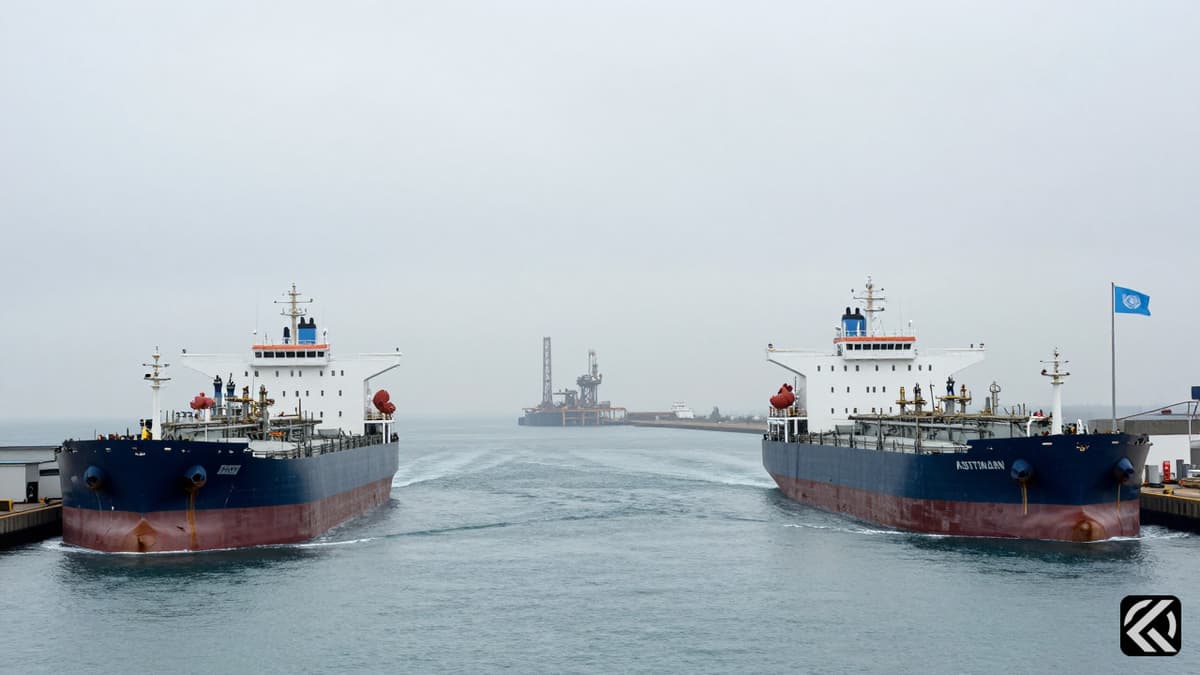
Moscow and Beijing block a UN Security Council effort to reopen the strategic Strait of Hormuz, challenging Gulf-backed moves and US demands as maritime tensions escalate globally.
Just hours before a deadline set by US President Donald Trump, Russia and China exercised their power to block a UN resolution aimed at reopening the critical Strait of Hormuz. The UN Security Council veto was cast on Tuesday, dealing a significant blow to Gulf-backed efforts to restore navigation through the waterway. This diplomatic failure occurred despite the resolution securing 11 votes in favor, though Pakistan and Colombia chose to abstain from the final tally.
The proposed measure, introduced by Bahrain, sought to address an existential threat to global energy supplies caused by an Iranian blockade. While the resolution underwent multiple revisions to avoid a veto, including scaling back language from authorizing military action to encouraging defensive coordination, it still failed to gain the necessary consensus. The failure leaves the waterway in a state of continued disruption, with roughly one-fifth of global oil supply typically passing through the strait.
Bahrain's Foreign Minister, Abdullatif bin Rashid Al Zayani, expressed deep concern following the vote, stating that the rejection sends the wrong signal to the world. He warned that inaction risks undermining efforts to safeguard global waterways. The proposal's trajectory saw it evolve from a draft calling for "all necessary means" to a final version merely encouraging countries reliant on the strait to coordinate defensive measures, such as escorting commercial vessels.
In their opposition, the Russian and Chinese envoys argued that the Security Council's priority should be an immediate cessation of hostilities rather than measures focused solely on maritime security. Their stance placed the blame squarely on the United States and Israel for escalating the Iran-US Israel conflict. They maintained that the focus on reopening the strait was premature given the broader context of rising tensions.
The standoff has intensified as Iran's blockade continues to rattle global energy markets. Gulf nations, many of which rely heavily on the route for oil and gas exports, have expressed growing alarm. Bahrain, which hosts the US Fifth Fleet, has been at the forefront of calling for international intervention, viewing the disruption as a direct threat to their economic stability.
President Trump had issued repeated warnings regarding the situation, demanding that Iran reopen the waterway immediately. He cautioned that a failure to comply could lead to a large-scale military response. The President explicitly stated that the country could be "taken out in one night" if a deal is not reached, signaling a high-stakes environment where diplomatic avenues are increasingly overshadowed by the threat of force.
The vote highlights the deep divisions within the UN regarding how to handle the crisis. While the US and its Gulf allies push for a return to normalcy through international coordination, the permanent members of the Security Council with veto power remain at odds over the root causes of the conflict.
The immediate aftermath of the veto suggests a continued period of instability for global shipping. With the UN unable to mandate a solution, the responsibility for navigation safety falls to bilateral or coalition efforts among nations reliant on the route. The diplomatic failure underscores the complexity of resolving a conflict where one side views military action as a necessary deterrent, while the other views such measures as the primary cause of escalation.
As the deadline for US action approaches without a UN mandate, the risk of a direct military confrontation increases. The refusal of Russia and China to support the resolution, citing US and Israeli responsibility, indicates that multilateral consensus on this issue may remain elusive for the foreseeable future.
The veto by Russia and China leaves Gulf nations in a precarious position as they navigate an unresolved crisis. With the Strait of Hormuz remaining blocked and diplomatic channels stalled, the economic implications for energy-dependent regions are severe. Future developments may hinge on whether the threatened military actions materialize or if new diplomatic frameworks emerge to bypass the current Security Council deadlock. The long-term impact depends on whether the international community can reconcile the differing narratives regarding the source of the conflict and the appropriate means to ensure safe passage.
Jun 8, 2026 02:17 UTC
Magnitude 7.8 Quake Shakes Philippines, Urging Immediate Evacuations
Jun 8, 2026 00:51 UTC
Trump Claims Iran Nuclear Deal Imminent Despite Diplomatic Fractures
Jun 8, 2026 00:47 UTC
Iran Fires Missiles at Israel After Beirut Strike
Jun 7, 2026 22:00 UTC
US, Iran Peace Hops Fade 100 Days Into War
Jun 8, 2026 04:15 UTC
Trump Urges Netanyahu to Halt Iran Strike for Peace


