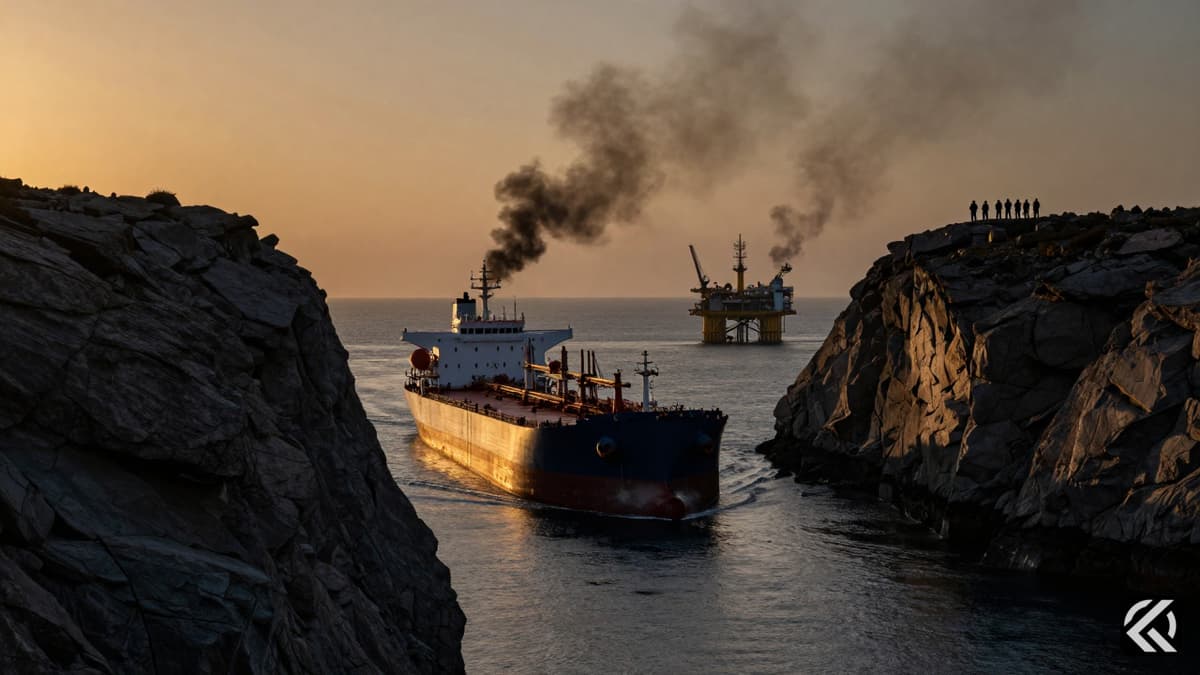
As tensions reach a breaking point, Donald Trump issues a stark warning regarding the future of Iran's civilization and the global energy supply in a critical 2026 escalation.
President Donald Trump issued a severe warning on Tuesday, April 7, 2026, stating that "a whole civilisation will die" if Iran does not accept his deal and reopen the Strait of Hormuz before his 8 p.m. deadline. The U.S. President extended the ultimatum multiple times in recent days, claiming progress in negotiations, but has now threatened catastrophic consequences if the Iranian leadership does not comply with the request to reopen the critical waterway. In response, Tehran warned that any American military action would trigger a counter-response leaving the U.S. and its allies without oil and gas for years.
This high-stakes confrontation marks a significant 2026 escalation in regional hostilities, with Vice-President J.D. Vance stating from Hungary that the U.S. possesses undeclared tools for use against Iran. Although the White House initially clarified that Vance did not imply nuclear use, the rhetoric remains dangerously volatile. The U.S. had previously transmitted a ceasefire proposal through Pakistan, which Iran's Foreign Ministry rejected, with President Trump describing Iran's counter-offer as "not good enough." Meanwhile, the Islamic Revolutionary Guards Corps (IRGC) declared that the Strait of Hormuz would never return to its previous status if the U.S. crosses its red lines.
The situation has rapidly deteriorated into active warfare, with reports from Tehran indicating that the U.S. and Israel have already begun attacking key infrastructure. Prime Minister Benjamin Netanyahu confirmed that Israeli forces targeted bridges and railways utilized by the Revolutionary Guards. Iranian state media corroborated these claims, with the Mizan news agency reporting strikes on a bridge in Qom, a rail bridge in central Iran, and tracks outside Tehran. Furthermore, the Mehr news agency confirmed that strikes occurred on Kharg Island, a vital export terminal for Iran's oil and gas, where residents heard explosions following the "American-Zionist enemy" attacks.
In a defiant video statement, Brig. Gen. Majid Mousavi, commander of the IRGC Aerospace Force, announced that the conflict has entered a new phase. He declared the deployment of dual missile launchers, specifically Fateh and Khaybar-shekan missiles, to double the impact of all previous strikes. The IRGC stated that this escalation represents a dramatic increase in military capability, promising to target U.S. infrastructure and interests across the region. On the same day, the Guards launched the 99th wave of attacks against U.S. bases in the Gulf and command centers in Israel.
The economic impact of these actions is already being felt, with the IRGC identifying specific targets for destruction. They reported that the largest petrochemical complex in the Al Jubail region of Saudi Arabia, owned by Sadara, ExxonMobil, and Dow Chemical, was effectively targeted. Additionally, the petrochemical complex operated by Chevron Phillips in Saudi Arabia's Al Juaima'h was hit. These attacks underscore the severity of the potential disruption to global energy supplies, aligning with the IRGC's warning that the region could be deprived of oil and gas for years.
Amidst the threat of mutual destruction, President Trump suggested that the geopolitical landscape might shift toward "Complete and Total Regime Change" if his ultimatum succeeds. He wrote on social media that while he does not want a civilization to perish, the outcome is probable without intervention. He posited that if "different, smarter, and less radicalized minds prevail," the region could witness a "revolutionarily wonderful" future. This statement implies a broader strategic goal beyond the immediate reopening of the waterway, hinting at a desire to fundamentally alter the Iranian leadership structure to ensure long-term stability.
The White House attempted to calm the nuclear rhetoric surrounding the crisis after confusion arose from Vice-President Vance's comments. A Rapid Response team on X clarified that Vance's mention of "tools" did not imply a nuclear strike, labeling the speculation as false. However, the IRGC's threat that a response would "extend beyond the region" suggests that the conflict is no longer confined to localized skirmishes. The deployment of dual missile units indicates a move toward sustained, high-intensity warfare aimed at degrading the energy infrastructure that supports the U.S. and its global allies.
As the deadline approaches, the diplomatic and military pressures are at their peak. The U.S. stance remains firm that the deal must be accepted, while Iran maintains that the status quo regarding the Strait of Hormuz is non-negotiable. The destruction of critical petrochemical facilities in Saudi Arabia and the targeted strikes on Iranian infrastructure signal that both sides are prepared for a prolonged and damaging conflict. The IRGC's assertion that the war is entering a new stage with doubled strike capabilities suggests that the coming hours could define the geopolitical balance for years to come.
The Strait of Hormuz Remains the Flashpoint The immediate outcome of this ultimatum will dictate the trajectory of the global energy market and the safety of the U.S. military presence in the Middle East. If the Iranian leadership does not comply, the IRGC has explicitly vowed to maintain a blockade-like status where the waterway never returns to its previous condition, effectively cutting off supply lines for the U.S. and its partners. The targeted destruction of major petrochemical complexes owned by American corporations like ExxonMobil and Chevron indicates that the economic repercussions will be severe and long-lasting. Without a resolution, the "new stage of the war" described by the IRGC could lead to a multi-year energy crisis, destabilizing global markets and extending the conflict far beyond the immediate region.
Jun 8, 2026 02:17 UTC
Magnitude 7.8 Quake Shakes Philippines, Urging Immediate Evacuations
Jun 8, 2026 00:51 UTC
Trump Claims Iran Nuclear Deal Imminent Despite Diplomatic Fractures
Jun 8, 2026 00:47 UTC
Iran Fires Missiles at Israel After Beirut Strike
Jun 7, 2026 22:00 UTC
US, Iran Peace Hops Fade 100 Days Into War
Jun 8, 2026 04:15 UTC
Trump Urges Netanyahu to Halt Iran Strike for Peace


