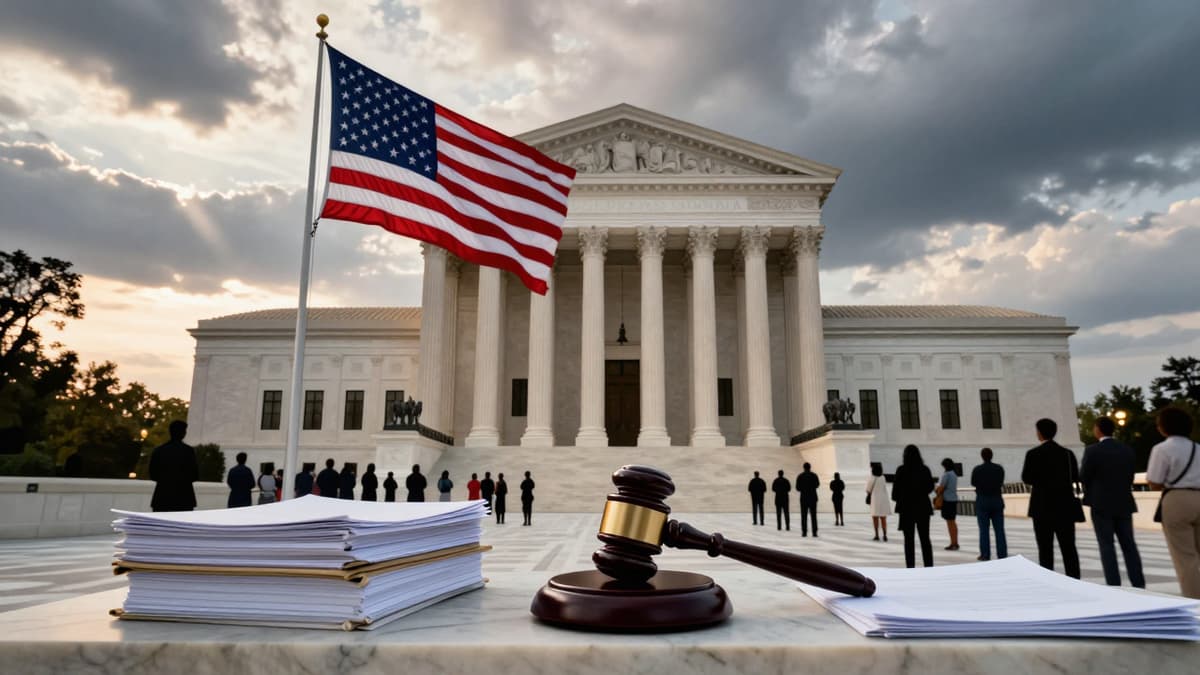
The Supreme Court just delivered a major First Amendment victory for counselors, overturning Colorado's conversion therapy ban on Transgender Day of Visibility.
The Supreme Court issued a pivotal Supreme Court ruling on Tuesday, a day specifically designated as Transgender Day of Visibility, overturning Colorado's ban on conversion therapy. Justice Neil Gorsuch authored the majority opinion, arguing that the state law violated the First Amendment by restricting counselors' speech. The decision arrives during a period of heightened political turmoil for transgender Americans, just as President Donald Trump returns to office to reverse recent federal protections.
The ruling directly challenges Colorado's 2019 legislation, which sought to protect gay and transgender youth from a scientifically discredited practice known as conversion therapy. This practice has been linked to increased risks of suicide, depression, anxiety, and high blood pressure. The law was challenged by Kaley Chiles, a licensed counselor in Colorado, who argued the statute infringed upon her right to engage in "faith-informed counseling." Chiles, represented by the Alliance Defending Freedom, asserted she would only engage in such counseling when clients sought it out and disavowed controversial methods like electric shock therapy.
Justice Gorsuch's opinion directly rebuts the dissent's argument that therapists act primarily as healthcare professionals rather than speakers. Gorsuch wrote that the dissent may believe state-imposed orthodoxies pose few dangers, but their policy is not the First Amendment's. He emphasized that the Court had interpreted the First Amendment to limit the State's ability to regulate medical providers who treat patients with speech, rejecting the notion that talk therapy should be regulated like a medical procedure in the same vein as physical treatments.
Justice Ketanji Brown Jackson, joined in dissent, offered a fiery warning about the long-term consequences of the decision. She described the majority as "playing with fire," fearing the people of the country will get burned by the ruling. Jackson argued that the Court is on a "slippery slope" where the First Amendment is being interpreted to bless a risk of therapeutic harm to children. She predicted a scenario where the medical system unravels as licensed professionals, including psychiatrists and talk therapists, wield a newfound constitutional right to provide substandard care.
Justice Elena Kagan, joined by Justice Sonia Sotomayor, wrote a concurring opinion clarifying the narrow scope of the decision. She stressed that the problem with Colorado's law was its "content-based" nature, which explicitly focused on anti-trans therapy rather than being viewpoint-neutral. Kagan noted that a hypothetical law banning affirming therapy would likely face similar scrutiny. This distinction explains why the liberal justices joined the majority, as they view the ruling as specific to Colorado's non-neutral approach rather than a blanket endorsement of state regulation of medical speech.
Steve Vladeck, a CNN Supreme Court analyst, noted that Kagan's opinion reveals a key clue: the justices are not averse to states regulating the speech of medical professionals, provided the regulation does not prefer one viewpoint over another. This nuance suggests that future regulations must be carefully crafted to avoid the pitfalls identified in the Colorado statute.
The decision comes amidst a broader landscape of legal and political headwinds for the transgender community. President Trump ran for reelection on a campaign promising to end what he described as "transgender lunacy." His administration and several conservative states have already moved to roll back gains made by LGBTQ advocates in recent years. As the Court prepares to release another key ruling regarding the participation of transgender athletes on teams aligning with their gender identity, the current decision sets a significant precedent for the intersection of medical regulation and free speech.
The Supreme Court ruling establishes a complex boundary for states attempting to regulate medical providers who utilize speech in their treatments. While the majority invalidated Colorado's specific ban for failing to remain viewpoint-neutral, the implications suggest a contentious future for state-level health regulations. If states seek to ban harmful practices in the future, they must do so through viewpoint-neutral laws or malpractice litigation rather than broad prohibitions on specific types of therapeutic speech. As President Trump's administration continues to challenge federal protections, the legal battle over transgender rights and the definition of therapeutic speech is likely to intensify, potentially leading to a fragmented landscape of medical regulation across different states.
Jun 8, 2026 00:51 UTC
Trump Claims Iran Nuclear Deal Imminent Despite Diplomatic Fractures
Jun 8, 2026 00:47 UTC
Iran Fires Missiles at Israel After Beirut Strike
Jun 7, 2026 22:00 UTC
US, Iran Peace Hops Fade 100 Days Into War
Jun 7, 2026 20:57 UTC
Iran Strikes Israel: IRGC Promises Week of Continuous Offensive
Jun 8, 2026 02:28 UTC
Trump Walks Out of Meet the Press After Rejecting Evidence Demands


