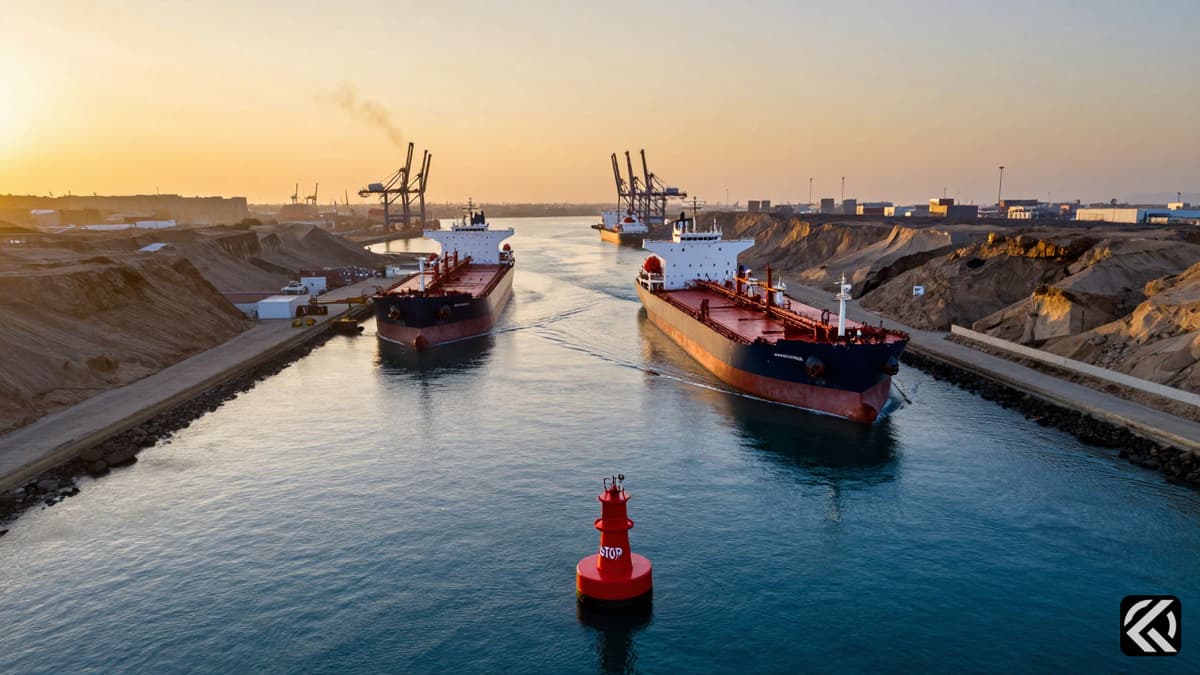
A tense standoff between the U.S. and Iran has severed traffic through the Strait of Hormuz, causing global oil prices to spike sharply as diplomatic efforts to restore peace remain fragile.
On Sunday, April 19, 2026, a critical U.S.-Iran standoff escalated as military friction prevented commercial tankers from transiting the strategic Strait of Hormuz. This blockade, a vital choke point for global energy supplies, triggered an immediate and severe reaction in financial markets. Trading on the Chicago Mercantile Exchange resumed late Saturday, revealing that the price of U.S. crude oil had surged 6.4% to $87.88 per barrel. Simultaneously, the international benchmark, Brent crude, climbed 6.5% to $96.25 per barrel, marking a significant spike from previous days.
The market volatility followed a chaotic sequence of events. For over two days, markets oscillated between hopes of peace and sudden disappointments. On Friday, Iran had announced it would fully reopen the passage to commercial traffic, a move that initially caused crude prices to plunge more than 9%. However, the stability was short-lived. By Sunday, both the U.S. and Iran accused the other of violating a ceasefire deal through attacks on ships over the weekend, effectively reopening the threat to the waterway. U.S. President Donald Trump confirmed that the U.S. military had seized an Iranian cargo ship attempting to run the blockade, while Iran responded by declaring it would not participate in a second round of peace talks despite renewed U.S. threats of airstrikes.
Amidst the rising economic pressure, diplomatic maneuvering intensified through Pakistan's unique "hybrid regime" of military and civilian coordination. Field Marshal Asim Munir, Pakistan's powerful military chief, embarked on a three-day trip to Tehran, allegedly carrying U.S. proposals for a second round of peace talks. Simultaneously, Pakistan Prime Minister Muhammad Shehbaz Sharif conducted a whirlwind diplomatic tour across Saudi Arabia, Qatar, and Turkey, alongside his foreign minister. During a 45-minute telephonic conversation on Sunday, Sharif reaffirmed Pakistan's "honest" and "sincere" efforts to advance regional peace, thanking President Masoud Pezeshkian for the high-powered Iranian delegation led by Speaker Mohammed Bagher Ghalibaf and Foreign Minister Abbas Araghchi, which had visited Islamabad in mid-April.
The economic ramifications of this geopolitical tension are profound. Mohammad Reza Aref, Iran's first vice president, emphasized that global fuel prices could only stabilize once economic and military pressures on Iranian oil exports cease. Aref wrote on X, "One cannot restrict Iran's oil exports while expecting free security for others," framing the crisis as a binary choice between a free oil market for all or significant costs for everyone. This rhetorical stance underscores the depth of the Strait of Hormuz crisis, where the control of this waterway is wielded as a direct lever in the conflict.
Despite the heightened rhetoric, physical movement through the channel continued, albeit precariously. Data from shipping analytics firm Kpler indicated that more than 20 vessels passed the Strait of Hormuz on Saturday, representing the highest number of crossings since March 1. Among the ships that successfully navigated the passage on April 18 were five vessels that had recently loaded cargoes in Iran, ranging from oil products to metals. Three of these were liquefied petroleum gas carriers, with specific destinations including China and India. Additionally, the Indian-flagged vessel Desh Garima, carrying approximately 780,000 barrels of UAE's Das crude, was observed heading toward Sri Lanka.
While the physical flow of goods continues, the diplomatic path to a lasting solution remains obstructed. Iran has explicitly stated it is not planning to attend talks with the U.S. in Pakistan, a direct response to the escalation following the U.S. destroyer's attack on the Iranian cargo ship. The situation highlights a fragile equilibrium where military actions on the water threaten to derail diplomatic overtures, leaving global energy markets in a state of precarious anticipation.
Current developments suggest a volatile short-term outlook for global energy markets as the U.S.-Iran standoff shows no immediate sign of de-escalation. With Iran refusing further negotiations in Islamabad and the U.S. maintaining active enforcement of a blockade, the potential for continued disruptions to the Strait of Hormuz remains high. If the current trajectory holds, where military incidents override diplomatic channels, oil prices may remain elevated well beyond the current $96 per barrel mark, potentially destabilizing regional security further. However, the intense diplomatic focus by Pakistan's hybrid leadership indicates a continued, albeit difficult, pathway to a potential second round of talks, which could act as a catalyst for stabilizing the market if successful. The coming days will be critical in determining whether the "choice" laid out by Iranian leadership results in a free market or continued economic costs.
Jun 8, 2026 02:17 UTC
Magnitude 7.8 Quake Shakes Philippines, Urging Immediate Evacuations
Jun 8, 2026 00:51 UTC
Trump Claims Iran Nuclear Deal Imminent Despite Diplomatic Fractures
Jun 8, 2026 00:47 UTC
Iran Fires Missiles at Israel After Beirut Strike
Jun 7, 2026 22:00 UTC
US, Iran Peace Hops Fade 100 Days Into War
Jun 8, 2026 04:15 UTC
Trump Urges Netanyahu to Halt Iran Strike for Peace


