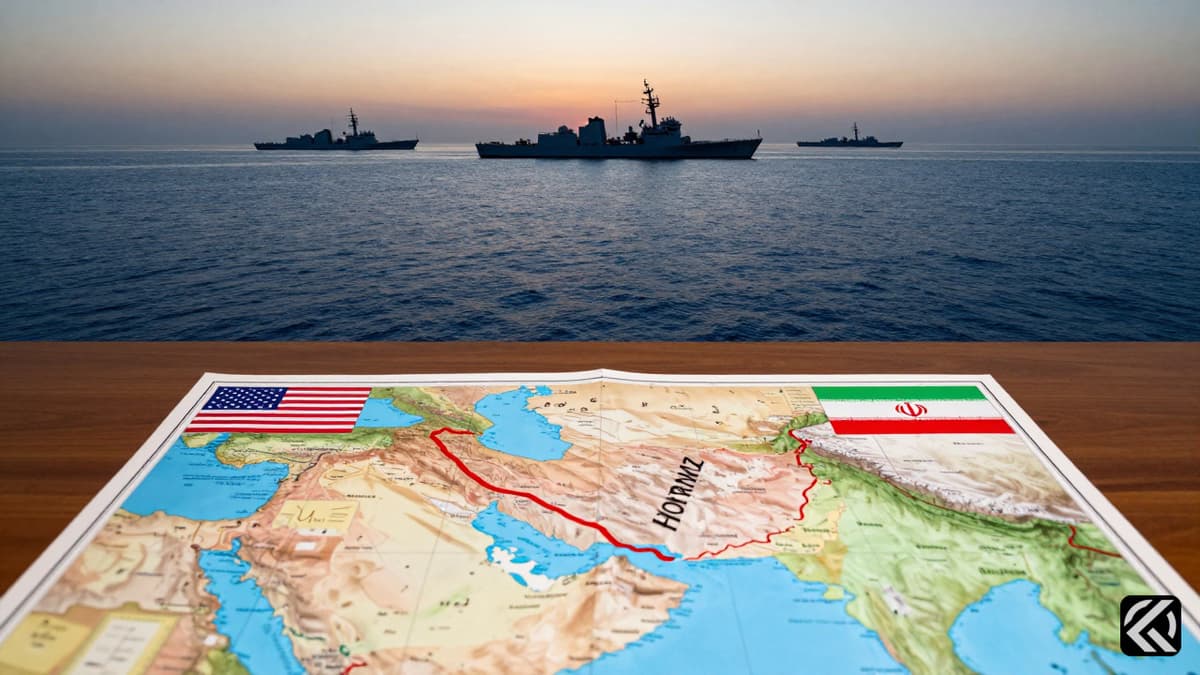
A defiant Iran challenges President Trump's ultimatums while a high-level American delegation prepares for renewed talks in Pakistan, raising global stakes over the Hormuz Strait.
A high-level American team is traveling to Pakistan for a second round of talks with Iran, even as President Donald Trump escalates his rhetoric with severe warnings. The delegation, which includes Vice President JD Vance, arrives amidst growing uncertainty regarding Iran's willingness to participate without specific concessions regarding the Hormuz Strait.
President Trump has adopted a belligerent tone, announcing dire consequences if Tehran does not agree to Washington's terms. In a recent social media post, he declared that the United States will "knock out every single Power Plant, and every single Bridge, in Iran" if a deal is not struck. This aggressive stance, which analysts describe as a potential war crime, contrasts sharply with the diplomatic efforts underway in Pakistan. Iran has not confirmed its team's return, citing a need for the US to lift the naval blockade and unfreeze assets before negotiations can proceed.
Confusion surrounds the composition of the US delegation, with reports initially stating Vance would not attend due to security concerns, only for the White House to confirm his participation. The Iranian President, Dr. Masoud Pezeshkian, countered the US narrative by accusing Washington of threatening assassinations while ignoring international laws. Despite the tension, Trump insists his team is negotiating with a moderate faction within the Iranian leadership, a view not shared by Tehran, which insists on respecting its red lines.
The current standoff follows a failed first round of talks that lasted only 21 hours. Critics and observers have noted the precarious nature of the situation, with one commentator on X describing the return to Pakistan as "restarting a microwave that already caught fire." The US President's strategy appears to rely on projecting instability to force a negotiation, a tactic that has drawn sharp criticism both domestically and internationally. According to senior administration officials cited by the Wall Street Journal, Trump believes his "unhinged" language, which included calling Iranian leaders "crazy bastards," is a language the Iranians would understand.
However, this approach has not deterred Teheran, which is staring down the US at the risk of further pulverization. The core of the disagreement remains the Hormuz Strait, where Iranian forces are accused by the US of firing on merchant ships in violation of a ceasefire agreement. Trump has claimed that the closure of the passage costs the US and other nations, yet he has also suggested the US loses nothing, noting that ships are headed to Texas and Louisiana. This conflicting messaging has added to the confusion regarding the US strategy.
Domestically, the President faces a mounting wave of criticism. MAGA supporters are reacting to rising gas prices, an issue Trump has attempted to downplay despite his boasts about energy self-sufficiency. Furthermore, allies of JD Vance are unhappy that the Vice President is being tasked with negotiations while simultaneously being undermined by the President's aggressive rhetoric. Some analysts argue that Trump's effort to "bulldoze Iran with threats and invective" is failing to achieve the desired outcome, particularly after the initial failure of talks.
The role of Pakistan in this diplomatic effort remains critical. Iranian military ruler Asim Munir recently completed a three-day visit to Teheran, which sources describe as apparently fruitless. Iran is reportedly ascertaining from Pakistan if its red lines will be respected before committing to a second round of talks. The White House has struggled to define the scope and brief of the US team, with the initial confusion over Vance's participation highlighting the lack of a cohesive strategy.
Secretary of State Marco Rubio, described as the country's lead diplomat, has been sidelined in the talks with Iran. Yet, a Wall Street Journal report indicates that Rubio privately acknowledged that Trump's aggressive language might actually bring the Iranians to the negotiating table. This divergence in perspective underscores the complex dynamics within the US administration as they navigate a crisis that Trump himself admits involves little American stake in the outcome, yet which he insists must be resolved through maximum pressure.
The situation remains volatile as the US team prepares to depart for Pakistan. The Iranian leadership continues to maintain that they will not engage until the US addresses their primary demands, which include lifting sanctions and unfreezing frozen assets. The US President's insistence that a deal is "very fair and reasonable" stands in stark contrast to the threats of destruction that follow if it is not accepted. The international community watches with concern as the diplomatic channel in Pakistan offers the only hope for de-escalation.
Predictive Analysis of Future Impacts If the US does not lift the naval blockade or address Iranian demands regarding sanctions, the stalemate is likely to persist, potentially escalating into further military confrontations in the region. The continued use of extreme rhetoric by President Trump may further alienate moderate factions within Iran, pushing the conflict toward a more radicalized stance. Meanwhile, domestic pressure in the US from rising gas prices and growing bipartisan criticism could force a recalibration of the administration's strategy, possibly leading to a more direct military engagement or a sudden, forced diplomatic resolution that prioritizes immediate security over long-term stability. Without a shift in the US approach, the risk of a broader regional conflict, particularly involving the critical Hormuz Strait, remains alarmingly high.
Jun 8, 2026 02:17 UTC
Magnitude 7.8 Quake Shakes Philippines, Urging Immediate Evacuations
Join 50,000+ readers getting the global briefing every morning.
No spam. Unsubscribe anytime.
Jun 8, 2026 02:17 UTC
Magnitude 7.8 Quake Shakes Philippines, Urging Immediate Evacuations
Jun 8, 2026 00:51 UTC
Trump Claims Iran Nuclear Deal Imminent Despite Diplomatic Fractures
Jun 8, 2026 00:47 UTC
Iran Fires Missiles at Israel After Beirut Strike
Jun 7, 2026 22:38 UTC
Congress Party Claims Unity for INDIA Bloc Delhi Meeting


