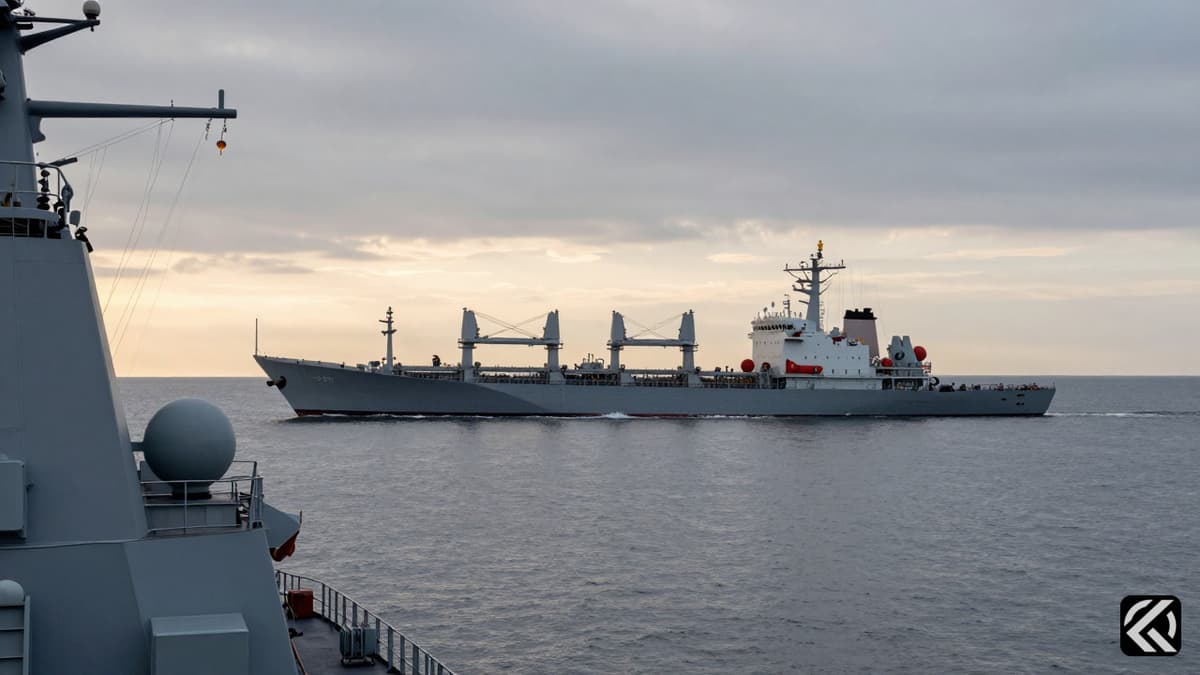
US President Trump and CENTCOM confirm the seizure of the Iranian-flagged vessel TOUSKA in the Gulf of Oman following a naval standoff and alleged refusal to comply with blockade orders.
US President Donald Trump announced on Sunday that the US Navy has forcibly seized the Iranian-flagged cargo ship TOUSKA, marking a significant escalation in the conflict near the Strait of Hormuz. The incident allegedly occurred in the Gulf of Oman after the vessel attempted to bypass a naval blockade without complying with orders to stop. In a statement posted on Truth Social, Trump described a confrontation where a US Navy guided missile destroyer, the USS Spruance, intercepted the ship and, after the crew refused to listen, allegedly blew a hole in the engine room to stop the vessel. The US Marines have since taken custody of the ship, which is currently under US Treasury sanctions due to a history of illegal activity. This announcement arrives as tensions remain high over the Strait of Hormuz, just as efforts to revive diplomatic talks between Washington and Tehran are underway.
The US Central Command (CENTCOM) subsequently issued a statement validating the US Navy seizure of TOUSKA, providing specific details on the enforcement of the naval blockade. According to CENTCOM, the USS Spruance intercepted the TOUSKA as it transited the north Arabian Sea at 17 knots, heading toward the Iranian port of Bandar Abbas. The US military stated that repeated warnings were issued over a six-hour period, during which the vessel allegedly failed to comply with orders to halt its progress. Following the interception, US Marines from the 31st Marine Expeditionary Unit boarded the non-compliant vessel. CENTCOM characterized the actions of US forces as "deliberate, professional, and proportional," noting that since the blockade began, 25 commercial vessels have been directed to turn around or return to Iranian ports.
However, a starkly different narrative has emerged from Tehran. Iranian state-linked media reported that its forces successfully foiled the alleged US attempt to seize the Iranian commercial vessel. Citing the semi-official Mehr news agency, Al-Jazeera reported that American forces deployed to the waters surrounding the Sea of Oman allegedly opened fire on the merchant ship to force it back into Iranian territorial waters. The report claims that with the "timely presence and rapid response of the IRGC naval units in support of the Iranian ship, the Americans were forced to retreat and flee the area." Notably, this Iranian account did not explicitly name the vessel involved, yet it directly contradicts the administration's claims regarding the outcome of the standoff.
The discrepancy between the official US account and the Iranian response highlights the volatile nature of the current situation. President Trump's initial post emphasized the CENTCOM naval blockade enforcement, stating that the US now has full custody of the TOUSKA and is currently inspecting the cargo on board. The president noted that the ship is under sanctions due to prior illegal activities. The US narrative suggests a decisive military action to enforce maritime law and sanctions, portraying the destruction of the engine room as a necessary measure to stop a non-compliant vessel. Conversely, the Iranian narrative frames the event as an aggressive act of terrorism that was repelled by their own naval units, suggesting a defensive victory rather than a successful US seizure.
This clash of narratives adds to the broader context of heightened US-Iran tensions Strait of Hormuz. The incident coincides with scheduled diplomatic efforts, raising questions about the feasibility of negotiations. Earlier, questions were raised regarding Trump's statement that US negotiators were scheduled to head to Pakistan on Monday for another round of talks with Iran. Currently, Tehran has not confirmed its participation in the next round of talks, leaving the diplomatic path uncertain amidst the military confrontation. The ongoing blockade has already resulted in 25 commercial vessels being redirected, demonstrating the immediate operational impact on maritime traffic in the region.
The immediate aftermath of the TOUSKA incident presents a complex challenge for US-Iran relations, as the military clash on the water runs parallel to fragile diplomatic channels. While the US asserts full custody and legal justification through sanctions and blockade enforcement, the Iranian claim of a successful retreat by their forces undermines the narrative of a unilateral US victory. The lack of confirmation from Tehran regarding the upcoming talks in Pakistan suggests that the crisis on the ground may stall or derail the potential for de-escalation through diplomacy. If the US maintains its stance on the blockade and the seizure, and Iran continues to assert that its naval units successfully repelled the attack, the region risks further escalation in the Strait of Hormuz. The interplay between the CENTCOM naval blockade operations and the diplomatic stalemate indicates that the immediate future will likely see continued high-alert naval presence and a significant strain on any prospects for immediate peace talks.
Jun 8, 2026 02:17 UTC
Magnitude 7.8 Quake Shakes Philippines, Urging Immediate Evacuations
Join 50,000+ readers getting the global briefing every morning.
No spam. Unsubscribe anytime.
Jun 8, 2026 02:17 UTC
Magnitude 7.8 Quake Shakes Philippines, Urging Immediate Evacuations
Jun 8, 2026 00:51 UTC
Trump Claims Iran Nuclear Deal Imminent Despite Diplomatic Fractures
Jun 8, 2026 00:47 UTC
Iran Fires Missiles at Israel After Beirut Strike
Jun 7, 2026 22:38 UTC
Congress Party Claims Unity for INDIA Bloc Delhi Meeting


