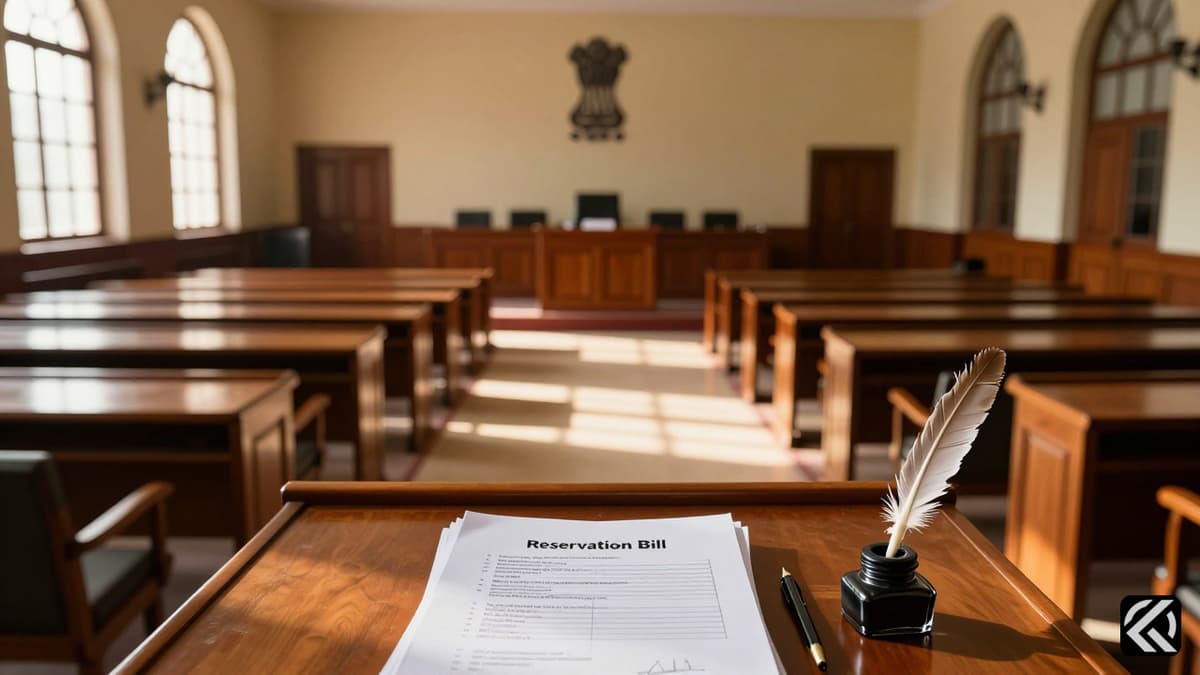
Facing a critical political juncture, opposition floor leaders convened to strategize a formal appeal to Prime Minister Narendra Modi, demanding the immediate execution of the women's reservation law.
In a significant political development on Saturday, April 18, 2026, the opposition in India is set to launch a direct appeal to the government. Floor leaders from the Indian National Developmental Inclusive Alliance (INDIA) bloc have resolved to address Prime Minister Narendra Modi with a formal letter. This correspondence will urge the Prime Minister to bypass procedural delays and immediately implement the women's reservation law, specifically by separating it from the contentious delimitation process.
The catalyst for this coordinated action was a high-level meeting held on the morning of April 18, 2026. During this gathering, the issue of women's representation in Indian politics was the central topic of discussion. The meeting was presided over by Congress president Mallikarjun Kharge, who facilitated the dialogue among the floor leaders of the alliance. The consensus reached during these discussions reflects a unified front within the opposition bloc regarding the urgency of the matter.
The crux of the opposition's argument rests on the belief that the implementation of the women's reservation law should not be contingent upon the completion of delimitation. Delimitation involves the redrawing of constituencies, a complex administrative process that has historically delayed various legislative enactments. By advocating for the delinking of the two, the opposition seeks to accelerate the realization of constitutional promises made through the 2023 legislation. This strategic approach aims to prevent further postponement of women's political empowerment, which has been a long-standing demand across the political spectrum.
The meeting chaired by highlighted a distinct divergence in strategy regarding the timeline of implementation. While the government may have maintained that the women's reservation law is inextricably linked to the delimitation exercise, the opposition bloc has determined that this linkage is an obstacle to progress. The letter to Prime Minister will explicitly request that the law be enforced immediately, irrespective of the status of the delimitation work. This move underscores a willingness to challenge the current administrative sequencing of the law's enactment.
The implications of this demand are substantial for the 2026 political landscape. By framing the issue as a matter of immediate implementation rather than a procedural sequence, the opposition is attempting to shift the narrative from administrative logistics to urgent political necessity. The role of Mallikarjun Kharge as the presiding officer of the floor leaders' meeting signals the depth of organizational commitment within the INDIA bloc. This collective effort suggests that the opposition views the women's reservation law not merely as a legislative technicality, but as a critical imperative for democratic representation that cannot be deferred.
The decision to write directly to the Prime Minister indicates that the opposition believes the final authority on this matter rests with the executive leadership. It is a calculated political maneuver to place the Prime Minister on record regarding the timeline of the law's enforcement. The failure to address this demand could potentially lead to further friction between the government and the opposition alliance, given the strong emphasis placed on the issue during the leadership meeting.
The historical context of the women's reservation law, passed in 2023, remains a pivotal element of this current standoff. The legislation was designed to reserve one-third of seats in the Lok Sabha and state legislative assemblies for women. However, the delay in its full enforcement has kept the promise of enhanced female representation in abeyance. The opposition's strategy to decouple the law from delimitation is a direct response to this delay, aiming to bypass administrative bottlenecks that have stalled the process.
As the opposition prepares to dispatch the letter, the political atmosphere in New Delhi is expected to tighten. The request for immediate action without delimitation presents a complex challenge for the administration. Prime Minister Narendra Modi will now face a clear demand to either comply with the request or provide a robust justification for continuing to link the two processes. The outcome of this written appeal will likely define the immediate future of women's representation in Indian legislatures and set a precedent for how future legislative implementations are handled.
The meeting chaired by Mallikarjun Kharge highlighted a distinct divergence in strategy regarding the timeline of implementation. While the government may have maintained that the women's reservation law is inextricably linked to the delimitation exercise, the opposition bloc has determined that this linkage is an obstacle to progress. The letter to Prime Minister Narendra Modi will explicitly request that the law be enforced immediately, irrespective of the status of the delimitation work. This move underscores a willingness to challenge the current administrative sequencing of the law's enactment.
The implications of this demand are substantial for the 2026 political landscape. By framing the issue as a matter of immediate implementation rather than a procedural sequence, the opposition is attempting to shift the narrative from administrative logistics to urgent political necessity. The role of Mallikarjun Kharge as the presiding officer of the floor leaders' meeting signals the depth of organizational commitment within the INDIA bloc. This collective effort suggests that the opposition views the women's reservation law not merely as a legislative technicality, but as a critical imperative for democratic representation that cannot be deferred.
The decision to write directly to the Prime Minister indicates that the opposition believes the final authority on this matter rests with the executive leadership. It is a calculated political maneuver to place the Prime Minister on record regarding the timeline of the law's enforcement. The failure to address this demand could potentially lead to further friction between the government and the opposition alliance, given the strong emphasis placed on the issue during the leadership meeting.
The historical context of the women's reservation law, passed in 2023, remains a pivotal element of this current standoff. The legislation was designed to reserve one-third of seats in the Lok Sabha and state legislative assemblies for women. However, the delay in its full enforcement has kept the promise of enhanced female representation in abeyance. The opposition's strategy to decouple the law from delimitation is a direct response to this delay, aiming to bypass administrative bottlenecks that have stalled the process.
As the opposition prepares to dispatch the letter, the political atmosphere in New Delhi is expected to tighten. The request for immediate action without delimitation presents a complex challenge for the administration. Prime Minister Narendra Modi will now face a clear demand to either comply with the request or provide a robust justification for continuing to link the two processes. The outcome of this written appeal will likely define the immediate future of women's representation in Indian legislatures and set a precedent for how future legislative implementations are handled.
The immediate aftermath of the letter to Prime Minister Narendra Modi will likely precipitate a critical period of political negotiation. If the administration delays the response or continues to insist on the delimitation link, the opposition bloc, under the guidance of Mallikarjun Kharge, is poised to escalate the issue through public demonstrations or further parliamentary interventions. The failure to act on the women's reservation law without delimitation could erode the opposition's leverage in subsequent electoral negotiations. Conversely, an agreement to delink the processes could accelerate the timeline for women's entry into legislative bodies, fundamentally altering the demographic composition of Indian politics sooner than anticipated. The coming weeks will be decisive in determining whether the 2023 law remains a dormant statute or becomes an active instrument of democratic reform.
Jun 8, 2026 02:17 UTC
Magnitude 7.8 Quake Shakes Philippines, Urging Immediate Evacuations
Join 50,000+ readers getting the global briefing every morning.
No spam. Unsubscribe anytime.
Jun 8, 2026 02:17 UTC
Magnitude 7.8 Quake Shakes Philippines, Urging Immediate Evacuations
Jun 8, 2026 00:51 UTC
Trump Claims Iran Nuclear Deal Imminent Despite Diplomatic Fractures
Jun 8, 2026 00:47 UTC
Iran Fires Missiles at Israel After Beirut Strike
Jun 7, 2026 22:38 UTC
Congress Party Claims Unity for INDIA Bloc Delhi Meeting