Section
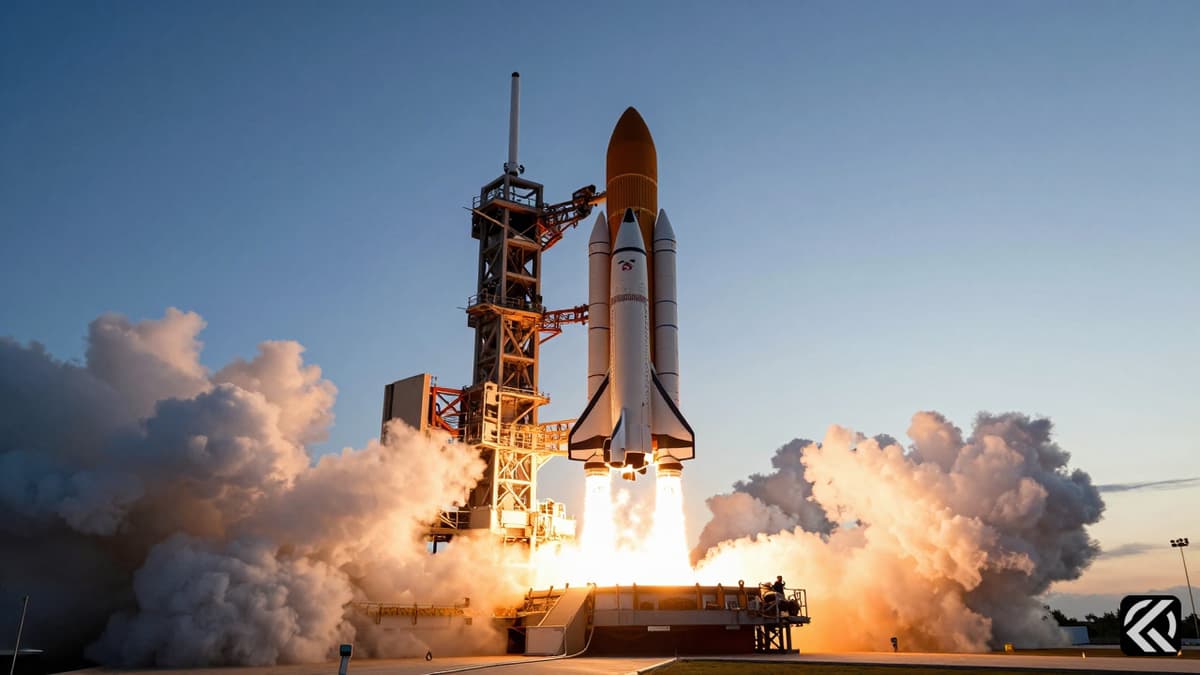
India’s private space sector hit a major milestone as Skyroot successfully launched Vikram-1 into orbit, signaling a new era for commercial launches.
India’s private space industry achieved a historic milestone on July 18 when Skyroot Aerospace successfully launched its Vikram-1 rocket into low-earth orbit. This event marks India’s first successful private orbital launch, distinguishing it from previous state-funded missions led by the Indian Space Research Organisation (ISRO).
The mission, dubbed ‘Aagaman’ or ‘arrival,’ took place at 12:05 p.m., following years of regulatory shifts that allowed private firms to utilize ISRO infrastructure. Founded in 2018 by former ISRO engineers Pawan Kumar Chandana and Naga Bharath Daka, Skyroot has rapidly progressed from its first suborbital test in 2022 to this significant orbital achievement.
While the successful insertion of Vikram-1 into its intended orbit is a monumental engineering feat, Skyroot faces a steep climb toward commercial viability. The global small-satellite launch market is evolving, characterized by intense competition and economic pressures. Skyroot’s four-stage rocket, which uses solid fuel for its first three stages and liquid fuel for the fourth, was designed to test critical parameters such as stage separation, propulsion, guidance, and avionics.
The success of Mission Aagaman places Skyroot among a small elite of private companies worldwide, such as SpaceX, Rocket Lab, and Firefly Aerospace, that have developed orbital launch vehicles. However, a single successful launch does not guarantee business success. The company must now navigate a complex landscape where launch revenues are growing more slowly than satellite manufacturing revenues, creating significant consolidation pressure.
Historically, forecasts predicted a boom in demand for launching small satellites weighing 100-500 kg. While demand has increased, it is increasingly concentrated in satellite constellations rather than being diffused across numerous enterprises. This shift has allowed larger providers like SpaceX to offer rideshare services on Falcon 9 rockets at dramatically lower costs. Consequently, dedicated small-satellite launchers must compete not only on flexibility and specific orbit options but also on price, often requiring customers to pay a premium over rideshare options.
Skyroot’s Vikram-1 has a payload capacity of 290 kg to a 500-km sun-synchronous orbit and 480 kg to a low-inclination orbit. The company plans two more developmental flights before deeming the rocket market-ready. Despite the challenges, Skyroot may leverage India’s lower manufacturing and labor costs, access to ISRO’s infrastructure, and the country’s growing focus on satellite manufacturing to gain an edge.
The competitive environment is fierce. Startups across Europe, the U.S., China, Japan, and Australia are developing similar launchers, with many folding or pivoting due to difficulties in securing contracts from a limited pool of customers. Additionally, Vikram-1 will face competition from ISRO’s own Small Satellite Launch Vehicle, whose reputation has been affected by two recent failures. Launch services are notoriously low-margin and capital-intensive, with additional costs arising from regulatory compliance and debris mitigation.
Skyroot’s roadmap extends beyond Vikram-1. The company aims to introduce Vikram-2, capable of carrying up to 1,000 kg to low-earth orbit, with a maiden flight targeted for 2027. Looking further ahead, Skyroot is engineering a fully reusable launch vehicle with recovery and reuse capabilities for both booster and upper stages. If manufacturing is streamlined, Skyroot claims it could produce one Vikram-1 rocket per month, scaling to 12 per year.
However, production capacity must align with demand. Currently, even ISRO does not launch 12 small satellites per year. Skyroot will need to secure international customers to fill its production capacity. Projections suggest that while small satellites may account for a third of all launches by 2035, they will represent less than one-tenth of the total launch mass, highlighting the economic constraints of this market segment.
Despite these hurdles, the achievement of flying an orbital launch vehicle on the first attempt is a rare global accomplishment. It serves as a critical milestone for India’s private space sector, demonstrating the capability to design, build, test, and fly complex aerospace vehicles. The companies that endure in this sector will be those that can consistently reach orbit through trustworthy processes at prices customers are willing to pay.
Skyroot’s successful Vikram-1 launch establishes a technical foundation, but the company’s long-term survival hinges on commercial strategy. The path forward requires diversifying beyond launch services into downstream applications and data services, leveraging the emerging domestic ecosystem of collaborators like Pixxel and Bellatrix Aerospace. While the domestic market remains limited, securing international contracts and delivering cost-effective, reliable launches will be paramount. The true test for Skyroot is not just reaching orbit, but sustaining a profitable business model in an industry where many competitors have already folded.
Oct 3, 2026 04:08 UTC
FlyDubai Co-Pilot Banned in Oman Over Extremism Concerns
Oct 3, 2026 00:50 UTC
Israel-Mumbai Campaign Honors Captain Smit After Flydubai Incident
Oct 2, 2026 18:13 UTC
Captain Smit Machchhar’s Courage Saves Flydubai Flight FZ1073 From Disaster
Oct 2, 2026 16:45 UTC
Captain Smit Machchhar Saves Plane Mid-Fall
Oct 3, 2026 00:50 UTC
Israel-Mumbai Campaign Honors Captain Smit After Flydubai Incident