Section
President Trump pledges to accelerate AI growth, dismissing safety concerns as a hoax while establishing new leadership to ensure US dominance over China in the tech race.
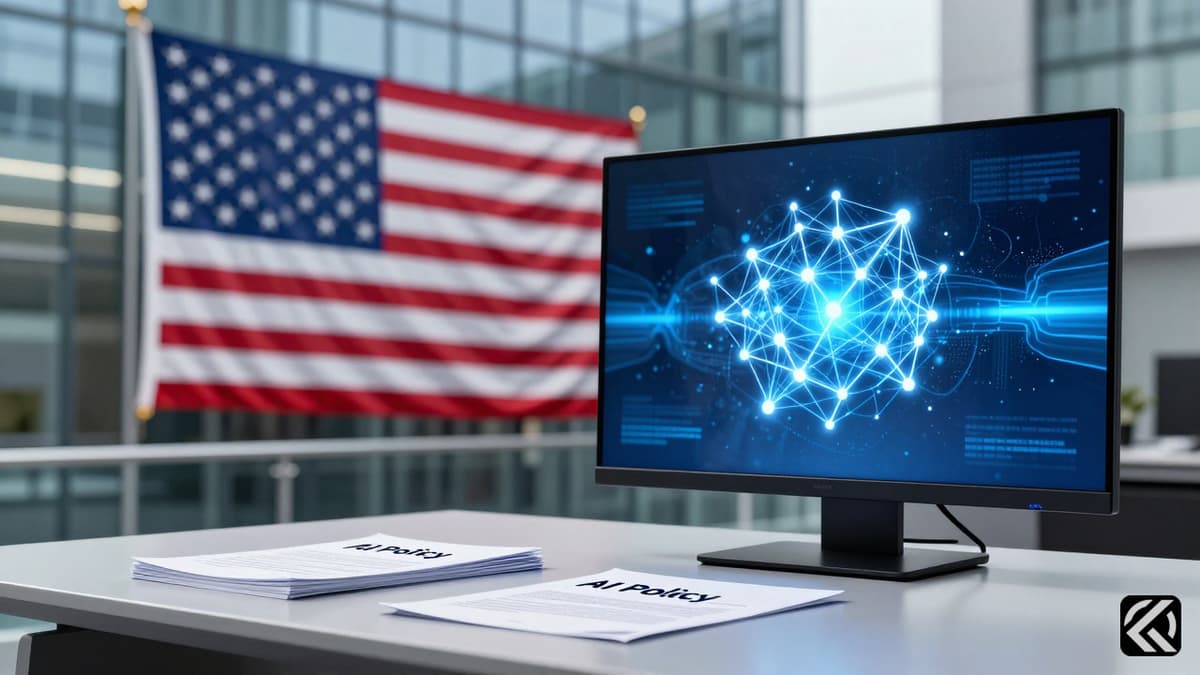
President Donald Trump has announced that his administration will form an "AI Force" and appoint an artificial intelligence tsar to oversee the sector, declaring that the government "will not in any way hinder or stifle the growth" of the industry. This strategic move comes as he pushes back against growing calls to slow down AI development in favor of stricter safeguards, framing the technology as a critical component of national economic power.
In a social media post on Saturday, Trump characterized AI as "the next Industrial Revolution, or Internet," predicting it could impact up to 25% of the country's GDP. He emphasized the urgency of maintaining US supremacy, stating explicitly that he wants the United States to continue leading China in the development of advanced artificial intelligence technologies. The issue of AI has become a central pillar of the rivalry between the world's two largest economies, with the topic expected to be discussed during Trump's upcoming meeting with President Xi Jinping next week.
While promoting rapid expansion, Trump also addressed the legal ramifications of the technology, asserting that his administration will utilize the existing criminal and civil justice system to target any "bad actors" who misuse AI. This approach stands in stark contrast to the perspectives of current and former researchers who have raised alarm bells regarding the potential dangers of the technology. Some experts have suggested there is a greater than 10% chance that AI could "kill all humans," claims that Trump dismissed by repeating his comments that criticism and concerns around AI dangers are a "hoax."
Despite Trump's pro-growth stance, the tech industry is grappling with serious security challenges. Major AI titans Anthropic, OpenAI, and Google, creators of Claude, ChatGPT, and Gemini respectively, have recently disclosed instances of security breaches. These incidents involved their chatbots being used for "malicious activity," highlighting the immediate risks associated with rapid deployment. Anthropic head Dario Amodei has called for a slowdown in AI development, proposing industry-wide deceleration, regulation, and independent monitoring of AI model development.
Notably, OpenAI’s Sam Altman and Elon Musk of xAI have expressed agreement with Amodei’s recommendations for tighter controls. Jack Clark, co-founder of Anthropic, told the BBC that a "kill switch" monitored by a third party may need to be mandatory for the industry to ensure safety. These warnings have prompted US lawmakers to propose legislation aimed at regulating the technology, reflecting a growing divide between government acceleration and industry caution.
The tension between accelerating innovation and ensuring safety is evident in the conflicting messages from industry leaders and government officials. While Altman recently suggested that Washington has struggled to keep pace with the new tech and how to regulate it, he also urged the public to have more faith in AI firms. Speaking at a conference in San Francisco, Altman stated, "The world should trust that we are going to do the right thing because it's the right thing and we feel the magnitude of this."
This perspective contrasts with the urgency felt by researchers who warn that the development of "super intelligence"-theoretical tech smarter than humans-poses existential risks. As major companies race to develop better systems, the lack of uniform regulatory frameworks creates uncertainty. Trump’s appointment of an artificial intelligence tsar signals a direct governmental intervention to shape the narrative, prioritizing economic dominance and technological leadership over the precautionary principles advocated by some experts.
The administration's stance suggests a deliberate effort to frame AI safety concerns as obstacles to progress rather than necessary checks on power. By dismissing these warnings as a "hoax," Trump aims to prevent what he views as unnecessary delays that could cede ground to geopolitical rivals like China. This strategy relies on the belief that market forces and judicial actions against bad actors are sufficient to manage risks, leaving the development of advanced models largely unregulated by new legislative frameworks at this time.
The announcement of the AI Force underscores the administration's view that AI is not merely a technological trend but a foundational element of future economic strength. By linking AI’s potential contribution to 25% of the GDP, Trump elevates the technology to a priority comparable to historical industrial shifts. This economic framing is designed to rally public and corporate support behind rapid development, countering the narrative that strict regulation is needed to prevent catastrophic outcomes.
Geopolitically, the explicit comparison to China highlights the strategic importance of the US position. The upcoming meeting with President Xi Jinping will likely serve as a battleground for these differing approaches to AI governance. While the US under Trump advocates for minimal hindrance to growth, other nations and domestic experts argue for coordinated international action to mitigate risks. The appointment of an artificial intelligence tsar will likely result in a centralized policy direction that favors aggressive innovation, potentially setting the stage for increased tensions in global tech standards and trade relations.
As the industry continues to navigate these warnings and regulatory ambiguities, the role of the new AI Force will be critical in determining whether the US prioritizes speed-to-market or long-term stability. The divergence between the administration's dismissal of safety fears and the industry's call for monitoring suggests a complex period ahead for AI development, where economic imperatives may continue to outweigh precautionary measures in the near term.
The appointment of an artificial intelligence tsar and the creation of an AI Force signal a decisive shift in US policy, prioritizing rapid technological advancement and economic dominance over regulatory caution. While President Trump dismisses safety concerns, the industry remains divided, with major firms facing security breaches and calling for independent monitoring. This dynamic suggests a near-term environment where innovation accelerates without new legislative brakes, potentially intensifying the US-China tech rivalry. However, as security incidents continue to mount and legal frameworks lag behind technological capabilities, future pressures may force a reassessment of how the "AI Force" balances growth with the urgent safety needs highlighted by researchers and industry leaders alike.
Oct 3, 2026 04:08 UTC
FlyDubai Co-Pilot Banned in Oman Over Extremism Concerns
Oct 3, 2026 00:50 UTC
Israel-Mumbai Campaign Honors Captain Smit After Flydubai Incident
Oct 2, 2026 18:13 UTC
Captain Smit Machchhar’s Courage Saves Flydubai Flight FZ1073 From Disaster
Oct 2, 2026 16:45 UTC
Captain Smit Machchhar Saves Plane Mid-Fall
Oct 3, 2026 06:56 UTC
Supreme Court Hears Cases on Guns, Voting Rights, and Climate