Section
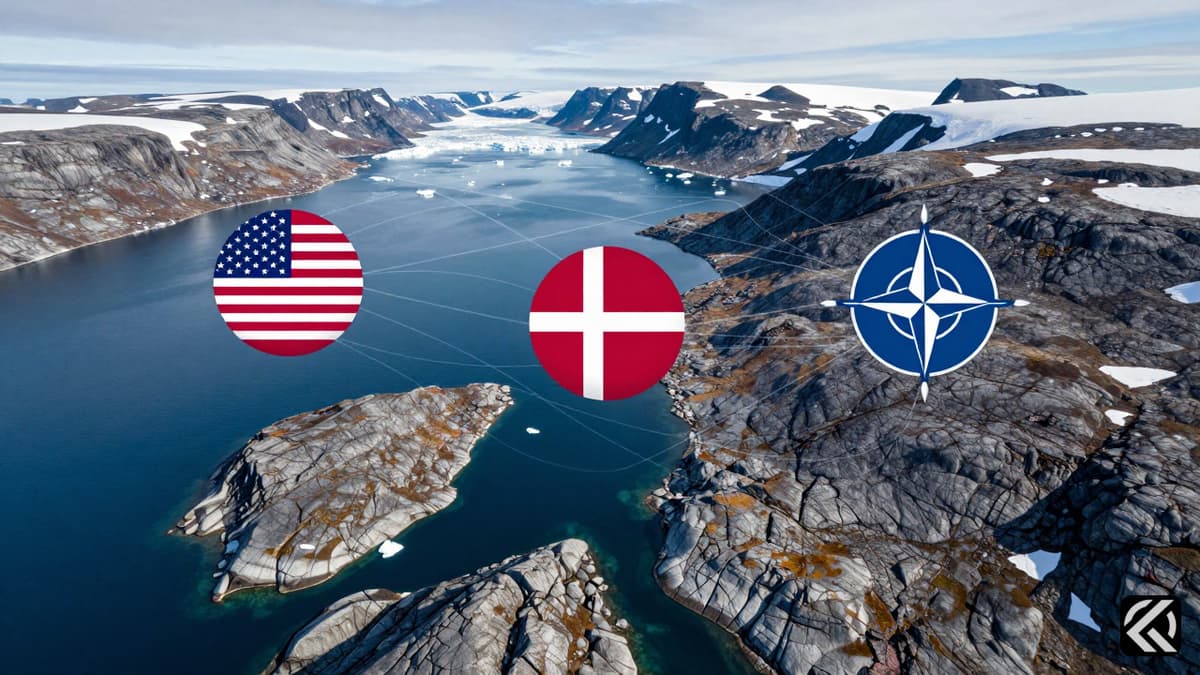
Tensions ease as the United States and Denmark finalize a pivotal security agreement over Greenland, granting Washington permanent control to counter adversaries in the Arctic.
The United States and Denmark have announced a comprehensive agreement regarding the security of Greenland, effectively resolving a diplomatic crisis triggered by President Donald Trump’s previous threats to seize the territory. This development marks a significant shift in Arctic geopolitics, moving from confrontation to cooperation.
Nato welcomed the deal as a move to stabilize the region, while President Trump stated on Truth Social that Denmark would grant the United States "permanent control over security, and all other needs" in the semi-autonomous Danish territory. The leaders of both Denmark and Greenland welcomed the move to strengthen security, with the formal signing expected next week at the UN General Assembly.
The agreement addresses long-standing national security concerns that prompted Trump’s initial threats. For months, the US President argued that Greenland was vulnerable to adversaries, specifically citing risks from Russia and China due to its strategic location and vast, untapped reserves of rare earth minerals essential for technology. The new deal aims to mitigate these perceived vulnerabilities without altering territorial ownership.
While no full text of the agreement has been released, an unnamed US State Department official outlined several key provisions. The deal grants the US unilateral power to build additional military structures without needing approval from Greenland or Denmark. It ensures "permanent access, basing and overflights rights" for American forces. Crucially, the agreement includes strict prohibitions against non-Nato countries establishing bases in Greenland.
A significant component of the deal targets economic influence. The official noted that the agreement bans adversaries from making investments in Greenland’s "sensitive sectors" that could threaten US interests. Previously, under the status quo, adversaries had been allowed to invest in these sectors without rigorous screening. The new rules explicitly block Russia and China from deploying troops or making investments in sensitive areas.
Trump emphasized that the deal comes with "no cost to the United States." He asserted that the agreement allows the US to "do what is necessary" to secure Greenland and includes a rule preventing any US adversary from maintaining a military presence there without US express written approval. The deal also contains a clause ensuring its validity remains even if Greenland were to become an independent country in the future, providing long-term legal stability for US operations.
The diplomatic fallout from Trump’s earlier threats was severe, prompting outcry from Greenlanders, Danes, and other NATO members. The new agreement seeks to restore calm and affirm respect for international law. Denmark’s Prime Minister Mette Frederiksen expressed pleasure at the prospect of a good agreement for all three parties. In a joint statement with Greenland’s Prime Minister Jens-Frederik Nielsen, she highlighted that the deal strengthens common security in the Arctic and North Atlantic while recognizing the sovereignty and territorial integrity of the Kingdom of Denmark.
Nielsen, the Prime Minister of Greenland, described the situation as "gratifying," noting that the agreement ensures the security of Greenland, Denmark, the US, and the Western alliance. He stressed that the deal recognizes Greenland’s interests and its place in international cooperation, benefiting all parties involved. However, he emphasized the importance of parliamentary procedures to ensure the agreement enters into force.
International reactions were largely positive regarding the preservation of sovereignty. French President Emmanuel Macron welcomed the deal, stating it helped "reaffirm Danish sovereignty" over the island. Macron noted that international law was respected, which had been a primary demand. This perspective aligns with Danish media interpretations that view the agreement as a diplomatic triumph for Copenhagen. Headlines in the newspaper Berlingske suggested that while Trump may claim victory, the Kingdom of Denmark effectively won by maintaining territorial integrity. A correspondent for Politiken remarked that Trump was allowed a "victory lap" but did not secure a change in territory.
Despite the optimism, skepticism remains within Greenland. Former politician Aaja Chemnitz expressed doubt, stating, "I don't have much confidence in Trump," and admitted to being skeptical until the deal is fully finalized. MP Naaja Nathanielsen echoed caution, noting that while the news is hopeful, it is "absolutely crucial that any agreement preserves our right to self-determination."
The details of this new pact raise questions about its divergence from the 1951 agreement between the US and Denmark, which already allowed the US to station troops in Greenland. It remains unclear exactly how the new deal expands upon or differs from this existing framework without the full text being published. The BBC contacted the Danish Embassy in the US and the White House for further clarification.
The economic implications are significant. Greenland holds vast reserves of rare earth minerals, many of which are crucial for the production of mobile phones and electric vehicles. By securing the ability to block sensitive investments from adversaries, the US aims to secure supply chains and prevent hostile powers from leveraging mineral wealth for geopolitical advantage.
As the signing approaches at the UN General Assembly, the focus shifts to implementation. The agreement requires parliamentary procedures in Denmark and likely Greenland to become fully operational. The resolution of this dispute is seen by many as a end to a tense diplomatic chapter, stabilizing the Arctic region against external threats. However, the political fallout from Trump’s initial aggressive stance has left some Greenlandic citizens nervous about the future balance of power and autonomy.
The agreement between the US and Denmark solidifies a new security architecture in the Arctic, prioritizing US military access and economic protection against rivals like China and Russia. By embedding these protections into a treaty that survives potential Greenlandic independence, Washington ensures long-term strategic dominance. This move likely diminishes the geopolitical leverage of non-Nato states in the region, potentially leading to increased economic integration with Western partners and stricter investment screening policies across the island.
Oct 3, 2026 04:08 UTC
FlyDubai Co-Pilot Banned in Oman Over Extremism Concerns
Oct 3, 2026 00:50 UTC
Israel-Mumbai Campaign Honors Captain Smit After Flydubai Incident
Oct 2, 2026 18:13 UTC
Captain Smit Machchhar’s Courage Saves Flydubai Flight FZ1073 From Disaster
Oct 2, 2026 16:45 UTC
Captain Smit Machchhar Saves Plane Mid-Fall
Oct 3, 2026 06:56 UTC
Supreme Court Hears Cases on Guns, Voting Rights, and Climate