A torpedoed Iranian warship had been granted docking rights by India days before the attack, raising new questions about regional authority.
The geopolitical landscape of the Indian Ocean shifted dramatically following a high-profile military engagement involving major global powers. Reports emerging from New Delhi indicate that an Iranian warship, identified as the Iris Dena, received official permission to dock at Indian ports merely days before it was targeted by a United States submarine. This sequence of events has ignited intense scrutiny regarding the operational authority of India within its maritime neighborhood and the escalating nature of the conflict between the United States, Israel, and Iran. The incident marks a significant escalation in hostilities that began in late February 2026, transforming naval exercises into active combat zones far removed from the Middle East theater.
The narrative surrounding the Iris Dena begins with its participation in joint military activities hosted by India. Between February 15 and February 25, the warship took part in a military exercise alongside two other Iranian vessels, the Iris Bushehr and the Iris Lavan. These operations were conducted at Visakhapatnam, a coastal city in India. Following the conclusion of these exercises on February 25, the three ships departed Indian waters.
However, the situation evolved rapidly as tensions rose globally. On February 28, the day that marked the commencement of military assaults by the US and Israel against Iran, the Iranian side formally requested permission for three specific ships in the region to dock at Indian ports. According to Foreign Minister S Jaishankar, this request was processed and officially granted on March 1. The diplomatic approval suggested a continuation of cooperation despite the outbreak of war. However, the movements of these vessels between March 1 and March 4 remain unclear according to available data. Furthermore, it remains unconfirmed why only one of the three vessels successfully reached an Indian port during this window.
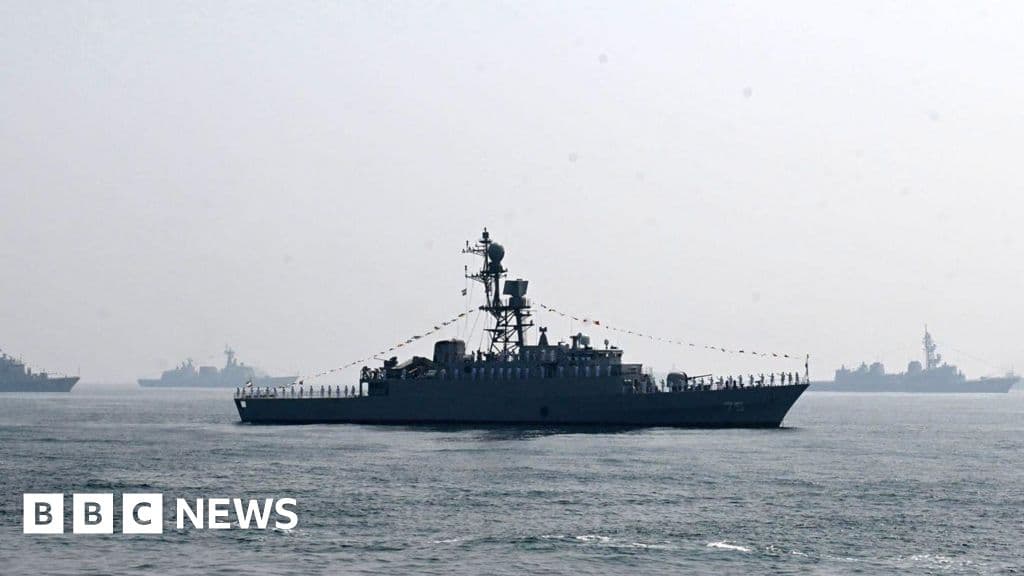
The fate of the Iris Dena was sealed on March 4 in international waters. Located approximately 20 nautical miles, or roughly 23 miles (37 kilometers), west of Galle, the ship was struck by a torpedo fired from a United States submarine. This location falls specifically within Sri Lanka's designated search-and-rescue zone. The attack resulted in a catastrophic loss of life for the vessel, which carried 130 sailors on board. At least 87 crew members were killed during the incident.
The sinking was described by observers as a dramatic widening of the war, occurring outside the traditional Middle East conflict zone. It is noted as the first military strike conducted by US forces in this manner since the initiation of their war on Iran. The United States tracks vessels across the world's oceans with extensive reach. Analysts indicate that a quarter of its submarine fleet, which comprises between 65 and 70 units, is at sea at any given time to facilitate such tracking and operational capabilities.
The aftermath of the attack has produced sharply contrasting statements from the governments involved. Indian Foreign Minister S Jaishankar addressed the parliament on Monday regarding the incident. He confirmed that the Iranian side had requested permission on February 28 for three ships to dock, which was accorded on March 1. He noted that while the Iris Dena was sunk, the Iris Lavan successfully docked in Kochi on March 4. Jaishankar stated that the crew of the Iris Lavan is currently being held in Indian naval facilities and affirmed that granting the permission was the right thing to do.
In response, Iran's Foreign Minister Abbas Araghchi condemned the action. He characterized the event as an atrocity committed at sea by the United States, specifically noting that the strike occurred 2,000 miles away from Iran's shores. Araghchi emphasized that the warship was struck in international waters without prior warning. Meanwhile, Sri Lanka later confirmed it had provided sanctuary for the Iris Bushehr on March 5, following a request for docking due to an engine malfunction.
The military implications of the strike have been highlighted by US leadership. US Defence Secretary Pete Hegseth has publicly touted the attack on the Iris Dena as a demonstration of American military prowess. In his assessment, he claimed it represented the first sinking of an enemy ship by a torpedo since World War Two.
However, the context provided in the reporting adds nuance to this claim. While it is indeed the first instance since 1945 that an American submarine has sunk an enemy ship using a torpedo, the record shows that other nations have achieved similar results in the intervening decades. Specifically, both the United Kingdom and Pakistan are noted to have sunk vessels using torpedoes since the end of the World War II era. This distinction highlights the specific nature of the US claim while acknowledging broader naval history.
Despite the official statements, significant questions remain regarding the logistics of the Iranian fleet during this critical period. The BBC has initiated inquiries with both the Iranian embassy in India and India's external affairs ministry to seek clarification on the movements of the three Iranian naval vessels after Delhi granted them permission to dock. The specific reasons why only one ship made it to India, as well as the precise locations of the other two ships between March 1 and March 4, remain unclear.
The sinking also raised immediate questions about India's authority in its own backyard. The incident occurred in a zone where India had previously hosted the ships for exercises, yet the vessel was sunk after leaving Indian waters. President Donald Trump has stated that destroying Iran's navy is one of the primary aims of the assault, providing context to the strategic motivation behind the submarine attack.
The torpedoing of the Iranian warship Iris Dena represents a complex intersection of military action, diplomatic permission, and geopolitical tension. With India having granted docking rights just days before the attack, the incident challenges perceptions of regional authority and the scope of the US-Iran conflict. As investigations continue into the movements of the remaining ships, the incident stands as a defining moment in the 2026 naval engagement, highlighting the far-reaching consequences of modern submarine warfare on international waters.
May 1, 2026 03:50 UTC
Trump Administration Declares Iran Conflict Terminated
Join 50,000+ readers getting the global briefing every morning.
No spam. Unsubscribe anytime.
May 1, 2026 03:50 UTC
Trump Administration Declares Iran Conflict Terminated
Apr 25, 2026 01:38 UTC
Iranian FM Araghchi Heads to Islamabad for Critical US-Iran Talks
Apr 25, 2026 01:13 UTC
Calm Suspect in Delhi Rape-Murder Case Faces Mental Evaluation
Apr 24, 2026 23:24 UTC
Raghav Chadha joins BJP, Shaking AAP’s Rajya Sabha Strength