Reports reveal Israel felt sidelined during critical US-Iran ceasefire negotiations, creating tension between allies even as Benjamin Netanyahu publicly backed the two-week truce.
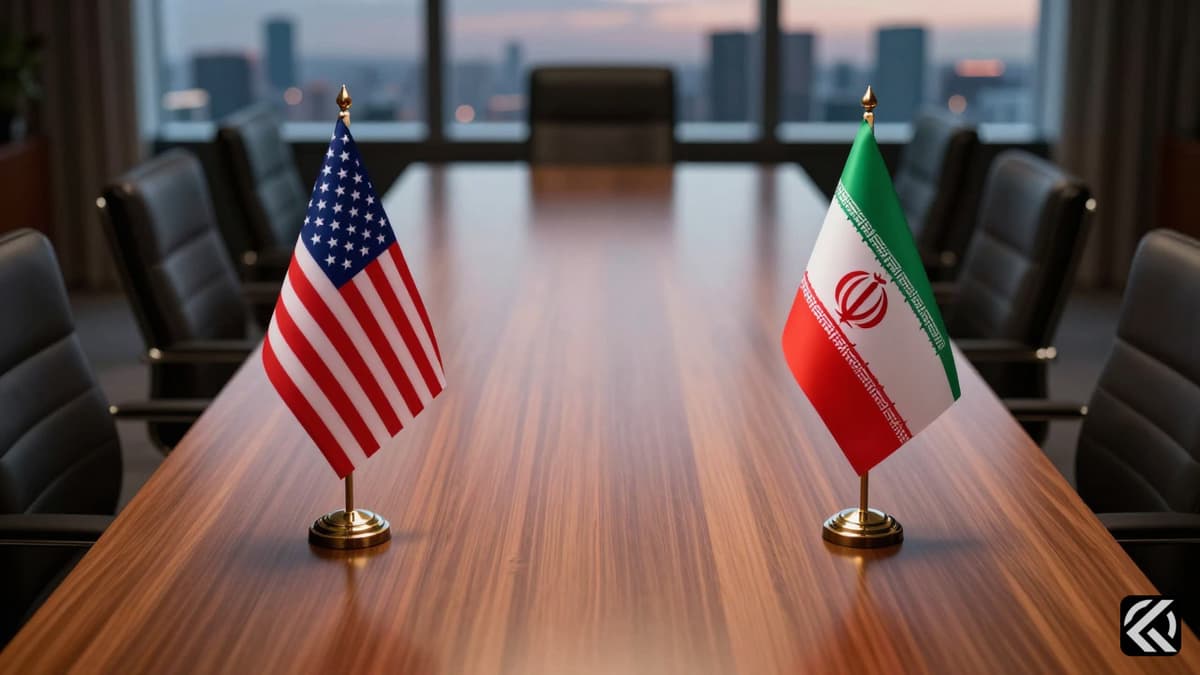
An AI-generated image depicting the diplomatic tension has surfaced as reports indicate Israel is dissatisfied with the United States' management of the recent ceasefire agreement with Iran. According to a Wall Street Journal report, Israeli officials were brought into the loop only at the final stage of the truce, creating a sense of being excluded from critical negotiations. Despite these reported concerns, Prime Minister Benjamin Netanyahu publicly backed the move, though he drew clear limits on the agreement's scope. The United States and Iran announced a two-week ceasefire early Wednesday, outlining plans for negotiations intended to end the ongoing conflict. As part of this complex arrangement, Iran agreed to reopen the Strait of Hormuz, a strategic move expected to stabilize global energy supplies. However, the reported friction highlights a significant Israel-US ceasefire dispute, as the coordination between the two allies appears to have been limited to a single call by President Donald Trump shortly before the public announcement.
The report details that Israeli officials expressed unhappiness regarding the late notice and the lack of prior consultation on certain provisions of the agreement. Sources familiar with the matter cited mediators as part of the communication chain, yet the extent of the preparation remained minimal for the Israeli leadership. While the US and Iran announced the truce, the reaction from Tel Aviv was nuanced. Netanyahu publicly supported the decision but issued immediate clarifications to prevent misinterpretation regarding the agreement's reach. He stated in a post on X that Israel supports the suspension of strikes for two weeks, contingent on Iran immediately opening the straits and halting attacks on the US, Israel, and regional countries. Four hours after Trump's announcement, Netanyahu's office issued a formal statement welcoming the ceasefire, yet it stressed a critical distinction: the agreement does not extend to Lebanon, contradicting claims made by Pakistani mediators.
According to the Wall Street Journal report, Israel objected to the reported inclusion of Lebanon in the ceasefire framework, firmly viewing the situation there as a separate operational front. In a televised address, Netanyahu underlined that the truce was temporary and did not signal the end of the broader conflict. "Let me be clear: We still have objectives to complete, and we will achieve them - either through agreement or through renewed fighting," he stated. He added that the military remains prepared to return to combat at any moment required, noting that their finger remains on the trigger. He emphasized that this is not the end of the campaign but a step toward achieving all objectives, asserting that Iran enters this pause battered and weaker than ever.
Responding to criticism from opposition leaders, including Yair Lapid, who termed the truce a "diplomatic disaster," Netanyahu insisted the ceasefire came "in full coordination with Israel." He told the Times of Israel that they were not surprised at the last moment. Netanyahu further detailed that Israel had already struck Iran's missile production facilities and nuclear infrastructure, disrupting networks linked to the Revolutionary Guards. He reiterated that military operations against Hezbollah would continue, stating, "We continue to strike it with force," as the military pursues its objective of disarming the group.
Despite the official announcement of a truce, tensions remain high on the ground. The ceasefire showed signs of strain almost immediately on Thursday, as Hezbollah claimed it fired rockets towards Israel. According to AFP, the Iran-backed group targeted the Israeli kibbutz of Manara near the Lebanon border, citing it as a response to the enemy's violation of the ceasefire agreement. This attack followed a significant wave of Israeli strikes on Lebanon a day earlier. Israel carried out its heaviest bombardment of the country since Hezbollah entered the conflict in early March, hitting multiple locations including central Beirut. The Lebanese Health Ministry reported that at least 182 people were killed and nearly 900 wounded in the strikes. This escalation underscores the fragility of the current Hezbollah Israel conflict, proving that the truce between the US and Iran has not translated to calm on the northern front.
The reported friction between Israel and the US regarding the Benjamin Netanyahu Iran truce suggests that while public diplomacy may align, strategic planning remains divergent. If the current pattern of unilateral strikes and subsequent retaliations continues, the temporary pause may fail to stabilize the region beyond the initial two weeks. The insistence by Netanyahu that operations against Hezbollah will proceed indicates that the military campaign will likely resume or intensify if diplomatic goals are not met quickly. The disparity between the stated US goal of ending the conflict and the Israeli declaration of continued objectives creates a volatile environment where the ceasefire could easily fracture, leading to renewed and potentially broader regional instability.
Jun 8, 2026 00:51 UTC
Trump Claims Iran Nuclear Deal Imminent Despite Diplomatic Fractures
Jun 8, 2026 00:47 UTC
Iran Fires Missiles at Israel After Beirut Strike
Jun 7, 2026 22:00 UTC
US, Iran Peace Hops Fade 100 Days Into War
Jun 7, 2026 20:57 UTC
Iran Strikes Israel: IRGC Promises Week of Continuous Offensive
Jun 8, 2026 02:28 UTC
Trump Walks Out of Meet the Press After Rejecting Evidence Demands


