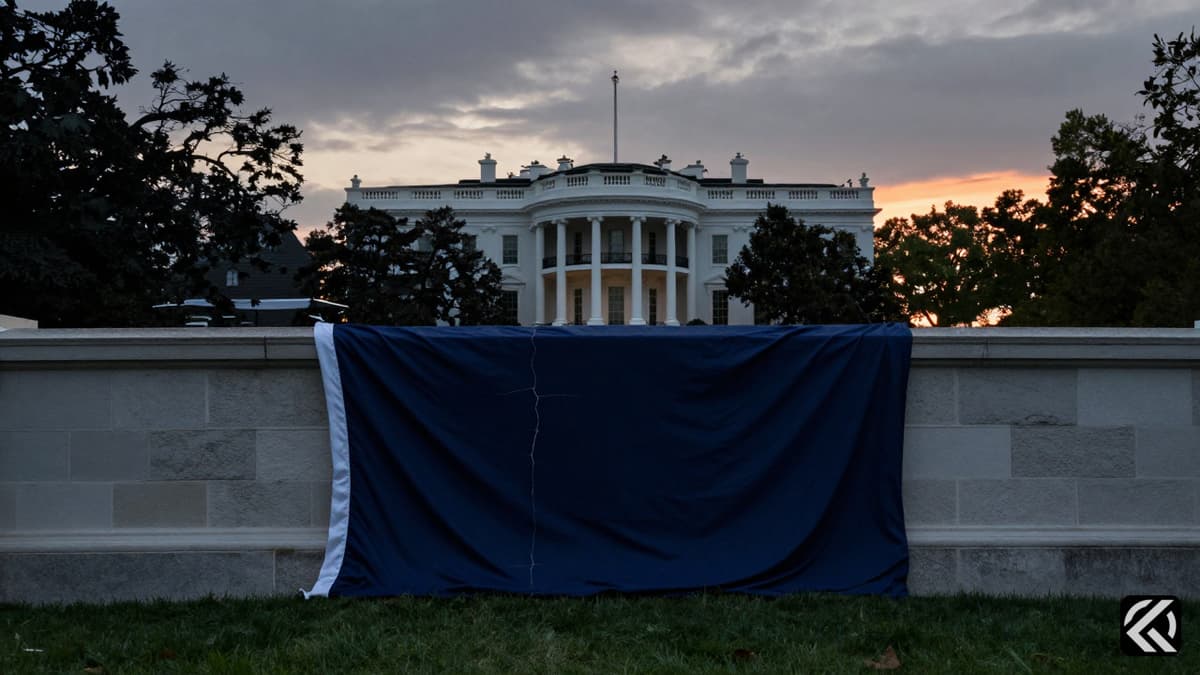
Following a tense White House meeting, President Trump declared NATO failed the US during the Iran conflict, warning of future non-participation.
Donald Trump has again attacked NATO for not supporting the US in the Iran war, following a private meeting with its Secretary General Mark Rutte at the White House. In a post shared to Truth Social immediately after the encounter, the US President stated that the alliance "WASN'T THERE WHEN WE NEEDED THEM, AND THEY WON'T BE THERE IF WE NEED THEM AGAIN." This confrontation highlights a significant fracture in the trans-Atlantic relationship as the President remains deeply skeptical of the organization's utility.
The meeting, which lasted over two hours on Wednesday, was characterized by Secretary General Mark Rutte as "very frank" and "very open," despite the presence of clear disagreements between the two leaders. Prior to the talks, President Trump had toyed with the idea of quitting the trans-Atlantic military alliance after several NATO countries resisted his calls to help reopen the Strait of Hormuz. This strategic action was intended to ease rising global oil prices, which were being impacted by the conflict. The Secretary General was at the White House for a duration exceeding two hours, though the exact length of the direct interaction with the President remains unknown.
The primary objective of the gathering was to cajole and convince Trump that it remains in his interest, and America's, to stay within the alliance. However, what remains clear is that Trump still holds deep misgivings about the alliance and the member countries that he believes did not help the US enough before and during Operation Epic Fury. When asked about NATO's specific role in the ongoing conflict with Iran, White House Press Secretary Karoline Leavitt delivered a direct quote from the president stating that the alliance was "tested and they failed." Leavitt further asserted that NATO countries had "turned their backs on the American people," who fund their nations' defense. She added that Trump would have a "very frank and candid conversation" with the NATO chief regarding these failures.
Rutte's message to the President appears to center on the idea that many European countries did not stand in the way of the US mission. The Secretary General told CNN that he pointed out that "the large majority of European nations has been helpful with basing, with logistics, with overflights." Whether this point, along with the Secretary General's own warm relationship with Trump, is sufficient to sway the US president remains to be seen. When asked if the world was safer now than it was before the war, Rutte responded "absolutely," crediting the improvement to Trump's "leadership" in degrading Iran's nuclear threats. He added that NATO members do not view the war in Iran as illegal, and most agreed it was important to degrade Iran's nuclear capabilities. At the end of 2023, the US Congress did vote to prohibit any US president from unilaterally withdrawing from NATO without the approval of a two-thirds Senate majority or an act of Congress.
The tension stems from the President's belief that the alliance failed during Operation Epic Fury. While Rutte emphasizes the logistical contributions made by the majority of European nations, the President's stance remains hardened by the perception that the alliance did not provide the necessary backing when it was most critical. The discrepancy between the President's view of the alliance as a failed entity and Rutte's assertion of active, helpful support underscores the difficulty in maintaining a unified front. The President's warning that members will not find US support if needed again suggests a shift in diplomatic reliance, potentially altering the strategic balance in the region.
The meeting concluded with both sides acknowledging the gravity of the situation, yet the divergence in their narratives regarding the US role and the alliance's effectiveness remains stark. The Secretary General's defense of the alliance's contributions contrasts sharply with the President's assertion of a collective failure. As the US Congress has already placed legal hurdles regarding withdrawal, the immediate future of the alliance remains stable, but the political relationship between the President and the organization is undeniably strained. The President's public declaration via Truth Social serves as a warning to member states, while Rutte's comments suggest a continued effort to bridge the gap through dialogue and reminders of shared contributions. The long-term impact on the alliance's cohesion will depend on whether the President's misgivings can be reconciled with the demonstrated support of European partners in the ongoing efforts to degrade Iran's nuclear capabilities.
Jun 8, 2026 02:17 UTC
Magnitude 7.8 Quake Shakes Philippines, Urging Immediate Evacuations
Join 50,000+ readers getting the global briefing every morning.
No spam. Unsubscribe anytime.
Jun 8, 2026 02:17 UTC
Magnitude 7.8 Quake Shakes Philippines, Urging Immediate Evacuations
Jun 8, 2026 00:51 UTC
Trump Claims Iran Nuclear Deal Imminent Despite Diplomatic Fractures
Jun 8, 2026 00:47 UTC
Iran Fires Missiles at Israel After Beirut Strike
Jun 7, 2026 22:38 UTC
Congress Party Claims Unity for INDIA Bloc Delhi Meeting


