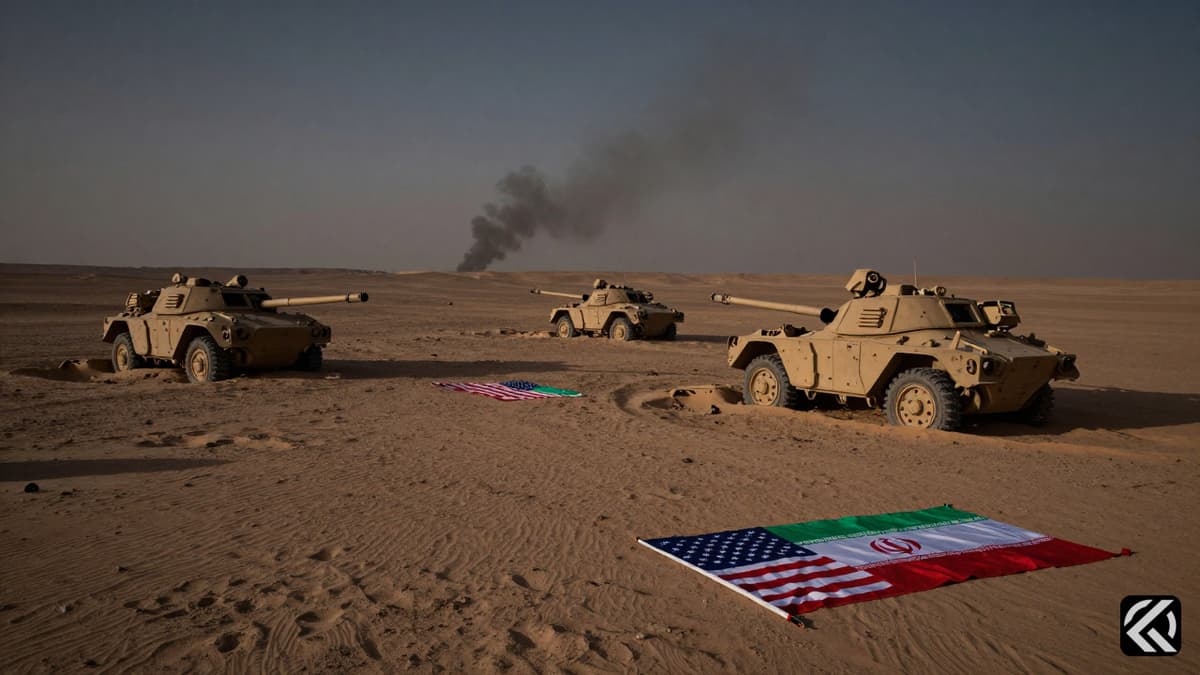
US War Secretary Pete Hegseth asserts Iran requested the truce following a devastating military campaign, while Tehran counters with its own victory narrative.
US War Secretary Pete Hegseth on Wednesday asserted that Iran "begged for this ceasefire" following a massive military operation that reportedly decimated their armed forces. Addressing a press briefing, Hegseth credited President Donald Trump with shaping the moment and hailed the end of the conflict as a historic victory.
This declaration follows the conclusion of 38 days of intense engagement known as Operation Epic Fury, a campaign Hegseth described as "overwhelming" and "victory on the battlefield." The Pentagon chief stated that the operation rendered Iran's military "combat-ineffective for years to come." While Hegseth emphasized the success of the US strikes, the situation on the ground presents a complex narrative where both nations claim victory through different lenses.
The President's shift in tone came after earlier warnings to wipe out Iran's "whole civilization." Trump subsequently announced a ceasefire with Tehran, framing it as a "total and complete victory." In contrast, the Islamic Republic, led by Mojtaba Khamenei, offered a competing story. Tehran claims that Washington's acceptance of its 10-point proposal serves as proof of success in both the battlefield and diplomatic arenas. Hegseth's comments, however, paint a picture of a defeated adversary seeking an exit.
Hegseth's remarks signal a continued hardline stance by Washington, with the US keeping the option of additional strikes on the table if its demands are not met. The Pentagon chief issued a particularly strong warning regarding Iran's stockpile of highly enriched uranium, stating the US would ensure it is secured, "by force if necessary." While the administration has not elaborated on the specific mechanisms for this seizure, Hegseth indicated that Washington is closely monitoring the situation.
"We're watching it. We know what they have, and they will give it up, and we'll get it, and we'll take it," Hegseth declared. He outlined a two-pronged approach to the uranium issue, suggesting that if Iran cooperates, the material will be surrendered voluntarily. However, he made it clear that the US reserves the right to act unilaterally. "They'll give it to us voluntarily, we'll get it, we'll take it, we'll take it out, or if we have to do something else ourselves, like we did Midnight Hammer or something like that, we reserve that opportunity," he added.
The rhetoric regarding the uranium stockpile suggests that the conflict could reignite if diplomatic channels fail to yield the material. Hegseth's reference to "Midnight Hammer" implies that previous operations were used as precedents for potential future actions, keeping the threat of further military engagement alive. The US remains willing to employ "any, any means necessary" to secure the material, highlighting the strategic importance of preventing Iran from retaining control over enriched uranium.
The contrasting narratives from Washington and Tehran highlight a significant divergence in how the end of hostilities is perceived. While the US views the cessation of hostilities as the culmination of a successful decimation of enemy capabilities, Iran frames the acceptance of their diplomatic terms as a strategic win. The 38-day duration of Operation Epic Fury suggests a prolonged and intense campaign, the aftermath of which has left the US military asserting dominance while the Iranian leadership claims a diplomatic triumph.
This divergence sets the stage for potential future friction. With the US reserving the right to seize the uranium stockpile by force and maintaining the option for additional strikes, the Iran-US ceasefire appears fragile. The Pentagon chief's comments indicate that the US does not consider the conflict fully resolved until the uranium issue is settled. As Washington closely monitors the situation, the immediate future will likely depend on whether Iran yields the requested materials or if the US chooses to enforce its demands through further military action, potentially reigniting the cycle of conflict that characterized the previous month. The long-term stability of the region now hinges on the resolution of this specific demand and the willingness of the Islamic Republic to comply voluntarily or face the consequences of unilateral US action.
Jun 8, 2026 00:51 UTC
Trump Claims Iran Nuclear Deal Imminent Despite Diplomatic Fractures
Jun 8, 2026 00:47 UTC
Iran Fires Missiles at Israel After Beirut Strike
Jun 7, 2026 22:00 UTC
US, Iran Peace Hops Fade 100 Days Into War
Jun 7, 2026 20:57 UTC
Iran Strikes Israel: IRGC Promises Week of Continuous Offensive
Jun 8, 2026 02:28 UTC
Trump Walks Out of Meet the Press After Rejecting Evidence Demands


