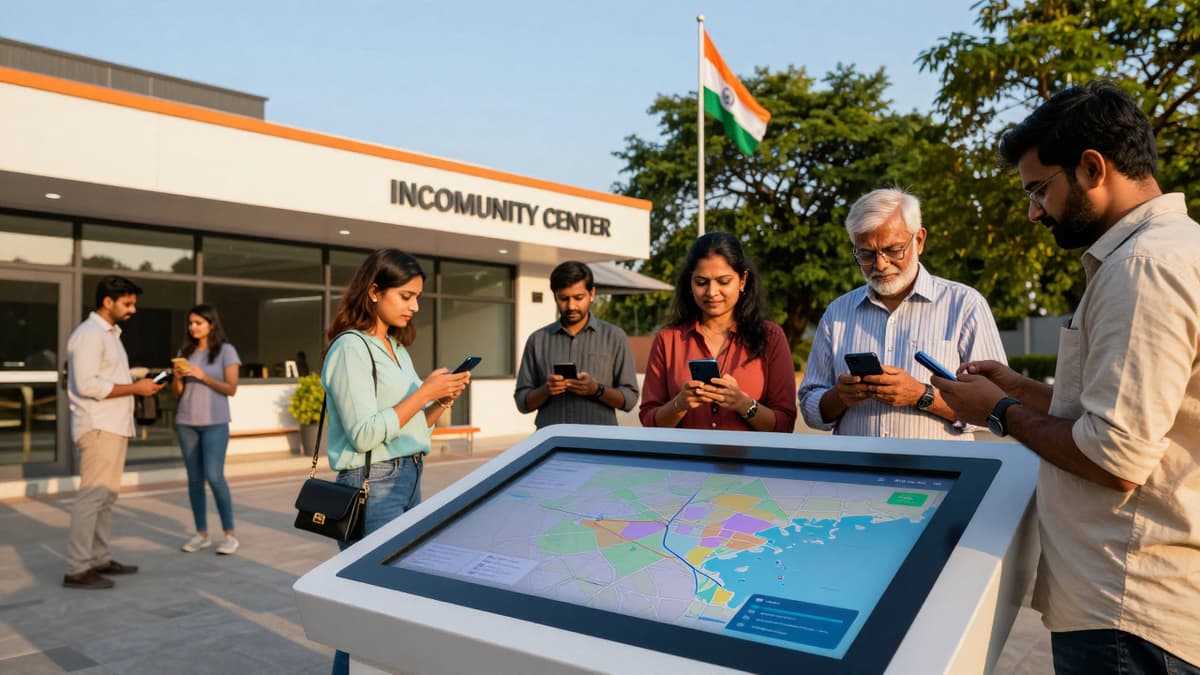
India prepares for its first fully digital population count, introducing self-enumeration and caste data collection. The Registrar General confirms the April 1 start date for the historic 2027 census.
As the countdown to a historic demographic milestone begins, the Registrar General and Census Commissioner of India, Mritunjay Kumar Narayan, confirmed on Monday that the Population Census 2027 is in its advanced stages. He stated that the first phase of the exercise is scheduled to commence on April 1, 2026, marking the beginning of the first fully digital population count in the nation's history. This transition to a digital census India represents a significant shift from traditional paper-based methods, promising a faster timeline for data publication with most results expected to be released in 2027 rather than years later.
The announcement comes amidst a period of administrative reorganization and modernization. According to data presented by Census officials, the landscape of the country has shifted considerably since the last count. There has been a notable decrease in the number of villages by over 1,000, contrasting with a substantial increase in urban settlements, including statutory towns and census towns. Specifically, the number of states and union territories has grown to 36, while the number of districts has risen by 144 to 784. Sub-districts have also increased from 5,990 to 7,092, reflecting a more granular administrative framework. Furthermore, statutory towns have risen by 1,087 to reach 5,128, and 688 new census towns have been added, bringing the total to 4,580. Conversely, the number of villages has seen a decline of 1,030, dropping from 640,932 in 2011 to 639,902 at present.
A defining feature of this cycle is the introduction of self-enumeration, a pilot initiative available in select regions before the general rollout. Mr. Narayan explained that the self-enumeration portal, accessible in 16 languages, will go live from April 1 to April 15 for residents of the Andaman and Nicobar Islands, Goa, Karnataka, Sikkim, Odisha, Lakshadweep, Mizoram, and specific areas of Delhi such as the NDMC and Delhi Cantonment. This option allows eligible residents to input their data using mobile phones or laptops 15 days before the House Listing Operations (HLO) begins. While this digital-first approach leverages increased digital literacy to ease the burden on enumerators, Mr. Narayan assured the public that all self-entered data will be rigorously verified by enumerators during subsequent door-to-door visits. The self-enumeration option is strictly limited to residents living within India to prevent data manipulation concerns.
A critical and often debated component of the upcoming count is the inclusion of caste data. The methodology for caste enumeration, which will be conducted during the second phase of the census, was described as not yet finalized. Officials are currently studying multiple suggestions received on the subject. The second phase, involving the enumeration of individual household members for details such as religion and caste, is scheduled for February 2027. However, exceptions exist for Ladakh and snow-bound areas of Jammu and Kashmir, Himachal Pradesh, and Uttarakhand, where both phases must be completed by September 30 of the current year to account for weather conditions.
Addressing legal concerns regarding privacy, Mr. Narayan emphasized that under the Census Act 1948, all census data remains strictly confidential. He clarified that individual data is protected under Section 15 of the Act and cannot be shared with state governments or the judiciary. Furthermore, census data does not fall under the purview of the Right to Information Act, and it cannot be used to provide reservation benefits to any specific individual. He stressed that only aggregate data will be released and that the information provided is considered beyond the "scope of investigation." The security framework for the Census 2027 includes end-to-end data security measures, such as secure transmission, audited systems, and data centers designated as Critical Information Infrastructure, ensuring that individual privacy is maintained throughout the process.
While the majority of the country prepares for the digital rollout, a unique administrative challenge remains in the state of West Bengal. Mr. Narayan noted that West Bengal is currently the only state that has not yet notified the census process. Despite this, the government maintains that there is still ample time for the state to comply with the requirements. The operational window for the first phase extends until September 30 for all states, providing a clear deadline for West Bengal to notify and complete the exercise. As deliberations continue with the state government, the central administration remains confident in the timeline, ensuring that the digital census India initiative proceeds without significant disruption from pending notifications in specific regions. This flexibility highlights the administrative adaptability required to manage a nationwide census of this magnitude.
Jun 8, 2026 00:51 UTC
Trump Claims Iran Nuclear Deal Imminent Despite Diplomatic Fractures
Jun 8, 2026 00:47 UTC
Iran Fires Missiles at Israel After Beirut Strike
Jun 7, 2026 22:00 UTC
US, Iran Peace Hops Fade 100 Days Into War
Jun 7, 2026 20:57 UTC
Iran Strikes Israel: IRGC Promises Week of Continuous Offensive
Jun 8, 2026 02:28 UTC
Trump Walks Out of Meet the Press After Rejecting Evidence Demands


