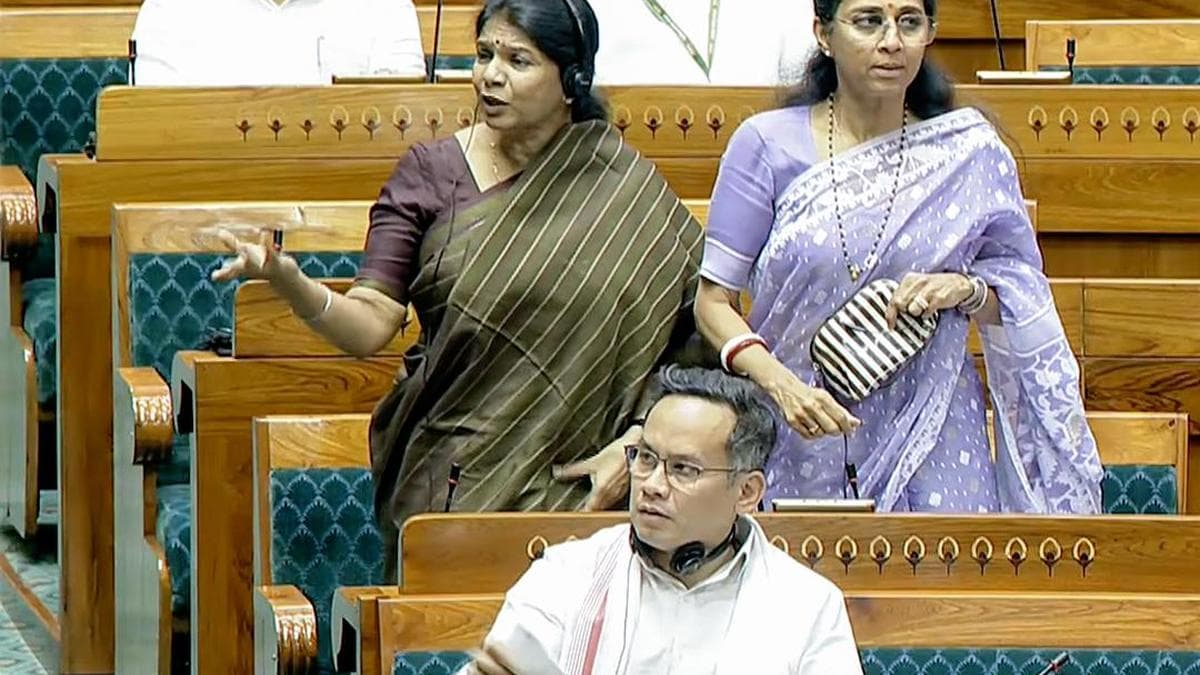
A significant political showdown unfolded in the Lok Sabha as Opposition MPs presented grievances against Speaker Om Birla regarding parliamentary conduct.
A significant political showdown unfolded within the Lok Sabha as Opposition MPs presented a formidable list of grievances against Speaker Om Birla during the Budget session updates. The debate centered on a resolution seeking the Speaker’s removal, driven by claims that parliamentary procedures were being skewed to favor the government at the expense of democratic dialogue. Senior Congress MP Manish Tewari summarized the Opposition's stance with a stark phrase: the government must have its way, but the Opposition must have its say. This sentiment encapsulates the core friction regarding the appointment of the constitutional position of Deputy Speaker, which has remained vacant for the past 12 years according to the proceedings.
Senior Congress MP Manish Tewari addressed specific controversies involving Rahul Gandhi and former Army Chief General M. M. Narawane’s memoir. He defended Gandhi’s right to quote from a published magazine, noting that the contents had not been controverted by the administration. Furthermore, he dismissed allegations regarding undignified protests by women MPs as overblown. He referenced past disruptions during the UPA era without resulting in suspension resolutions, contrasting this with current actions taken against opposition members. Tewari emphasized that despite BJP member disruptions washing out an entire session previously, no resolution was ever moved to suspend any Opposition member during that time.
Trinamool Congress MP Mahua Moitra highlighted the irony of her position, having previously been denied a defense during her expulsion from the 17th Lok Sabha. She described it as ironic and divine karma that she is opening the debate from her party against the Speaker who had denied her the opportunity to defend herself. She accused Birla of setting less than graceful benchmarks for presiding over the House. The statistics presented were damning; since 2004, 245 MPs from Opposition parties have faced suspension. Moitra noted that nearly half, specifically 120 MPs, were suspended during Birla’s tenure alone. She pinpointed December 2023 as a critical moment where Birla ordered the largest mass suspension in history, removing 100 Opposition MPs in one episode. This single incident accounted for over 40% of all Lok Sabha suspensions recorded since 2004.
Samajwadi Party MP Rajeev Rai challenged the Chair regarding microphone control. He argued that microphones remain active when BJP members attack former Prime Ministers of the Congress regime but are cut off within 30 seconds when Opposition members question the government. DMK leader T.R. Baalu described Birla as a gentleman under pressure, questioning why harsh steps were necessary despite his status. Baalu stated he did not know what went wrong with him regarding the suspensions in the last seven years.
JD(U) leader and Union Minister Rajiv Ranjan Singh countered that the no-confidence motion was merely an attempt to keep the Speaker under pressure. He maintained that maintaining decorum requires controlling unruly members, asserting there is nothing wrong with such actions. The debate highlights a deepening rift over who controls the narrative within India’s legislative body. The clash between procedural authority and political representation remains unresolved as the session continues. Singh argued that to maintain the decorum and dignity of the House, the Speaker has to control unruly members.
The resolution to remove Speaker Om Birla reflects a contentious period where procedural fairness is questioned by the Opposition. While ministers defend the Speaker's role in maintaining order, the Opposition emphasizes the lack of representation and historical precedents regarding suspensions. The debate underscores the tension between executive pressure on the Chair and the fundamental rights of parliamentary members to speak freely.
May 1, 2026 03:50 UTC
Trump Administration Declares Iran Conflict Terminated
Join 50,000+ readers getting the global briefing every morning.
No spam. Unsubscribe anytime.
May 1, 2026 03:50 UTC
Trump Administration Declares Iran Conflict Terminated
Apr 25, 2026 01:38 UTC
Iranian FM Araghchi Heads to Islamabad for Critical US-Iran Talks
Apr 25, 2026 01:13 UTC
Calm Suspect in Delhi Rape-Murder Case Faces Mental Evaluation
Apr 24, 2026 23:24 UTC
Raghav Chadha joins BJP, Shaking AAP’s Rajya Sabha Strength