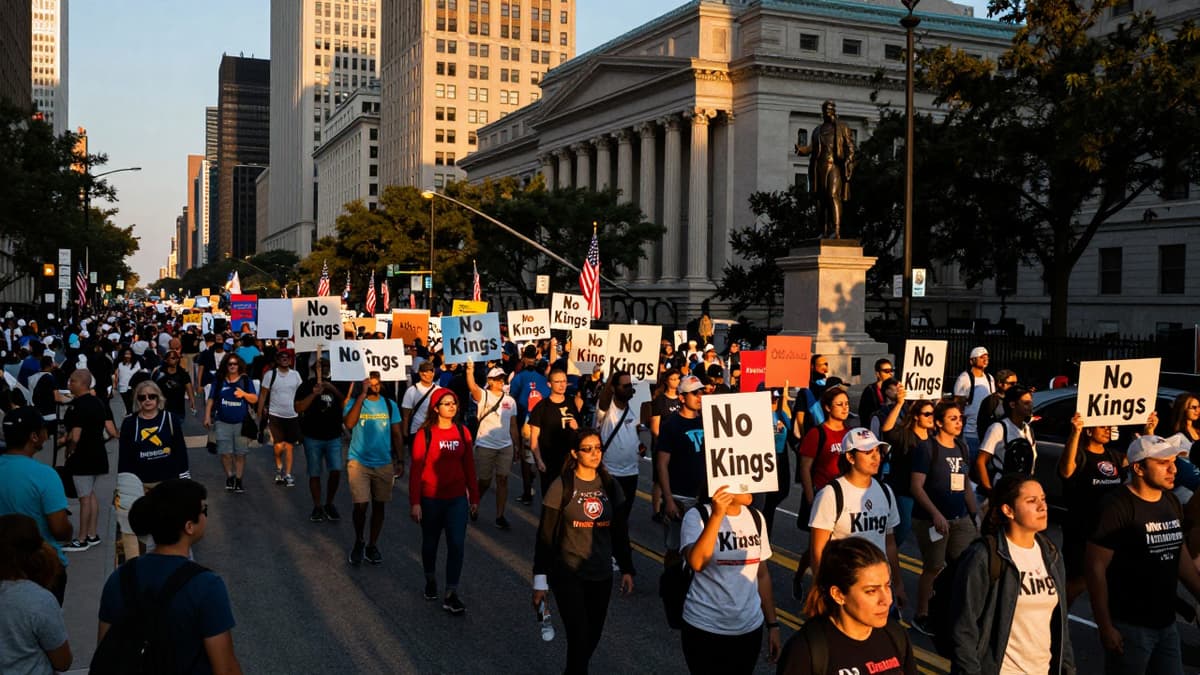
Massive crowds gathered from Minnesota to London in No Kings rallies, denouncing presidential overreach and immigration enforcement while demanding the end of authoritarian rule.
Protestors in Minnesota (AP photo)
A wave of dissent swept across the United States and parts of Europe on Saturday as thousands of citizens took to the streets for the "No Kings" rallies. These demonstrations were organized to voice deep anger over the war in Iran and the actions of President Donald Trump. From bustling metropolitan areas to remote small towns, people mobilized to demand an end to what they perceive as authoritarian overreach, with the state of Minnesota emerging as the undeniable centre of the movement.
The flagship event drew thousands to the Capitol lawn in St Paul, where the atmosphere was charged with a mix of musical tribute and political fervor. Musician Bruce Springsteen headlined the gathering, delivering a passionate performance that highlighted the resilience of the local population. He specifically praised residents for resisting a recent surge in immigration enforcement by US authorities, a move that has sparked significant public backlash. During his set, Springsteen performed "Streets of Minneapolis," a poignant song written in response to the fatal shootings of Renee Good and Alex Pretti by federal agents. Reflecting on the local resistance, he stated, "Your strength and your commitment told us that this was still America… this reactionary nightmare… will not stand."
The Minnesota protests featured a lineup of high-profile figures including actor Robert De Niro, singer Joan Baez, actor Jane Fonda, and Senator Bernie Sanders. The visual messaging of the rally was stark, with a large banner declaring, "We had whistles, they had guns. The revolution starts in Minneapolis." This sentiment echoed across the country, where the scale of the movement became evident through more than 3,100 registered events across all 50 states. While the vast majority of gatherings remained peaceful, the situation in Los Angeles saw violence erupt. In that city, clashes occurred near a federal detention centre, leading police to deploy tear gas after some protesters threw objects. Authorities confirmed that arrests were made when individuals refused to disperse from the area.
In the nation's capital, Washington DC, hundreds marched past the Lincoln Memorial to the National Mall. Participants held signs reading "Put down the crown, clown" and chanted "No kings," reinforcing the central theme of opposition to executive power. The response to these widespread demonstrations was sharp and immediate from Republican leadership. White House spokesperson Abigail Jackson dismissed the No Kings rallies as the product of leftist funding networks, asserting that they lacked genuine public support. In a statement, Jackson remarked, "The only people who care about these Trump Derangement Therapy Sessions are the reporters who are paid to cover them."
The criticism extended beyond the White House to the National Republican Congressional Committee (NRCC). NRCC spokesperson Maureen O'Toole labeled the gatherings as "hate America Rallies," claiming they provided a platform for the "far-left's most violent, deranged fantasies." The unrest was not confined to American soil; demonstrations were held in several countries, including Rome, London, and Paris. In Rome, crowds marched while criticizing Prime Minister Giorgia Meloni and opposing recent military actions involving Iran. In London, demonstrators carried signs reading "Stop the far right" and "Stand up to racism." Meanwhile, in Paris, several hundred people, including Americans living abroad, gathered at the Bastille to join the global call for accountability. The sheer volume of registered events suggests a coordinated, nationwide shift in public sentiment, challenging the current political trajectory.
The convergence of celebrity endorsements, citizen activism, and international solidarity in the Minnesota protests indicates a deeply rooted dissatisfaction with the current administration's policies. As the events unfolded, the sheer geographic spread of over 3,100 rallies suggests that the unrest is not an isolated incident but a sustained national movement. If current trends in police responses and political rhetoric continue, the pressure on federal authorities regarding immigration enforcement and military engagement in Iran is likely to intensify. The involvement of international figures and the cross-border nature of the dissent may also force a broader diplomatic re-evaluation of the US stance, potentially leading to further domestic policy shifts as the administration grapples with the scale of public opposition.
Jun 8, 2026 02:17 UTC
Magnitude 7.8 Quake Shakes Philippines, Urging Immediate Evacuations
Join 50,000+ readers getting the global briefing every morning.
No spam. Unsubscribe anytime.
Jun 8, 2026 02:17 UTC
Magnitude 7.8 Quake Shakes Philippines, Urging Immediate Evacuations
Jun 8, 2026 00:51 UTC
Trump Claims Iran Nuclear Deal Imminent Despite Diplomatic Fractures
Jun 8, 2026 00:47 UTC
Iran Fires Missiles at Israel After Beirut Strike
Jun 7, 2026 22:38 UTC
Congress Party Claims Unity for INDIA Bloc Delhi Meeting