Political tensions rise in Kerala as state leadership boycotts the Prime Minister's project launch event due to invitation controversies.
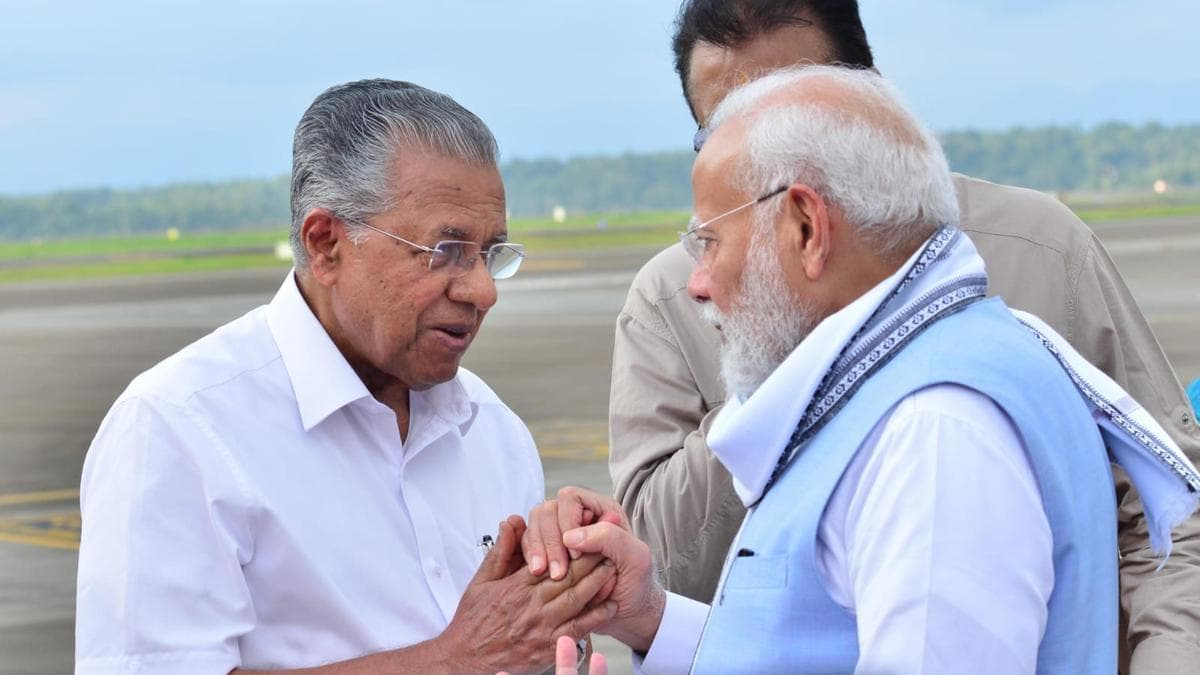
On Wednesday, March 11, 2026, a scheduled visit by Prime Minister Narendra Modi to Kochi evolved into a significant political development rather than a standard administrative function. The Chief Minister of Kerala and several state ministers decided to boycott the official gathering, marking a distinct shift in the interaction between state leadership and the central government during an election-sensitive period. This event was originally intended to launch infrastructure projects valued at ₹10,800 crore at the Jawaharlal Nehru International Stadium in Kaloor. While Union Ministers and BJP State president Rajeev Chandrasekhar were confirmed attendees, key figures from the state government opted out, turning a project inauguration into a statement on political exclusion.
The primary catalyst for the absence of state leadership was the handling of invitations by the organizers. Public Works Department Minister P.A. Mohamed Riyas was notably not invited to the function at all. This oversight directly influenced the stance of other cabinet colleagues, who viewed the exclusion as a procedural failure. Minister for Local Self-Governments M. B. Rajesh expressed dissatisfaction, stating he was invited very late and that his colleague was left out entirely. He viewed this as a mark of protest against the exclusion of the PWD Minister.
Chief Minister Pinarayi Vijayan remained in Thiruvananthapuram, citing a lack of proper communication regarding the schedule. Although the Chief Minister did not have any public programmes for the day, sources indicated that the absence was due to the perceived disregard for state protocols. The event was also set up as a venue to kickstart the poll campaign of the National Democratic Alliance (NDA). This context suggests that the boycott was partly driven by the desire to avoid endorsing a political campaign during a government function.
The atmosphere at the Jawaharlal Nehru International Stadium was further complicated by the reactions of opposition leaders, who were also invited to the event. Congress leader Benny Behannan, currently in Delhi for Parliament sessions, declared he would not attend to avoid endorsing the BJP’s political campaign. He stated he would have refused even if he were in the State, highlighting a principled stand against the event's political usage.
In contrast, Hibi Eden attended as an MP right but criticized the inclusion of Rajeev Chandrasekhar and his role in translating the Prime Minister’s speech. Eden described the presence of Mr. Chandrasekhar at a government function as a reflection of the BJP’s intention to make it a political event, which cannot be appreciated. He specifically objected to the choice of a BJP leader to translate the speech of Mr. Modi, calling it an objectionable act. Meanwhile, Uma Thomas MLA was absent due to constituency duties in Thrikkakara, noting she would be busy attending another function there.
The boycott highlights the growing political friction ahead of the Assembly elections, with project launches becoming battlegrounds for political influence. While the Prime Minister was set to launch projects worth ₹10,800 crore alongside Union Ministers and BJP State president Rajeev Chandrasekhar, the absence of top state leadership underscores the sensitivity surrounding the event. The differing stances from Congress leaders like Benny Behannan and Hibi Eden further illustrate the complex dynamics at play as political parties finalize their strategies for the upcoming Assembly elections.
May 1, 2026 03:50 UTC
Trump Administration Declares Iran Conflict Terminated
Join 50,000+ readers getting the global briefing every morning.
No spam. Unsubscribe anytime.
May 1, 2026 03:50 UTC
Trump Administration Declares Iran Conflict Terminated
Apr 25, 2026 01:38 UTC
Iranian FM Araghchi Heads to Islamabad for Critical US-Iran Talks
Apr 25, 2026 01:13 UTC
Calm Suspect in Delhi Rape-Murder Case Faces Mental Evaluation
Apr 24, 2026 23:24 UTC
Raghav Chadha joins BJP, Shaking AAP’s Rajya Sabha Strength