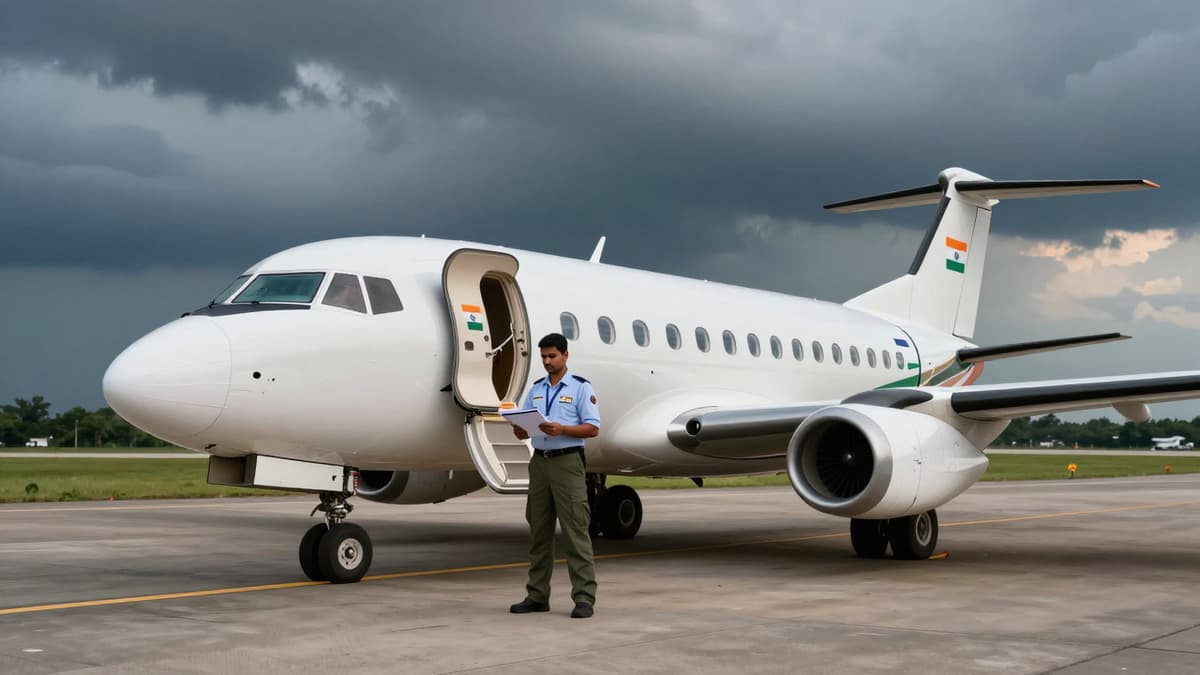
Following a fatal crash involving a deputy CM, India's aviation regulator empowers flight crews to refuse unsafe flights, marking a major shift in pilot refusal rights.
In the wake of a tragic small plane crash in January that claimed the life of Maharashtra Deputy Chief Minister Ajit Pawar and four others, the Directorate General of Civil Aviation (DGCA) has issued a decisive update to aviation protocols. On Friday, the regulator released a fresh set of "guidelines for carriage of central, state and other dignitaries by aircraft," fundamentally altering the power dynamic between flight crews and high-profile passengers. These DGCA new guidelines now empower pilots flying specific categories of Very Important Persons (VIPs)-including Z+ category SPG protectees, cabinet ministers, the Chief Justice of India, and state governors-to unilaterally refuse a flight if safety conditions are not met.
The catalyst for this regulatory shift was the January incident involving the deputy CM, which highlighted critical vulnerabilities in the safety of air travel for government officials. The DGCA observed that previous accidents and incidents associated with flights to temporary helipads or airstrips, particularly during electioneering, often involved violations of safety instructions. In a stark departure from previous norms, the new directives explicitly state that flight crews must not be subjected to undue pressure to undertake flights that could jeopardize the safety of operations. The regulator noted that last-minute changes to planned flights driven by VIP requirements must be coordinated exclusively through an organization's management, rather than directly with the crew, to eliminate direct coercion.
Historically, the aviation industry operated under a pressure cooker environment where safety concerns raised by pilots were often overridden by the urgency of political schedules. A charter operator with decades of experience highlighted the significance of this shift, stating that these new rules make it possible for them to say no to VIPs when operations are unsafe. The operator recalled personal instances where pointing out unsafe conditions due to weather or other reasons led to professional trouble. However, the new framework clarifies that while operators remain responsible for aircraft maintenance and landing approvals, the ultimate onus for a safe flight rests with everyone on board.
Under the updated directives, the planning and conduct of the flight are defined as professional responsibilities that must remain under the sound judgment of the flight crew and aircraft maintenance engineers. They are now guaranteed freedom from external pressure or undue influence. The DGCA mandates that VVIP air safety is the paramount concern, noting that frequent use of small aircraft and helicopters for electioneering and other purposes has often led to compromised safety standards in the past. The new rules aim to rectify this by ensuring that adequate measures are taken by all stakeholders to uphold the highest standards of safety.
The DGCA has laid down a comprehensive list of conditions that must be followed strictly by all stakeholders, including State Governments, Public Sector Undertakings (PSUs), and non-scheduled or private aircraft operators. One of the core requirements is that only twin-engine aircraft with a minimum of two crew members and good operational capability can be used for these flights. Furthermore, the operator and flight crew must ensure that all baggage is properly screened before being loaded into the aircraft.
A significant procedural change involves the preparation of the landing site. All relevant entities must ensure the existence of a suitable helipad or airstrip intended for use at least 24 hours prior to the commencement of the flight. Before operating to or from remote or uncontrolled airports and helipads, the operator is required to obtain landing permission or a No Objection Certificate (NOC) from the District Authorities. The State and District Administrations are now tasked with facilitating the timely provision of information regarding helipad or airstrip conditions, coordinates, security, and fire and rescue arrangements. Landing permission or NOCs will only be issued after ensuring the availability of requisite support services.
Beyond procedural changes, the new rules impose stringent technical and crewing standards. Aircraft operating on these routes must be equipped with serviceable instruments and equipment as required under Instrument Flight Rules, including functional weather radar, communication, and navigational equipment. Every aircraft must be inspected and certified prior to such flights to ensure compliance.
Any defects in the aircraft, engines, or instruments reported by the pilot in command or detected during ground inspections must be rectified before the commencement of the next flight. Fuel management is also strictly regulated; the quality of fuel must be ensured during refueling, and adequate fuel must be uplifted for the planned flight, including contingencies. Finally, the rules mandate that only experienced pilots are permitted to operate these flights, ensuring that the human element of safety is handled by the most qualified professionals available.
The implementation of these new rules marks a definitive end to the era where political pressure could supersede safety protocols. By explicitly codifying the right of pilots to refuse a flight, the DGCA has placed the lives of VVIPs and crew members on a firmer legal and operational footing. Looking ahead, the aviation sector is likely to see a reduction in ad-hoc flight schedules and an increase in rigorous pre-flight checks. The industry trend points toward a more conservative approach to flight operations, where the "yes" to a flight is no longer automatic but earned through strict adherence to safety protocols. As the aviation community adapts to these DGCA new guidelines, the long-term impact will likely be a restoration of public trust in air travel safety for the nation's most prominent figures, ensuring that no political figure's schedule ever again overrides the fundamental laws of aerodynamics and safety.
Jun 8, 2026 00:51 UTC
Trump Claims Iran Nuclear Deal Imminent Despite Diplomatic Fractures
Jun 8, 2026 00:47 UTC
Iran Fires Missiles at Israel After Beirut Strike
Jun 7, 2026 22:00 UTC
US, Iran Peace Hops Fade 100 Days Into War
Jun 7, 2026 20:57 UTC
Iran Strikes Israel: IRGC Promises Week of Continuous Offensive
Jun 8, 2026 02:28 UTC
Trump Walks Out of Meet the Press After Rejecting Evidence Demands


