A "little excursion" escalates toward full-scale invasion as the US targets Iran's oil lifeline, sparking global market fears and domestic opposition.
What began as a minor incursion described as a "little excursion" by President Trump is rapidly evolving into a potential full-scale invasion of Iran. U.S. officials have signaled the start of a broader military campaign, with thousands of American troops moving into the region. The central objective appears to be the seizure of Kharg Island, Iran's critical oil export hub, marking a dramatic escalation in the US invasion of Iran scenario.
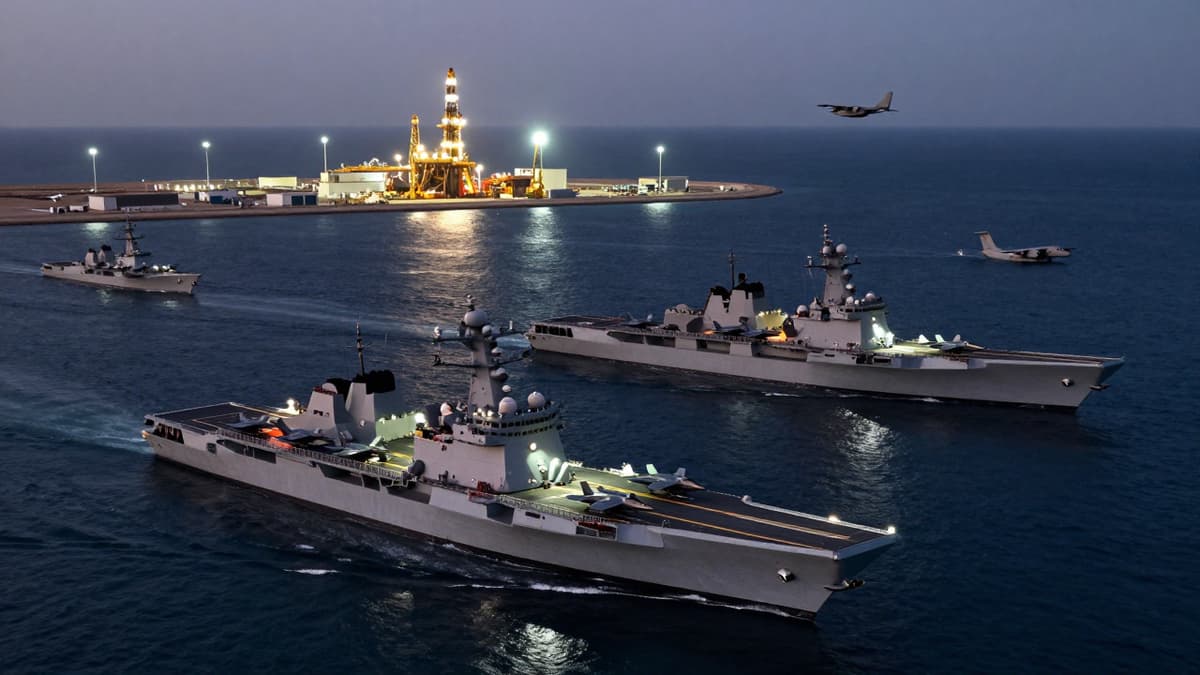
The administration has not confirmed a full-scale invasion, yet the scale of troop movements suggests a widening conflict is imminent. Leaks over the weekend revealed preparations for a "final blow," including the deployment of roughly 2,500 Marines aboard the USS Tripoli, a flagship amphibious assault ship capable of launching F-35 stealth fighters. This vessel, formerly based in Japan, is now positioned within striking range of the Persian Gulf. Simultaneously, elements of the 82nd Airborne Division have been moved, with reports indicating the Pentagon is considering deploying up to 10,000 additional troops. Amphibious assets, including the USS Boxer, are en route, underscoring an effort to build "maximum optionality" for the Commander in Chief.
Defense analysts suggest that a Kharg Island seizure would not be a traditional territorial conquest but a strategic move to choke off Tehran's revenues and control maritime routes. Located just off the coast, the island handles the vast majority of Iran's oil exports, much of which is directed toward China. Seizing the island would directly strike the country's economic lifeline and potentially give the United States leverage over global energy flows, where roughly a fifth of the world's oil passes through the nearby Strait of Hormuz.
Administration officials have sent mixed signals regarding these maneuvers. Secretary of State Marco Rubio stated that the United States could achieve its objectives "without any ground troops," though he added that President Trump must be prepared for multiple contingencies. White House spokeswoman Karoline Leavitt emphasized that the Pentagon's job is to prepare for "maximum optionality" and that no final decision has been made. However, the specific focus on Kharg Island reveals the administration's deep strategic intent to disrupt Iran's ability to threaten shipping or maintain its energy economy.
The stakes are high, as the conflict has already driven up fuel prices, disrupted commercial aviation, and rattled global markets. By targeting Iran's infrastructure, Washington could reshape global energy markets and indirectly pressure major buyers like China, which relies heavily on Iranian oil. Some analysts argue this move is tied to a wider strategy aimed at constraining Beijing's strategic options, including its posture toward Taiwan. However, military experts concede that any attempt to seize Kharg Island would be complex and risky. The island is exposed, making it vulnerable to Iranian missile strikes, drone attacks, and naval harassment. Holding it would require sustained air superiority and a steady flow of reinforcements.
Iran, despite descriptions of a degraded military capacity by U.S. and Israeli officials, has continued to strike back. Low-level but persistent attacks on American assets, targeting aircraft and missile defense systems, have kept tensions high. Tehran has warned of a "punitive response" if its territory is seized, citing a history of absorbing heavy losses during its protracted war with Iraq in the 1980s as evidence of its willingness to sustain a fight.
Critics argue the administration is courting a wider war without a clear endgame. Over the weekend, nationwide "No Kings" rallies-the third such demonstrations since Trump took office for a second term-revealed growing opposition to the war across the U.S. These protests include MAGA circles that initially embraced the President's promise not to get into needless foreign wars. President Trump continues to issue erratic statements, sometimes insisting there will be "no deal" with Iran short of "unconditional surrender," while at other times claiming the "War is almost over" amidst the expanding military buildup. While officials maintain that diplomacy remains possible, the steady buildup of forces suggests the Pentagon is preparing for a scenario in which talks fail, potentially initiating the Trump Middle East conflict into a prolonged and dangerous phase.
The military buildup points toward a decisive blow that could fundamentally alter the geopolitical landscape of the Middle East. If the Kharg Island seizure proceeds, Iran's economic stability will be severely compromised, likely forcing a rapid retaliation that could destabilize global shipping lanes. The historical context of Iran's willingness to absorb heavy losses suggests that even a limited operation could spiral into a broader regional war. As diplomatic signals remain mixed and domestic opposition grows, the window for a negotiated exit is narrowing, leaving the international community bracing for a potential long-term conflict defined by economic warfare and direct military confrontation.
Jun 8, 2026 00:51 UTC
Trump Claims Iran Nuclear Deal Imminent Despite Diplomatic Fractures
Jun 8, 2026 00:47 UTC
Iran Fires Missiles at Israel After Beirut Strike
Jun 7, 2026 22:00 UTC
US, Iran Peace Hops Fade 100 Days Into War
Jun 7, 2026 20:57 UTC
Iran Strikes Israel: IRGC Promises Week of Continuous Offensive
Jun 8, 2026 02:28 UTC
Trump Walks Out of Meet the Press After Rejecting Evidence Demands


