Diplomatic efforts intensify as Pakistan arrives in Tehran for renewed peace talks, while the US Navy and Senate back aggressive military action and economic sanctions against Iran.
The United States and Pakistan have engaged in urgent diplomatic maneuvering as a delegation led by Pakistan's Army Chief Munir arrived in Tehran on April 15, 2026. This mission follows President Donald Trump's indication that peace negotiations could resume this week, aiming to resolve the escalating Iran war that has seen intense naval confrontations.
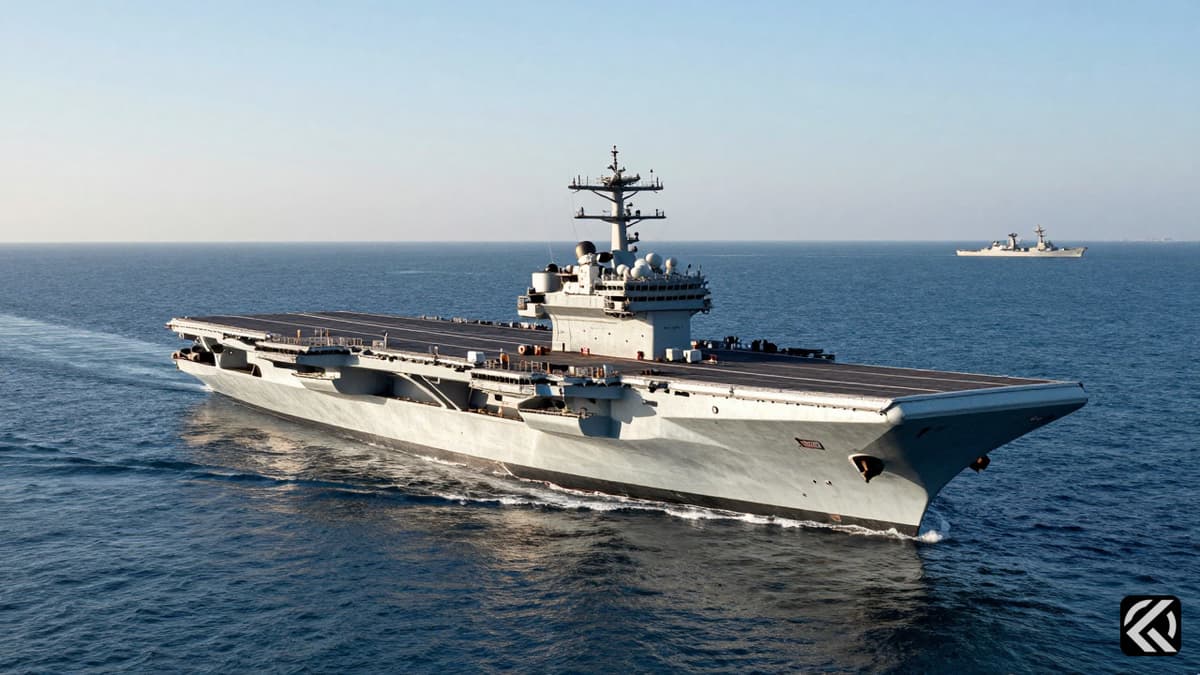
The military landscape is simultaneously shifting as the USS Gerald R. Ford, the world's largest aircraft carrier, surpassed the 50-year record for the longest deployment since the Vietnam War, reaching its 295th day at sea. Concurrently, the US Navy has enforced a strict US blockade on Iran, turning around ten vessels in the first two days of the operation. These dual developments highlight the intensifying pressure on Tehran, even as the US Treasury expands sanctions targeting Iranian oil elites.
In response to the tightening naval cordon, Iran's military commander issued a stark warning on Wednesday, threatening to halt trade in the Gulf region and shut down Red Sea commerce if Washington does not lift the blockade. Despite this rhetoric, President Trump claimed the conflict was "very close to over" and suggested that China had agreed not to supply arms, a claim denied by Beijing. Meanwhile, US lawmakers voted to block a Democratic-led resolution that would have halted the military campaign without congressional authorization, signaling strong legislative backing for the President's strategy.
The diplomatic front saw a Pakistani delegation arrive in Tehran carrying a new message from Washington. This follows the abortive negotiations held in Islamabad last weekend. White House Press Secretary Karoline Leavitt stated that further talks "would very likely" take place in the Pakistani capital, expressing optimism about the prospects of a deal. The United States is reportedly discussing a potential second round of talks, with US Vice President J.D. Vance previously offering the Islamic Republic a "grand bargain" to end the six-week war and address nuclear disputes.
On the economic front, the stakes are rising globally. Qatar's Finance Minister Ali Ahmed Al-Kuwari warned that the full economic impact of the Iran war is imminent, describing recent price spikes as merely the "tip of the iceberg." He predicted a "really huge economic impact globally" within one to two months. In response, Finance Ministers from 11 countries, including Britain and Japan, called on the IMF and World Bank for "coordinated emergency support" to aid nations facing supply chain disruptions and energy security risks.
The US military continues to assert dominance at sea. The USS Gerald R. Ford has already endured significant strain, including a fire that required lengthy repairs, yet it remains deployed. The ship's 10-month duration now surpasses the previous record set by the USS Abraham Lincoln in 2020. This deployment has seen the carrier participate in a military raid in Venezuela and now the Iran war, raising questions about the physical toll on the ship and the mental strain on its crew.
Sanctions have also been ramped up by the US Treasury Department. Targeting Iran's oil transportation infrastructure, more than two dozen individuals, companies, and vessels have been sanctioned. The Treasury specifically named Mohammad Hossein Shamkhani, an oil magnate and the son of Ali Shamkhani, a key security figure killed in U.S.-Israeli strikes in February. Treasury Secretary Scott Bessent described the action as "Economic Fury" aimed at regime elites.
While Washington focuses on Tehran, Prime Minister Benjamin Netanyahu of Israel maintained a firm stance on the southern front. He stated that the Israeli military continued to strike Hezbollah and was closing in on the militia's stronghold of Bint Jbeil. Netanyahu emphasized that negotiations with Lebanon were finally happening because Israel is "very strong." Despite the US focus on Iran, Netanyahu noted that Israel and the US share "identical goals," including the removal of enriched material and the reopening of maritime routes.
Global shipping has faced immediate disruptions. A Malta-flagged crude oil carrier, the VLCC Agios Fanourios I, became the first to successfully head west through the Strait of Hormuz after anchoring for two days in the Gulf of Oman. It is expected to arrive in Basra, Iraq, which is not under the US blockade. This movement follows reports that no vessels have made it past US naval forces during the initial 48 hours of the blockade.
Regional dynamics also include high-level communications between other global players. UAE Vice President Sheikh Mansour bin Zayed Al Nahyan and Iran's parliamentary Speaker Mohammad Bagher Qalibaf held a phone call to discuss de-escalating tensions. Similarly, China's top diplomat spoke with his Iranian counterpart, reiterating Beijing's support for maintaining the momentum of the ceasefire and peace talks, even as US officials claimed Beijing had agreed not to transfer arms to Iran.
The US administration clarified that while President Trump would welcome an end to hostilities between Israel and Hezbollah, such a deal is not part of the current peace negotiations with Iran. The focus remains on the "grand bargain" to end the conflict with Tehran.
Global Economic Tensions Surge Amid Naval Standoff The convergence of military blockades, record-breaking naval deployments, and targeted economic sanctions paints a picture of a volatile region with far-reaching consequences. As the US maintains a firm stance with the USS Gerald R. Ford and a strict blockade on Iranian ports, the ripple effects on global markets are already being felt by nations reliant on Gulf trade. With Qatar's finance minister forecasting severe economic impacts within weeks and international finance ministers demanding emergency support, the trajectory suggests a prolonged period of instability. Unless the diplomatic efforts led by Pakistan and the US succeed in securing a "grand bargain," the region faces a likely deepening of the crisis, potentially leading to extended disruptions in global energy supply chains and sustained upward pressure on commodity prices. The fragile nature of the current ceasefire, set to expire on April 22, leaves little room for error, indicating that the coming weeks will be critical in determining whether the conflict de-escalates or escalates further into a broader regional war.
Jun 8, 2026 00:51 UTC
Trump Claims Iran Nuclear Deal Imminent Despite Diplomatic Fractures
Jun 8, 2026 00:47 UTC
Iran Fires Missiles at Israel After Beirut Strike
Jun 7, 2026 22:00 UTC
US, Iran Peace Hops Fade 100 Days Into War
Jun 7, 2026 20:57 UTC
Iran Strikes Israel: IRGC Promises Week of Continuous Offensive
Jun 8, 2026 02:28 UTC
Trump Walks Out of Meet the Press After Rejecting Evidence Demands


