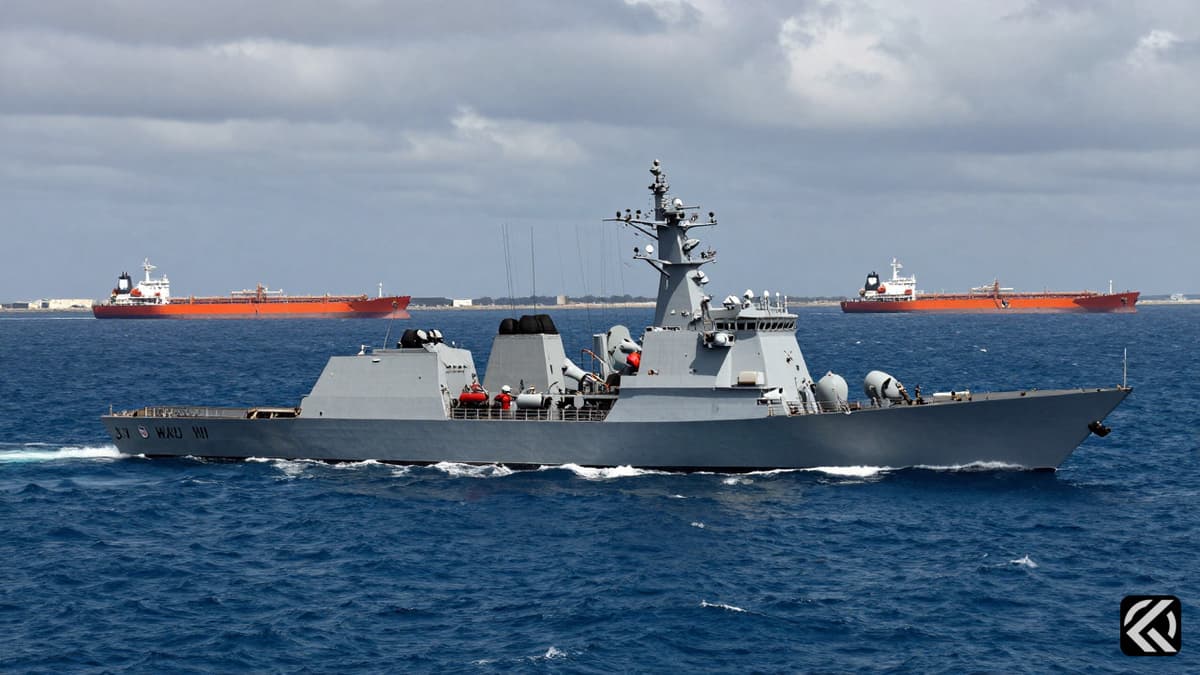
US forces intercepted oil tankers attempting to leave Iran, enforcing a new blockade aimed at reopening the critical energy chokepoint following collapsed ceasefire talks.
The US Navy destroyer intercepted two oil tankers attempting to leave Iran on Tuesday, enforcing a naval blockade announced by President Donald Trump a day prior. This operation targets the Strait of Hormuz, a vital energy chokepoint where roughly one-fifth of global oil supplies flow, to compel Iran to end the effective closure of the waterway.
This incident marks the initial phase of Washington's enforcement strategy, aimed at reopening the critical passage after talks collapsed to end hostilities in the ongoing Iran-US-Israel conflict. The conflict, which erupted on February 28, has now entered its second month and is currently under a two-week ceasefire. President Trump has explicitly linked the reopening of the Strait of Hormuz to a temporary ceasefire agreement set to expire next week. According to a US official speaking on condition of anonymity to Reuters, the vessels had departed Chabahar port in the Gulf of Oman when they were contacted by radio by the warship and ordered to turn back. It remains unknown whether additional warnings were issued to the captains.
A US Central Command statement confirmed that six merchant vessels complied with instructions to turn around and re-enter an Iranian port on the Gulf of Oman. The statement added that no ships have successfully passed through the blockade since it began on Monday. However, maritime tracking data cited by AFP and Kpler indicates a more complex reality on the water. The data reveals that at least three vessels departing Iranian ports managed to cross the Strait of Hormuz despite the US-declared naval blockade, though some ships later turned back. The specific vessels identified in these reports include the Liberia-flagged bulk carrier Christianna, the Comoros-flagged tanker Elpis, and the bulk carrier Argo Maris, all of which reportedly moved through the chokepoint after completing cargo operations at Iranian ports. These movements are believed to be part of a wider group of at least seven Iran-linked vessels that transited the strait after the blockade came into force on Monday.
The operation involves a significant mobilization of military assets. According to the military, more than 10,000 US personnel, over a dozen warships, and multiple aircraft are currently engaged in the mission. Washington maintains that it will continue to ensure freedom of navigation for vessels not travelling to or from Iran. However, experts have urged caution regarding the immediate effectiveness of the operation. "We just don't know yet how effective it is. We are still in day two," said Noam Raydan of The Washington Institute for Near East Policy. Raydan noted that the challenge is compounded because some Iran-linked ships disable tracking systems to avoid detection.
The broader context of the Hormuz Blockade is one of escalating tension and significant humanitarian and economic cost. Iranian threats to shipping have already driven global oil prices up by around 50%. The hostilities have resulted in roughly 5,000 deaths, while thousands of US strikes have reportedly weakened Iran's military infrastructure. Despite these losses, analysts warn that Tehran still poses a significant challenge for Washington. Citing a more hardline leadership and a concealed stockpile of highly enriched uranium, experts suggest the situation remains volatile. Raydan warned that retaliation remains likely if pressure intensifies, adding, "We're in the testing period."
If the blockade is sustained, analysts say it could further escalate tensions and provoke direct retaliation from Tehran. The situation may also strain the fragile ceasefire and further destabilize regional security. The uncertainty of the next few days, particularly as the temporary ceasefire agreement approaches its expiration next week, hangs over the operation. The ability of the US Navy to maintain the blockade against vessels bypassing the restriction, combined with the potential for Iranian countermeasures, will likely determine whether the pressure on Tehran yields the desired result of reopening the Strait of Hormuz.
The current Hormuz Blockade faces an immediate test of its durability as the expiration of the ceasefire approaches. While US forces have successfully intercepted vessels and enforced a turn-around order, the breach by at least three ships and the transiting of a wider group suggest logistical vulnerabilities. With oil prices already surging and a hardline leadership in Tehran controlling a concealed stockpile of enriched uranium, any perceived failure could trigger severe retaliation. The effectiveness of the blockade relies heavily on maintaining pressure without breaking the fragile ceasefire, a balance that analysts describe as a critical "testing period" with significant regional security implications.
Jun 8, 2026 00:51 UTC
Trump Claims Iran Nuclear Deal Imminent Despite Diplomatic Fractures
Jun 8, 2026 00:47 UTC
Iran Fires Missiles at Israel After Beirut Strike
Jun 7, 2026 22:00 UTC
US, Iran Peace Hops Fade 100 Days Into War
Jun 7, 2026 20:57 UTC
Iran Strikes Israel: IRGC Promises Week of Continuous Offensive
Jun 8, 2026 02:28 UTC
Trump Walks Out of Meet the Press After Rejecting Evidence Demands


