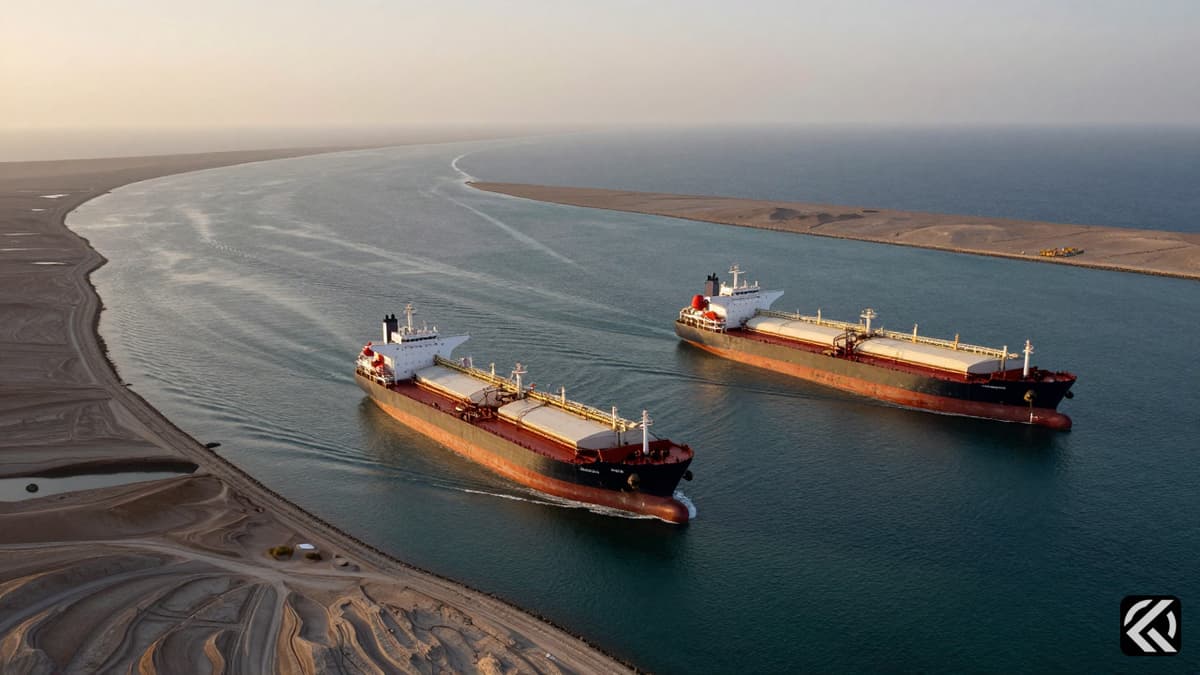
As regional tensions escalate due to ongoing US-Israel strikes on Iran, Oman and Iran have convened high-level talks to negotiate vessel passage through the critical waterway.
The Omani Foreign Ministry announced that representatives from Oman and Iran have convened to discuss critical options for maintaining the flow of maritime traffic. These discussions, held at the deputy foreign minister level, aimed to address the challenges facing the Strait of Hormuz during the current period of regional instability. The meeting took place on Saturday and was attended by specialists from both nations tasked with finding viable solutions for vessel movement.
This diplomatic engagement follows a period of heightened uncertainty where global energy supplies have been threatened. On Saturday, three Omani ships were tracked transiting the strait outside of the approved corridor near Larak Island, a move noted by shipping journal Lloyd's List as unusual due to their proximity to the Omani coast. These vessels included two large oil supertankers and one liquefied natural gas carrier, highlighting the continued operational risks in the area.
The timing of these talks coincides with significant developments in the broader regional landscape. An Iranian official stated earlier in the week that a protocol was being drafted with Oman to monitor traffic in the strait, a vital artery carrying approximately one-fifth of global oil supplies. However, Iran has severely restricted passage in retaliation for the ongoing Iran US Israel conflict, which has caused significant disruptions since the war began on February 28. While the Islamic Revolutionary Guard Corps (IRGC) has permitted some vessels, including those linked to Pakistan, France, and Turkey, to pass, approximately 3,000 other ships remain stranded.
The critical nature of the waterway cannot be overstated, as it serves as a primary chokepoint for energy shipments moving from the Gulf to Europe and Asia. Any sustained disruption injects volatility into global markets and forces importing nations to seek alternative energy sources. In response to the escalating situation, United States President Donald Trump issued a stern warning via social media, threatening to unleash severe consequences if the strait is not opened by Monday.
Amidst these military and diplomatic postures, Egypt has taken active steps to facilitate de-escalation. Egypt's Foreign Minister Badr Abdelatty held separate calls to discuss regional proposals with US Special Envoy Steve Witkoff and regional counterparts, including Iranian Foreign Minister Abbas Araghchi. These efforts underscore the international focus on finding a path forward through the crisis.
The potential for a diplomatic resolution remains a focal point for international observers. Amin Saikal, a professor emeritus at the Australian National University, cautioned that an expansion of the war would be disastrous for the entire region. He emphasized the necessity of a negotiated settlement, noting that while the door for diplomacy appears narrow, it could still be the only viable path to avoiding a catastrophe. Saikal suggested that the conflict might reach a turning point if President Trump determines that the domestic and international problems caused by the war necessitate a compromise with Iran.
The current efforts by Oman and Iran to hold Iran Oman deputy foreign minister talks represent a critical attempt to de-escalate the situation through direct communication. These meetings signal a potential channel for resolving the logistical gridlock that has paralyzed much of the global shipping industry. As the region waits for the outcome of these discussions, the world watches closely to see if a compromise can be reached before the threatened consequences are enacted.
The ongoing dialogue between Omani and Iranian officials highlights a fragile but essential avenue for stabilizing the Strait of Hormuz. As long as the Iran US Israel conflict continues to drive restrictions on maritime traffic, the risk of broader regional escalation remains high. The stranded vessels and the volatile market conditions suggest that without a swift diplomatic breakthrough or a shift in political will, particularly from the United States, the status quo of restricted transit and global market volatility will likely persist. The future of the region's energy security now hangs in the balance, dependent on the success of these high-level negotiations and the willingness of global powers to seek a compromise.
Jun 8, 2026 02:17 UTC
Magnitude 7.8 Quake Shakes Philippines, Urging Immediate Evacuations
Jun 8, 2026 00:51 UTC
Trump Claims Iran Nuclear Deal Imminent Despite Diplomatic Fractures
Jun 8, 2026 00:47 UTC
Iran Fires Missiles at Israel After Beirut Strike
Jun 7, 2026 22:00 UTC
US, Iran Peace Hops Fade 100 Days Into War
Jun 8, 2026 04:15 UTC
Trump Urges Netanyahu to Halt Iran Strike for Peace


