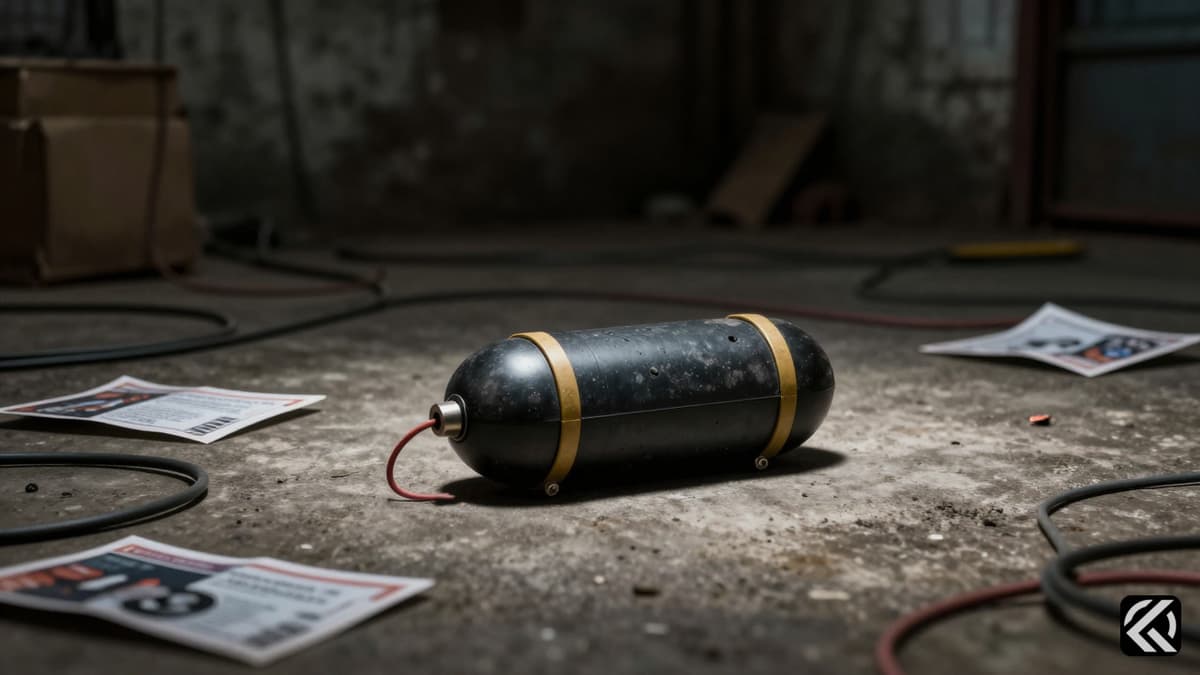
In a major security breakthrough, Delhi Police and local authorities dismantled a radical cell in Mumbai, arresting suspects linked to a plot involving remote-controlled explosive devices.
In a decisive security operation, the Delhi Police special cell, working in tandem with the Maharashtra Anti-Terror Squad (ATS), has successfully dismantled a radicalized terror module operating out of Mumbai. The Delhi Police arrest operations led to the detention of two primary suspects, Mossab Ahmad and Mohammad Hamad, who were allegedly in the final stages of preparing an IS-inspired attack using remote-controlled toy car bombs.
The crackdown was executed following intelligence reports indicating that youths in Kurla, Shivaji Nagar, and Govandi were in contact with banned terrorist organizations. Police teams conducted searches at the residences of three individuals over a weekend, seizing mobile phones and electronic devices containing incriminating material. The suspects, who joined radical online groups identified as "Mission Khilafat" and "Soldiers of Jihad," were found to be in the process of manufacturing improvised explosive devices. Authorities confirmed that the duo, who operate under the aliases Kalam and Hamad, had links to Abu Hufeiza, a figure associated with Jaish-e-Mohammed who functions as a recruiter on Telegram for the Islamic State.
The investigation has revealed a deeper, interconnected network of radicalization. While the primary focus was on the duo planning the vehicle-borne improvised explosive device (IED) attacks, the scope of the Mumbai terror module extends to a wider circle of potential recruits. Sources indicate that security agencies have identified four to five minors in Mumbai who appear to have been influenced by Islamic State propaganda. These young individuals are currently being monitored as agencies work to trace other leads connected to the module.
The operation is not an isolated incident but part of a broader, high-alert strategy by law enforcement. It comes on the heels of a similar arrest by the Delhi Police special cell, conducted jointly with the Uttar Pradesh ATS, of a suspect named Rizwan from Kushinagar. Rizwan, a 30-year-old figure associated with an IS-linked module since 2015, was previously arrested but allegedly continued his recruitment activities while in judicial custody. He has been transferred to Tihar Jail in Delhi, where a large amount of anti-national content was seized.
The current sweep follows the busting of a Bangladesh-based LeT module headed by Shabbir Ahmed Lone and the aftermath of Operation Sindoor in May 2025, which dismantled cross-border terror infrastructure. The security agencies remain on high alert to counter potential retaliatory "asymmetric" threats. This vigilance marks a full-scale security overhaul following the previous year's tragic car bomb blast at the Red Fort in Delhi, where a high-intensity IED triggered by suicide bomber Umar-Un-Nabi resulted in the deaths of 13 people.
Preliminary reports suggest that the suspects had been actively manufacturing devices and gathering sensitive literature. A senior police officer stated that following legal procedures, the teams conducted extensive searches and interrogations. The focus now shifts to identifying handlers and preventing any potential sleeper cell activity across the country. As the interrogation of the two men continues, central and state agencies are collaborating to dismantle the remaining network and ensure no further threats to national security emerge from this radicalized group. The seizure of sensitive literature and chats during the raids provides critical evidence of the group's intent and operational planning.
The recent dismantling of the Mumbai terror module underscores a persistent and evolving threat landscape in India. Law enforcement agencies have transitioned from reactive measures to a proactive state of constant vigilance, specifically targeting the recruitment tactics used by groups like the Islamic State and Jaish-e-Mohammed. The use of toy car bombs highlights the group's intent to exploit the element of surprise and target crowded urban environments.
Looking ahead, the identification of minors influenced by online propaganda signals a critical need for expanded counter-radicalization efforts. The connection between local suspects and online figures like Abu Hufeiza indicates that digital platforms remain a primary vector for recruitment and operational planning. Security agencies are expected to maintain a high-intensity focus on monitoring online communications and physical locations identified as recruitment hubs. The ongoing investigation into the handlers and potential sleeper cells will likely lead to further arrests and a stricter enforcement of surveillance measures in areas like Kurla, Shivaji Nagar, and Govandi, ensuring that the infrastructure for future attacks is completely neutralized before it can be realized.
Jun 8, 2026 00:51 UTC
Trump Claims Iran Nuclear Deal Imminent Despite Diplomatic Fractures
Jun 8, 2026 00:47 UTC
Iran Fires Missiles at Israel After Beirut Strike
Jun 7, 2026 22:00 UTC
US, Iran Peace Hops Fade 100 Days Into War
Jun 7, 2026 20:57 UTC
Iran Strikes Israel: IRGC Promises Week of Continuous Offensive
Jun 8, 2026 02:28 UTC
Trump Walks Out of Meet the Press After Rejecting Evidence Demands


