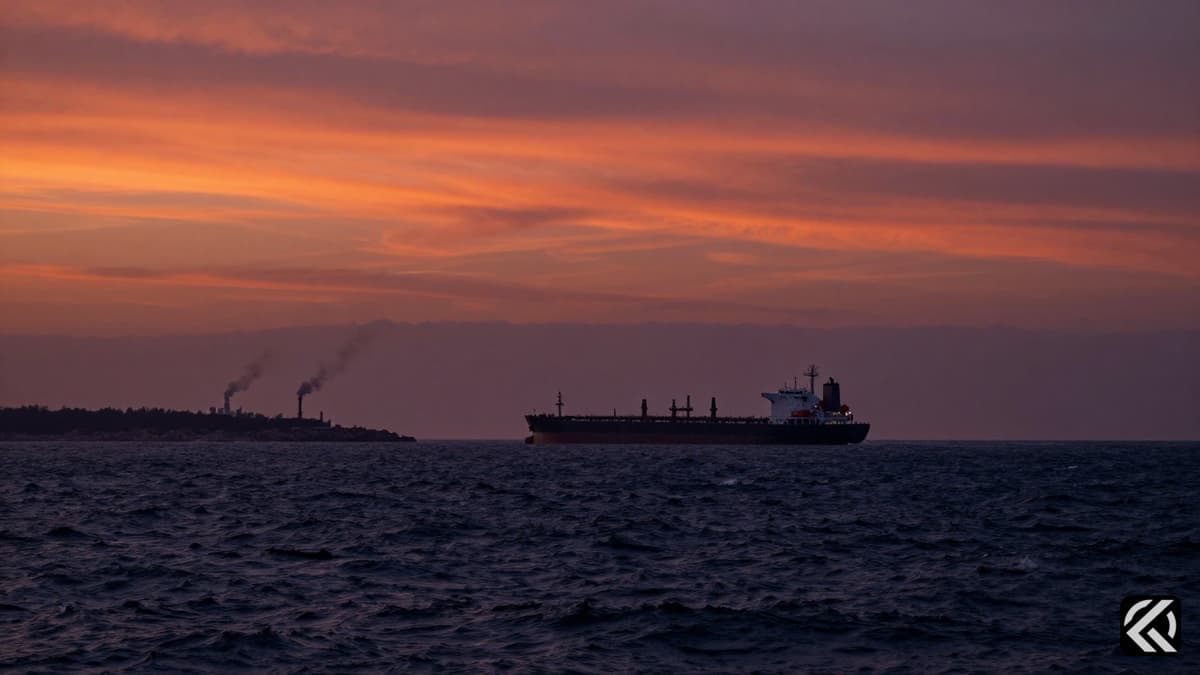
Oil markets reacted with volatility as Donald Trump threatened military action against Iran to secure the Strait of Hormuz, driving Brent crude above $110.
Oil prices experienced choppy trading on Monday morning in Asia following a fierce threat from US President Donald Trump regarding the Strait of Hormuz. The President vowed to destroy critical Iranian infrastructure unless the crucial waterway remains open for shipping. This tension has pushed global energy concerns to the forefront as markets react to the possibility of military escalation in the region.
In a strongly worded social media post on Sunday, Trump declared that the United States would attack power plants and bridges if the waterway is not secured by Tuesday. The post, described as expletive-laden, included a specific deadline of 8:00 P.M. Eastern Time on Tuesday. Trump told Fox News that there was a "good chance" an agreement would be reached, yet he simultaneously warned he was considering "blowing everything up and taking over the oil" if no deal was imminent. These statements come after a week of intensifying threats where Trump warned that US airstrikes could send Iran "back to the Stone Ages."
Tehran has responded by threatening to attack vessels attempting to use the strait in retaliation for recent US and Israeli airstrikes. On Sunday, Iranian officials claimed responsibility for a series of strikes on petrochemical plants in Kuwait, Bahrain, and the United Arab Emirates. The Iranian Revolutionary Guard Corps (IRGC) further warned that attacks against US economic interests would be intensified if civilian infrastructure within Iran continues to be targeted. This has created a volatile situation where Iran Strait of Hormuz threat has become a central driver of global market sentiment.
The impact on shipping has been severe, with oil and gas shipments from the Middle East severely disrupted. The Strait of Hormuz is a critical choke point, with a fifth of the world's energy shipments usually passing through this narrow waterway. The disruption has pushed up the price of energy globally and raised significant concerns about higher inflation. Brent crude rose above $110 (£83.38) a barrel before those gains eased slightly following a report that the US, Iran, and regional mediators were discussing the terms of a potential 45-day ceasefire.
News website Axios reported that discussions are underway regarding a potential ceasefire that could lead to a permanent end to the conflict. However, BBC News has not verified this report, and the White House did not immediately respond to requests for comment. Before lunchtime in Asia, the market showed mixed signals, with Brent crude trading 0.7% higher at $109.80, while US-traded oil remained broadly flat at $111.62. Despite the volatility, the Brent crude oil price has remained significantly elevated compared to previous weeks, reflecting the ongoing fear of supply cuts.
On Sunday, Opec+ agreed to a small increase in crude output for May, a move that includes major producers like Saudi Arabia and Russia. However, the scheduled 206,000 barrels a day production hike is expected to exist on paper only. Several key members of the group are currently unable to increase output due to the active conflict and the resulting disruptions in the region. This discrepancy between planned and actual production adds another layer of uncertainty to the global energy supply outlook.
President Trump has postponed several deadlines for Iran to remove its threats against ships, yet he has repeatedly restated his demands in strongly worded posts. The specific language used in his social media update was aggressive, stating, "Tuesday will be Power Plant Day, and Bridge Day, all wrapped up in one, in Iran. There will be nothing like it!!! Open the Fuckin' Strait, you crazy bastards, or you'll be living in Hell - JUST WATCH! Praise be to Allah." He followed this with a specific time for the potential action, further heightening the tension.
The current standoff represents a critical escalation in the conflict, with the US President directly linking military action against Iranian infrastructure to the freedom of navigation in the Strait of Hormuz. If the US proceeds with strikes as threatened by Tuesday, the immediate effect will likely be a sharp spike in oil prices, potentially pushing them well above the current $110 level. Conversely, if the reported ceasefire talks succeed, prices may stabilize, though the underlying disruption from Tehran's retaliatory strikes on regional facilities will continue to weigh on the market. The inability of Opec+ members to increase output due to the conflict suggests that even a diplomatic resolution may not immediately alleviate supply constraints. The situation remains fluid, with the next 48 hours critical in determining the path of global energy security and the extent of the damage to both Iranian infrastructure and regional shipping lanes.
Jun 8, 2026 02:17 UTC
Magnitude 7.8 Quake Shakes Philippines, Urging Immediate Evacuations
Jun 8, 2026 00:51 UTC
Trump Claims Iran Nuclear Deal Imminent Despite Diplomatic Fractures
Jun 8, 2026 00:47 UTC
Iran Fires Missiles at Israel After Beirut Strike
Jun 7, 2026 22:00 UTC
US, Iran Peace Hops Fade 100 Days Into War
Jun 8, 2026 04:15 UTC
Trump Urges Netanyahu to Halt Iran Strike for Peace


