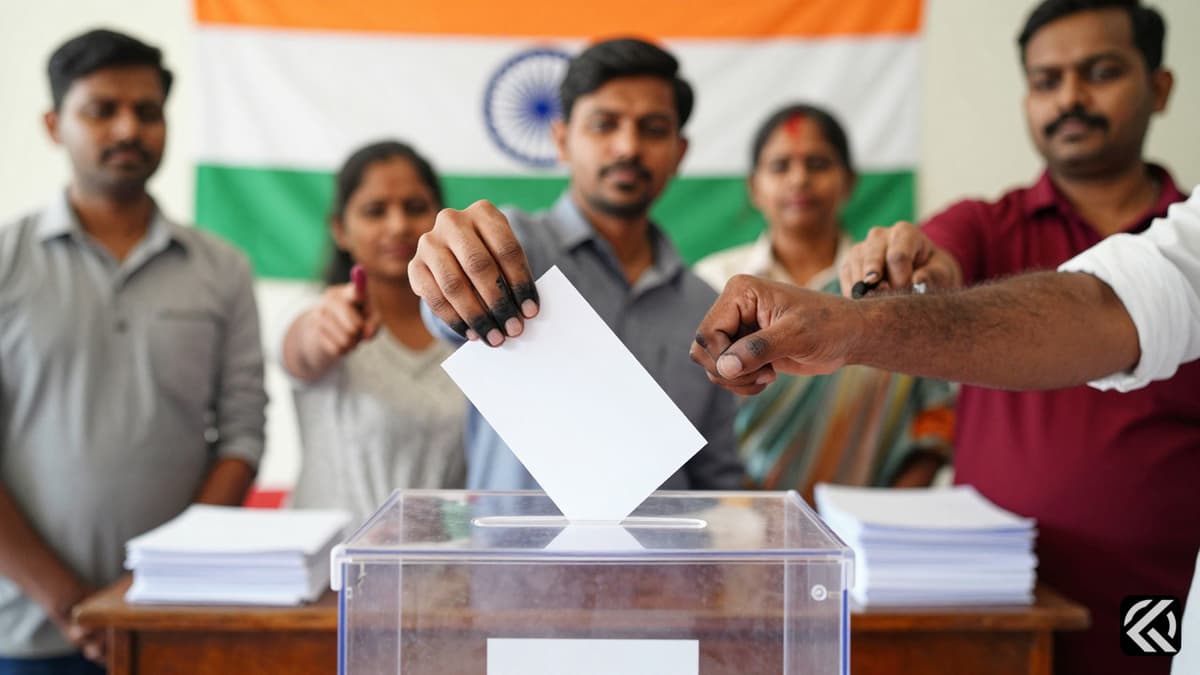
More than 5.3 crore voters across three regions face a historic choice on Thursday, deciding between continuity and new leadership in a critical electoral showdown.
The spotlight has finally shifted to the voters across Assam, Kerala, and Puducherry, who are now preparing to cast their ballots on Thursday. More than 5.3 crore people are set to decide the fate of various political parties and candidates across these two states and one union territory. This election day promises a verdict that could ripple far beyond regional boundaries, influencing the broader political landscape of the nation.
Polling operations officially began at 7 am across thousands of booths, backed by extensive security deployments, webcasting capabilities, and rigorous logistical arrangements designed to ensure the smooth conduct of the process. During the mandatory silence period, active campaigning gave way to quiet, last-mile mobilisation efforts as political parties shifted to subdued, door-to-door strategies to reach the electorate. Across all three regions, polling authorities have significantly ramped up security measures, deploying Central Armed Police Forces, state police, and real-time monitoring systems to maintain order and adherence to the Model Code of Conduct.
In Assam, the political narrative is defined by a largely straight contest between the ruling BJP-led National Democratic Alliance (NDA) and a Congress-led opposition front, with regional players adding complexity to select constituencies. The ruling BJP, led by Chief Minister Himanta Biswa Sarma, is campaigning to secure a third consecutive term, banking heavily on governance records, welfare delivery, and a consolidated alliance structure. Opposing them is the Congress, led in the state by Gaurav Gogoi, which is attempting to stage a political comeback a full decade after losing power in 2016.
The electoral landscape for the Assam Elections 2026 features a total of 722 candidates vying for 126 seats, reflecting a more streamlined contest compared to previous years. Polling will take place from 7 am to 5 pm across 31,490 polling stations located in 35 districts, covering a geographically diverse terrain that includes riverine islands and remote areas. Approximately 2.5 crore voters, including over 1.25 crore women, first-time voters, senior citizens, and persons with disabilities, are eligible to cast their votes.
Prominent names in the fray include Sarma, who is seeking a sixth consecutive win in Jalukbari, and Debabrata Saikia, the leader of the opposition. The contest map features a mix of direct and triangular fights, with high-profile constituencies like Jorhat, where Gaurav Gogoi is attempting his assembly debut, and Sibsagar, where Akhil Gogoi faces a multi-cornered battle. While most seats are witnessing NDA versus Congress contests, parties like the AIUDF, Raijor Dal, and the AJP could play a decisive role in influencing margins in minority-dominated and upper Assam constituencies.
The narrative in Kerala is framed as a contest between continuity and a potential comeback, with all 140 constituencies voting in a single phase. The ruling Left Democratic Front (LDF), led by Pinarayi Vijayan, is seeking a rare third consecutive term, a feat that would break the state's long-standing pattern of alternating governments. Conversely, the Congress-led United Democratic Front (UDF) sees an opportunity to return to power, banking on anti-incumbency sentiments, governance concerns, and the electoral setbacks suffered by the Left in recent contests.
In the Kerala Assembly Election 2026, the BJP-led National Democratic Alliance is attempting to convert its incremental gains in vote share into a breakthrough in assembly representation, positioning itself as a viable alternative to both major fronts. A total of 883 candidates are in the fray, with polling scheduled from 7 am to 6 pm. The state's electorate of 2.71 crore includes 1.39 crore women, giving Kerala one of the rare female-majority voter rolls in the country.
Campaigning saw sharp exchanges, with the LDF foregrounding its governance record and welfare model, while the UDF targeted issues of corruption, administration, and alleged political linkages. National leaders, including Prime Minister Narendra Modi and Congress leaders Rahul Gandhi and Priyanka Gandhi Vadra, actively campaigned, signaling the immense significance of this election. The verdict will determine whether Kerala continues with its recent departure from political alternation or reverts to its traditional cycle, and potentially decide if India will finally be 'Left-mukt'.
In Puducherry, elections to the 30-member assembly will see a competitive, multi-cornered contest where regional and new entrants are shaping the narrative. Around 9.5 lakh voters will decide the fate of 294 candidates, with polling scheduled from 7 am across 1,099 polling stations spread across Puducherry, Karaikal, Mahe, and Yanam. The NDA, comprising the AINRC, BJP, and allies, is aiming to retain power, while the Congress-DMK-led INDIA bloc is pushing for a return, focusing on governance and autonomy issues.
The Puducherry Assembly Election 2026 has been further complicated by the entry of actor Vijay, whose newly launched political outfit has added a fresh dimension to the contest, emerging as a potential disruptor in select constituencies. Authorities have identified 209 vulnerable polling stations, with drone surveillance and enhanced monitoring deployed to ensure adherence to the Model Code of Conduct. Seizures of cash and liquor during the campaign period point to intensified enforcement measures by the election machinery.
Special arrangements have been made for senior citizens and persons with disabilities, including transport assistance and the deployment of volunteers at polling booths. Across all three regions, the conclusion of campaigning earlier this week marked the beginning of the 48-hour silence period, with political parties shifting to subdued, door-to-door outreach strategies to mobilise voters.
As polling concludes, the focus shifts to the counting of votes scheduled for May 4, which will also include results from West Bengal and Tamil Nadu. The outcome of these elections will likely dictate the immediate political trajectory of the region, with the potential for a "Left-mukt" future in Kerala and a new leadership dynamic in Assam. The high-security deployment and technological integration in Puducherry suggest a heightened scrutiny on electoral integrity, while the voter demographics in Kerala highlight a significant female voting bloc that could sway the continuity of the LDF. The convergence of these diverse political contests in a single phase underscores the complexity of Indian federal democracy, where regional dynamics in Assam, Kerala, and Puducherry will be counted together to deliver a verdict that could ripple beyond regional boundaries.
Jun 8, 2026 00:51 UTC
Trump Claims Iran Nuclear Deal Imminent Despite Diplomatic Fractures
Jun 8, 2026 00:47 UTC
Iran Fires Missiles at Israel After Beirut Strike
Jun 7, 2026 22:00 UTC
US, Iran Peace Hops Fade 100 Days Into War
Jun 7, 2026 20:57 UTC
Iran Strikes Israel: IRGC Promises Week of Continuous Offensive
Jun 8, 2026 02:28 UTC
Trump Walks Out of Meet the Press After Rejecting Evidence Demands