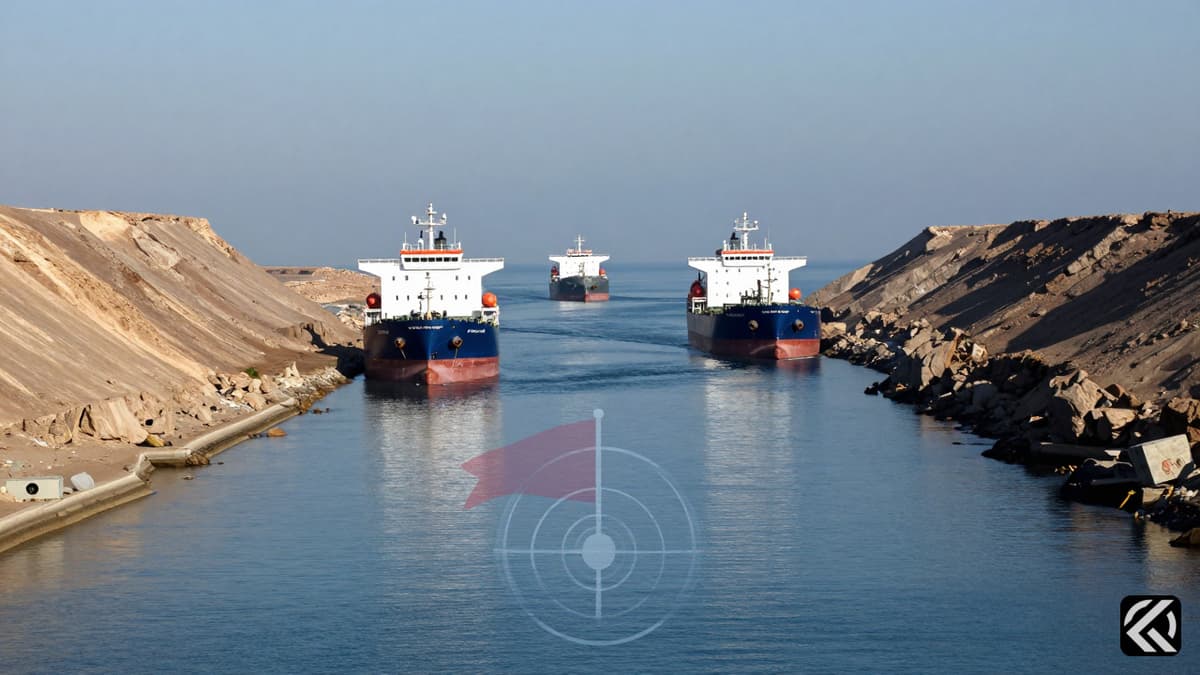
Iran's navy warns that unauthorized vessels crossing the Strait of Hormuz will be destroyed, creating severe shipping uncertainty and disrupting the flow of global oil and gas supplies.
A two-week ceasefire recently announced to guarantee safe passage through the Strait of Hormuz has yielded minimal results as an Iran naval warning looms large over the waterway. The shipping brokerage firm SSY confirmed to BBC Verify that Iranian authorities have declared any vessels seeking to cross without explicit permission will be "targeted and destroyed." This ultimatum arrives as the strait remains a critical focal point in the ongoing US-Israel war with Iran, effectively choking off a shipping lane responsible for carrying about a fifth of the world's oil and liquefied natural gas.
The disruption, which has persisted for five weeks, has sent shock waves across the global economy, driving up energy prices and exposing the fragile reliance of international supply chains on this narrow waterway. While the price of oil has fallen in response to news of the ceasefire, shipping analysts caution that a return to normalcy is unlikely in the immediate future. Lars Jensen from Vespucci Maritime noted that most shipping lines are waiting for specific details on transit requirements, which remain unavailable. By 14:00 BST on April 8, only three bulk carriers-NJ Earth, Daytona Beach, and Hai Long 1-had passed through since the truce was announced late on Tuesday night.
This figure stands in stark contrast to the average of 138 ships that passed through the strait daily before the conflict erupted on February 28. BBC Verify's analysis of MarineTraffic data indicates uncertainty regarding whether these three vessels crossed due to the ceasefire or were on pre-approved plans. Ana Subasic of Kpler remarked that it is too soon to determine if this signals a broader reopening or merely an exception. Richard Meade, editor-in-chief of Lloyd's List, described the situation as "very dangerous," highlighting the continued uncertainty for ship owners who must still navigate under Iran's control.
The primary concern remains the lack of clarity regarding the terms of transit. Meade pointed out that ship owners likely still need to seek permission from the Islamic Revolutionary Guard Corps (IRGC), though the mechanism for this remains unclear. BBC Verify's analysis of ship tracks shows that the three vessels that crossed took a northern route close to Iran's coastline, entering its territorial waters. This marks a significant deviation from the usual practice where vessels navigate a more southerly route through the middle of the waterway.
If crossings resume, Meade predicts that stranded, fully loaded tankers will be the first to exit. He notes that nearly 800 ships have been stuck in the Gulf for several weeks, creating an urgent priority to release the cargo they carry. However, Niels Rasmussen of BIMCO doubts a large influx of ships will follow, as operators fear the two-week window closing and trapping them once again. Thomas Kazakos, secretary general of the International Chamber of Shipping, emphasized the need for clear confirmation regarding the safety of navigation and the removal of sea mines.
Another layer of complexity involves potential toll payments. Reports suggest that Iran may require tolls for safe passage, a condition that could deter shipping lines. Jensen warned that paying these tolls might violate US sanctions if the payments go to sanctioned entities, unless the US grants specific exceptions. This financial and legal hurdle adds another dimension to the existing shipping uncertainty that has gripped the industry.
Countries including India, Malaysia, and the Philippines have successfully negotiated safe passage for their vessels recently, offering a potential model for resolving the crisis. However, the broader question remains how long the current situation can persist before causing lasting damage to global trade. Jensen cautioned that while oil prices reacted positively to the ceasefire news, they will likely not return to normal levels soon. The strait remains a vital artery for chemicals needed to process microchips, pharmaceuticals, and fertilizers, meaning the disruption extends far beyond just energy. As negotiations continue, the global community awaits a definitive solution that balances national security concerns with the economic necessity of open sea lanes.
Jun 8, 2026 00:51 UTC
Trump Claims Iran Nuclear Deal Imminent Despite Diplomatic Fractures
Jun 8, 2026 00:47 UTC
Iran Fires Missiles at Israel After Beirut Strike
Jun 7, 2026 22:00 UTC
US, Iran Peace Hops Fade 100 Days Into War
Jun 7, 2026 20:57 UTC
Iran Strikes Israel: IRGC Promises Week of Continuous Offensive
Jun 8, 2026 02:28 UTC
Trump Walks Out of Meet the Press After Rejecting Evidence Demands


