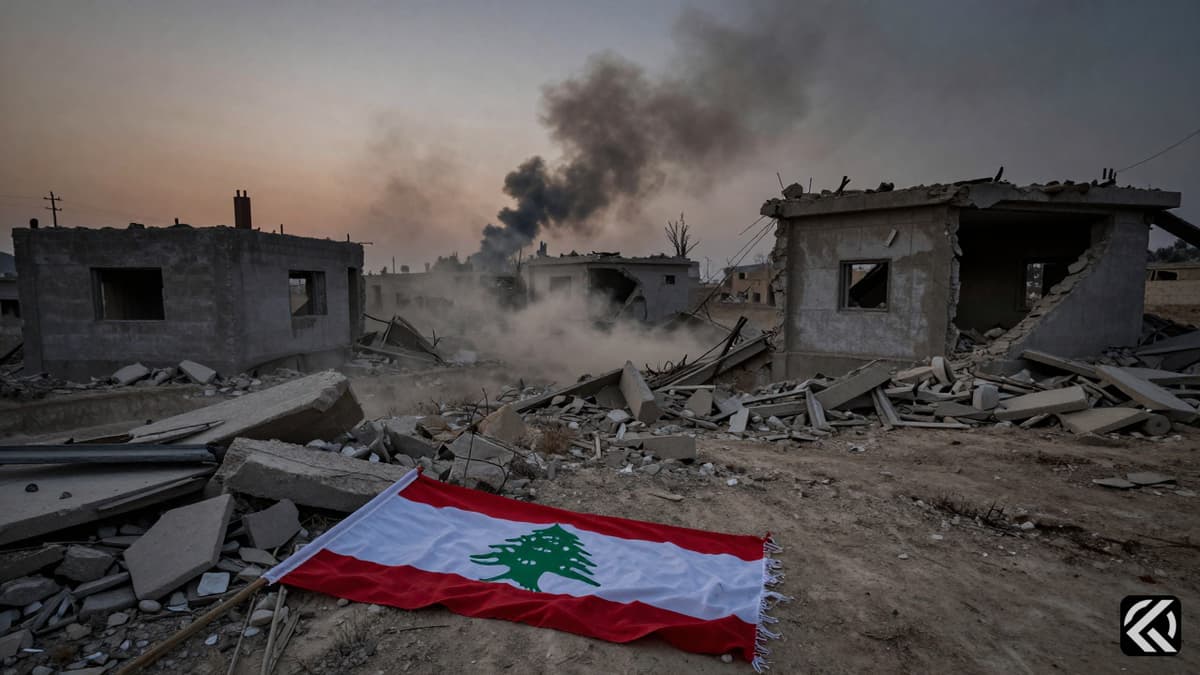
In a massive escalation, Israel launched its largest air strike wave in Lebanon, targeting over 100 Hezbollah sites and leaving hospitals overwhelmed with casualties.
Israel has carried out a massive and unprecedented wave of air strikes across Lebanon, marking what the Israeli government described as the largest offensive of the conflict. The targeted assault hit more than 100 locations identified by Tel Aviv as Hezbollah command centers and military sites within a concentrated 10-minute window. This sudden escalation has resulted in a severe humanitarian crisis, with reports confirming a high number of casualties across the country. Hospitals are currently overwhelmed by the influx of the injured, and many civilians are feared to be trapped under the rubble of collapsed buildings.
The timing of this intense bombardment occurred just hours after the office of Israeli Prime Minister Benjamin Netanyahu publicly denied a mediation assertion made by Pakistan. Pakistani officials had claimed that a ceasefire deal, mediated to address tensions between the US and Iran, would also extend coverage to the ongoing Lebanese conflict. The Israeli denial clarified that such an understanding did not exist, effectively signaling that operations would continue unabated in Lebanon. Following this political clarification, the military campaign intensified, with Wednesday's strikes alone killing at least 112 people and injuring 837 others according to Lebanon's health ministry.
Civil defence officials in Lebanon, however, present a starkly different and more grim statistic. Their figures place the death toll from the recent waves of attacks at 254, with more than 1,100 people suffering injuries. The discrepancy highlights the chaos and confusion in the immediate aftermath of the strikes. In the capital, Beirut, the human cost of the violence was palpable. The BBC interviewed a local resident named Abd, whose brother was among those wounded in the air strikes. Expressing a sense of helplessness, Abd told the BBC, "What should the people do? We can't do anything."
Despite the intensity of the bombardment, Hezbollah, the militant group at the center of the conflict, has not claimed any attack since the broader ceasefire announcement regarding the US and Iran war. In its statement, the group described its position as being on the "threshold of a major historic victory." Simultaneously, Hezbollah issued a warning to displaced families, advising them to wait for a formal ceasefire announcement before attempting to return to their homes. This stance comes despite the Lebanese presidency stating its intent to continue "efforts to include Lebanon in regional peace" following the announcement of the truce between the US and Israel against Iran, which began in late February.
The roots of this latest escalation trace back to a cycle of retaliation involving Iran and Hezbollah. The conflict reignited when Hezbollah fired rockets into Israel in response to the killing of Iran's supreme leader, Ayatollah Ali Khamenei, which occurred in the opening stages of the war. These actions were a direct response to near-daily Israeli attacks on Lebanon that continued despite a ceasefire agreement that was previously reached in November 2024. The toll of this prolonged engagement is staggering; more than 1,500 people have been killed, including 130 children.
The displacement crisis has been catastrophic, forcing more than 1.2 million people, or one in five of Lebanon's population, to flee their homes. The vast majority of these displaced individuals are from Shia Muslim communities located in the south, the eastern Bekaa Valley, and the southern suburbs of Beirut, regions where Hezbollah holds significant sway. The devastation has been so thorough that villages near the border have been effectively destroyed. Israeli authorities have indicated that their invading troops aim to create a security buffer zone, destroying Hezbollah's infrastructure and pushing its fighters away from the northern border.
This military strategy has raised profound concerns among observers regarding the future of the region. There is a growing fear that some areas may remain occupied even after the official end of the war, leaving many residents unable to return to their homes permanently. While Israeli officials had previously indicated their intention to continue the campaign in Lebanon regardless of any deal struck with Iran, recent reporting suggests a shift in military outlook. Military sources quoted by Israeli media in recent days stated that the army had no intention of advancing further in their invasion. Furthermore, they acknowledged that they would not be able to fully disarm Hezbollah by force alone.
Observers have expressed surprise regarding Hezbollah's continued military capabilities in this conflict. It was widely believed prior to this engagement that the group had been severely weakened during their previous war. Yet, the group has frequently launched rockets and drones into northern Israel while also managing to confront Israeli troops on the ground in southern Lebanon. Inside Lebanon, the political landscape remains complex. Hezbollah has faced strong criticism from many who blame the group for dragging the country into an unwanted war and for acting in defense of its Iranian patron's interests. Nevertheless, the organization still maintains significant support among Lebanese Shia communities.
The humanitarian impact of this displacement has placed immense pressure on a country already suffering from a deep crisis. Schools that have been repurposed as shelters are now completely full. Many families are forced to sleep in improvised tents in public spaces or even inside their cars due to the lack of alternative accommodation. The arrival of these displaced families in other communities has led to a rise in sectarian tensions, with existing residents fearing they too could become the target of Israeli attacks.
Following the 2024 ceasefire deal, the Lebanese government had announced a plan to disarm Hezbollah, an organization created in the 1980s in response to Israel's occupation of Lebanon during the 15-year Lebanese civil war. However, the group has thus far refused to discuss the future of its weapons, leaving the question of disarmament unresolved and the potential for future violence lingering.
The current situation depicts a nation on the brink of collapse, where the discrepancy in casualty figures and the refusal to discuss disarmament suggest a volatile future. Based on the source material, which highlights the destruction of border villages and the creation of a security buffer zone, it is likely that a significant portion of the population will remain displaced long-term. As Israeli forces have indicated no intention to advance further but also no clear path to disarm Hezbollah by force, the conflict may settle into a prolonged stalemate. This dynamic could lead to sustained sectarian tensions and a permanent demographic shift, as fears of occupation and further attacks prevent residents from returning to their southern and suburban communities, ultimately altering the social fabric of Lebanon for years to come.
Jun 8, 2026 00:51 UTC
Trump Claims Iran Nuclear Deal Imminent Despite Diplomatic Fractures
Jun 8, 2026 00:47 UTC
Iran Fires Missiles at Israel After Beirut Strike
Jun 7, 2026 22:00 UTC
US, Iran Peace Hops Fade 100 Days Into War
Jun 7, 2026 20:57 UTC
Iran Strikes Israel: IRGC Promises Week of Continuous Offensive
Jun 8, 2026 02:28 UTC
Trump Walks Out of Meet the Press After Rejecting Evidence Demands


