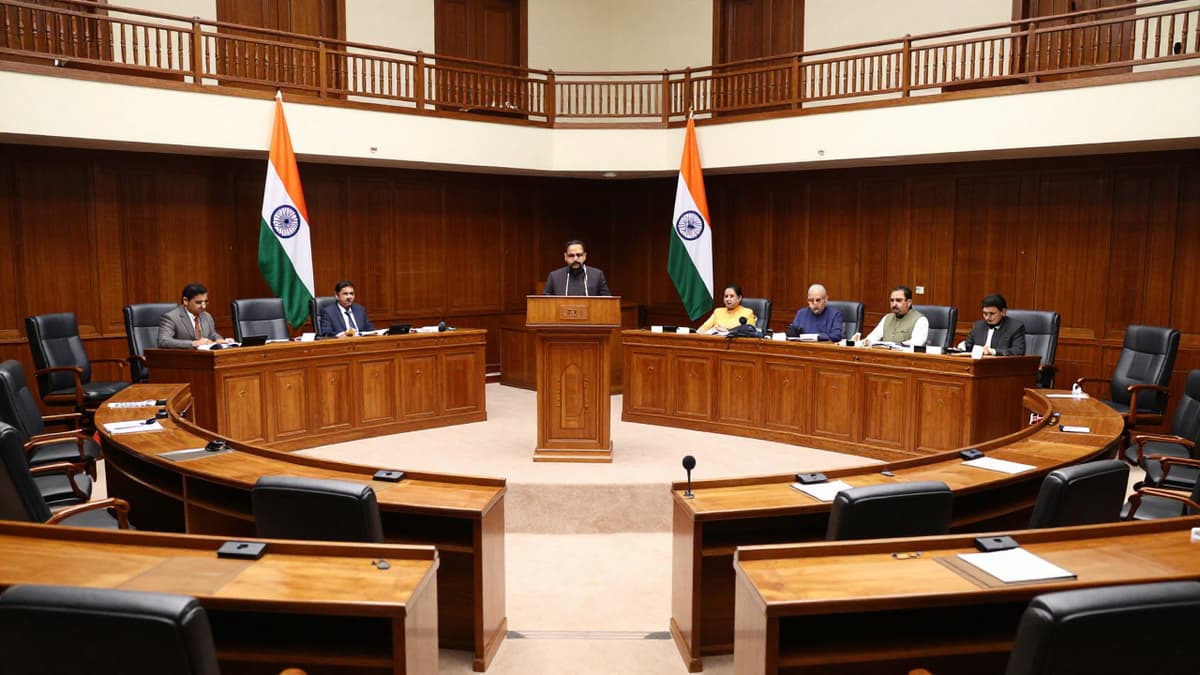
The Lok Sabha has cleared the IBC Amendment Bill 2025, a move Finance Minister Nirmala Sitharaman says will resolve stressed assets faster and strengthen corporate governance across India.
The Lok Sabha cleared the Insolvency and Bankruptcy Code (Amendment) Bill, 2025, on Monday, marking a significant legislative update to India's financial framework. Finance and Corporate Affairs Minister Nirmala Sitharaman addressed the House, emphasizing the law's transformative impact on the banking landscape since its 2016 inception. This latest legislation aims to further strengthen corporate governance and accelerate the recovery of non-performing assets across the nation.
The move follows a rigorous review process where a Select Committee examined the proposal and submitted its report in December 2025. Originally introduced in the Lok Sabha on August 12, 2025, the Bill underwent significant scrutiny to address long-standing delays in the legal framework. The primary objective of the new amendments is to resolve cases faster, with the Finance Minister noting that the current framework has already helped resolve more than half of all stressed assets. Sitharaman argued that the improved performance of companies exiting insolvency demonstrates the efficacy of the law, prompting the need for these additional reforms.
The core of the IBC Amendment Bill 2025 lies in its twelve proposed changes designed to streamline the admission of insolvency cases. A critical component of the new rules is the mandate that applications must be admitted within 14 days once a default is established. This strict timeline is a direct response to the issue of prolonged litigation, which has historically been a key factor causing delays in the resolution process. By tightening these procedural windows, the legislation seeks to eliminate bottlenecks that have stalled the insolvency resolution process for years.
Furthermore, the Bill introduces specific penalties aimed at curbing the misuse of the system. Finance Minister Sitharaman highlighted that preventing the strategic misuse of insolvency proceedings is vital for maintaining the integrity of the legal framework. The goal is to ensure that the system is not exploited to delay legitimate claims, thereby fostering a more efficient environment for creditors and corporate debtors alike. These measures are designed to complement the existing successes of the IBC, which has been instrumental in reshaping the banking sector.
The introduction of these amendments underscores the government's commitment to refining the legal mechanisms that govern financial distress. With the Bill now having undergone seven amendments since the IBC first came into force, the legislative trajectory suggests a dynamic approach to addressing the evolving needs of the economy. The Finance Minister's statement reflects a broader confidence in the IBC as a tool for stabilizing the banking sector and encouraging better corporate governance practices.
The new provisions regarding the 14-day admission window represent a paradigm shift in how insolvency applications are handled. Previously, the lack of strict timelines allowed for prolonged legal battles that often drained the value of distressed assets. By enforcing a mandatory admission window, the legislation aims to bring urgency to the proceedings. This structural change is expected to reduce the time capital remains tied up in unresolved disputes, allowing for faster recovery and reinvestment. The introduction of penalties for system misuse further reinforces this by deterring frivolous or manipulative filings that could delay the process.
Sitharaman's emphasis on the resolution process having a wider impact on companies suggests that the benefits extend beyond immediate asset recovery. Firms emerging from insolvency are already showing improved performance, a trend that the new Bill aims to amplify. The focus on stronger corporate governance practices indicates a shift towards preventing future distress rather than just managing it after it occurs. This proactive stance, supported by the detailed examination by the Select Committee, positions the revised code as a robust framework for sustainable economic recovery.
The passage of the IBC Amendment Bill 2025 signals a continued evolution in India's approach to financial distress and corporate insolvency. Based on the historical trend of seven amendments since 2016, the legal framework is clearly designed to adapt to emerging economic challenges and procedural inefficiencies. The introduction of strict timelines and penalties for misuse suggests a future where the resolution process becomes significantly faster and more reliable. If implemented effectively, these changes are expected to further improve the health of the banking sector by reducing the time assets remain stressed. The anticipated result is a more resilient corporate landscape where governance is strengthened, and litigation is curtailed, fostering a more stable financial environment for investors and businesses alike.
Jun 8, 2026 00:51 UTC
Trump Claims Iran Nuclear Deal Imminent Despite Diplomatic Fractures
Jun 8, 2026 00:47 UTC
Iran Fires Missiles at Israel After Beirut Strike
Jun 7, 2026 22:00 UTC
US, Iran Peace Hops Fade 100 Days Into War
Jun 7, 2026 20:57 UTC
Iran Strikes Israel: IRGC Promises Week of Continuous Offensive
Jun 8, 2026 02:28 UTC
Trump Walks Out of Meet the Press After Rejecting Evidence Demands


