Lebanon's government seeks international intervention as Israeli bombing escalates, displacing hundreds of thousands and killing hundreds more in a widening conflict.
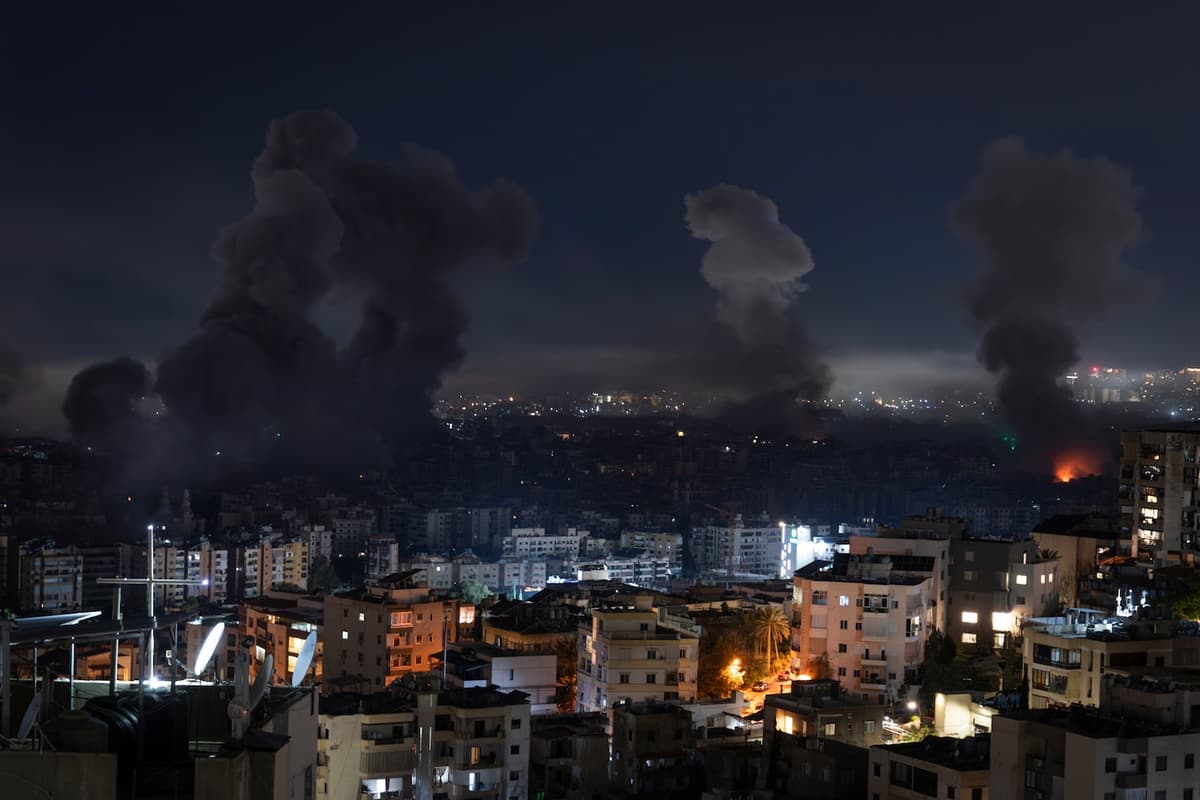
Lebanon’s President Joseph Aoun is engaged in a desperate diplomatic scramble as the nation faces potential collapse due to an expanding conflict. The U.S.-Israeli war against Iran has now engulfed Lebanon, leading to a ferocious Israeli bombing campaign that threatens a full invasion of the south. According to local authorities, more than 630 people have been killed in the past week alone, including at least 91 children. This violence has forced 800,000 people from their homes, creating an exodus greater than that seen during the 2024 war.
In response to this devastation, the Lebanese government has appealed to U.S. and European leaders to intervene immediately. Officials offered to engage in once-taboo talks with Israel under American sponsorship, seeking a ceasefire and support for the army to seize Hezbollah’s arsenal. However, Israel rejected the proposal. Diplomatic sources indicate that Israeli leaders view the current moment as an opportunity to fulfill a long-standing ambition of wiping out Hezbollah and extending regional dominance while U.S. attention remains focused on Iran.
French President Emmanuel Macron is actively working to broker a truce, seeking to project influence after the Trump administration sidelined European powers in the decision to unleash war in the Middle East. Macron has warned Israeli Prime Minister Benjamin Netanyahu against another invasion and suggested French vessels could help secure shipping lanes or back the Lebanese army in disarming Hezbollah. Conversely, U.S. President Donald Trump stated on Wednesday that the country must get rid of Hezbollah, aligning with the Israeli desire to dismantle the group completely.
The humanitarian situation is deteriorating rapidly as families cram into schools and spill onto streets. Traffic now chokes roads needed by ambulances, and overnight strikes have hit Beirut’s public beach where displaced civilians shelter in cars. Even the Norwegian Refugee Council office in Tyre was damaged during an attack. Joshua Zarka, Israel’s ambassador to France, noted that Lebanese President Aoun’s openness to negotiations is insufficient; only the disarmament of Hezbollah would end the campaign.
Internally, Lebanon teeters on a fragile political balance between communities scarred by a 15-year civil war. The government has attempted to establish a monopoly on weapons, but Hezbollah has resisted demands to surrender its arsenal. While Hezbollah launched rockets to avenge strikes that killed Iran’s supreme leader Ayatollah Ali Khamenei, the group faces deepening isolation as the Shiite community bears the brunt of the fighting.
As Israeli forces send reinforcements to the border and issue evacuation orders for over 10 percent of the country, peace remains elusive. Residents like Nahida fear they cannot return home as neighborhoods are destroyed, while religious leaders insist on staying to preserve their land. The conflict threatens to outlast the war with Iran, leaving Lebanon in a national emergency where economic collapse and bombardment converge.
May 1, 2026 03:50 UTC
Trump Administration Declares Iran Conflict Terminated
Join 50,000+ readers getting the global briefing every morning.
No spam. Unsubscribe anytime.
May 1, 2026 03:50 UTC
Trump Administration Declares Iran Conflict Terminated
Apr 25, 2026 01:38 UTC
Iranian FM Araghchi Heads to Islamabad for Critical US-Iran Talks
Apr 25, 2026 01:13 UTC
Calm Suspect in Delhi Rape-Murder Case Faces Mental Evaluation
Apr 24, 2026 23:24 UTC
Raghav Chadha joins BJP, Shaking AAP’s Rajya Sabha Strength