In a decisive victory at the 2026 Conservative Political Action Conference, Vice President JD Vance secured 53 percent of the straw poll, signaling a strong foundation for his potential 2028 bid against rising rivals.
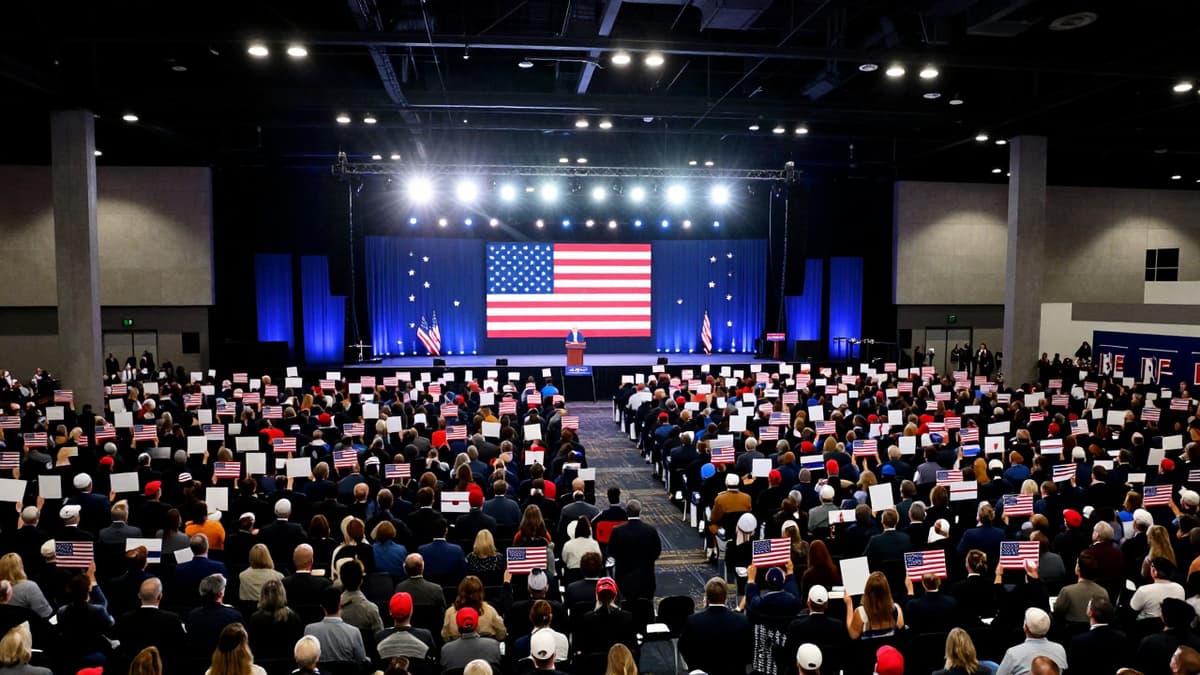
Vice President JD Vance has topped the straw poll at the 2026 Conservative Political Action Conference (CPAC) for the second consecutive year, securing 53 percent of the votes cast by nearly 1,600 attendees. This victory, revealed on stage during the four-day event, positions Vance as the leading contender to lead the Republican Party ticket for the 2028 presidential election. The results mark a significant moment in the internal dynamics of the party, particularly as the administration navigates a period of economic frustration and international conflict.
The polling dynamics at the 2026 CPAC conference highlighted a shifting landscape within the conservative base, with rising support for senior officials under the current administration. While Vance swept the poll, Secretary of State Marco Rubio emerged as the strongest challenger, notching 35 percent of the vote. Rubio, a former senator from Florida, demonstrated a markedly improved standing compared to the previous year's event, where he had tied for fourth place. This year's results suggest a consolidation of support around the current administration's top two figures, as the party prepares for a critical election cycle.
During the conference, attendees were explicitly asked which candidate they would prefer to lead the Republican Party for the upcoming race. The voting outcomes revealed a distinct preference for the Vice President over the Secretary of State. This outcome stands in contrast to the previous year's straw poll, taken within weeks of the President's return to office in 2025, which saw Vance with 61 percent support. That earlier poll also featured former Trump adviser Steve Bannon with 12 percent, Florida Governor Ron DeSantis with 7 percent, and Representative Elise Stefanik with 3 percent.
The JD Vance CPAC straw poll results come at a pivotal juncture for the Republican Party, with less than eight months remaining until the November midterm elections. Party leaders are urgently hoping to defend their congressional majorities at the ballot box, a task complicated by the President's declining popularity. A recent survey conducted by Reuters and the research firm Ipsos found that only 36 percent of US citizens approve of the President's job performance, marking a new low for his administration.
Several factors are contributing to this political slump, including an ongoing war in Iran and economic frustrations such as rising gas prices linked to the conflict. President Trump, who is currently 79 years old, has long been the standard-bearer for his party, but his approval numbers have suffered since his second term began. Although Trump has teased the possibility of seeking a third term, US law prohibits modern presidents from serving more than two terms. Consequently, his second presidency is set to expire in 2028, leaving an open question regarding his successor.
The current candidates represent divergent ideological branches within the party. Vance, a veteran and former single-term senator from Ohio, is viewed as representing a more isolationist faction of the "Make America Great Again" base. While generally opposed to US involvement in foreign conflicts, Vance has defended the President's decision to join Israel in joint strikes on Iran. Conversely, Secretary of State Marco Rubio Secretary of State holds a longer political resume and is perceived as more hawkish regarding regime change, particularly in Cuba, his family's ancestral home. Rubio served as a senator from Florida from 2011 until his unanimous confirmation as secretary of state in 2025.
Both candidates share a history of criticizing the President before joining his administration. Vance once referred to Trump as "unfit" for office, while Rubio previously derided him as a "con artist" and an "embarrassment" during his 2016 nomination campaign. This history underscores the current dynamic, where former critics have now aligned with the President to secure their positions in the administration.
CPAC typically avoids surveying participants about a presidency while a Republican currently occupies the Oval Office, making this year's results notable. Historically, the straw polls from 2017 to 2021 revealed a realignment in the party. In the decade leading up to the 2016 election, moderate Republican Mitt Romney and libertarian Rand Paul consistently won the straw polls. Following Trump's first term, however, he trounced the competition. Despite losing the 2020 election, Trump garnered the most backing in the 2021 straw poll with 55 percent support, and his numbers climbed each year through his 2024 re-election.
Experts note that the Republican Party has largely consolidated around Trump's politics, with moderate and critical voices becoming increasingly marginalized. However, the straw poll is not always a perfect predictor. Ahead of Trump's 2016 victory, the majority of straw poll participants backed Senator Ted Cruz, with Trump coming in third. The current 2026 results suggest the party has moved further away from those historical moderate victories toward a unified base supporting the current leadership.
The strategic positioning of Vance and Rubio at the 2026 CPAC conference suggests a future leadership battle that will likely define the Republican Party for the next decade. As the party moves deeper into the 2028 election cycle, the divergence between Vance's isolationist stance and Rubio's hawkish foreign policy could become a primary fault line for voters to consider. With Trump's approval ratings hitting historic lows and the nation grappling with the economic fallout of the war in Iran, the party's ability to unify behind a single candidate for the 2028 nomination will be tested. The current poll indicates that the base favors Vance's approach, but Rubio's strong second-place finish suggests a significant faction within the party may seek a more interventionist alternative. As the November midterms approach, these internal dynamics will determine whether the party can maintain its congressional control or if the leadership struggles will spill over into the general electorate, potentially impacting the final selection of the 2028 nominee.
Jun 8, 2026 02:17 UTC
Magnitude 7.8 Quake Shakes Philippines, Urging Immediate Evacuations
Join 50,000+ readers getting the global briefing every morning.
No spam. Unsubscribe anytime.
Jun 8, 2026 02:17 UTC
Magnitude 7.8 Quake Shakes Philippines, Urging Immediate Evacuations
Jun 8, 2026 00:51 UTC
Trump Claims Iran Nuclear Deal Imminent Despite Diplomatic Fractures
Jun 8, 2026 00:47 UTC
Iran Fires Missiles at Israel After Beirut Strike
Jun 7, 2026 22:38 UTC
Congress Party Claims Unity for INDIA Bloc Delhi Meeting