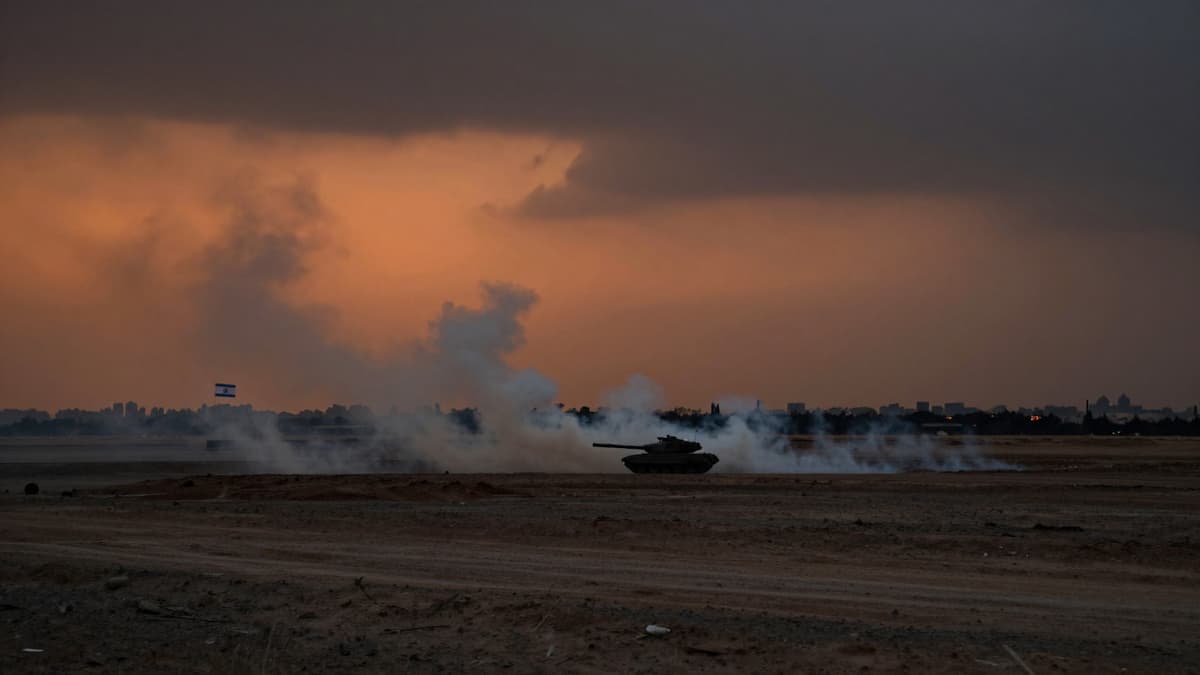
A deadly surge in the Middle East sees Israeli troops fallen in Lebanon and Tehran under fire, while the U.S. president signals a potential end to military strikes despite an ongoing strategic blockade.
The Israeli military confirmed on Tuesday that four of its soldiers were killed in active combat operations within southern Lebanon. This fatal engagement occurs as Israeli forces continue to clash with Iran-backed Hezbollah militants in the region. Simultaneously, a wave of explosions was heard across Tehran, accompanied by significant power outages affecting parts of the Iranian capital. These developments mark a fresh escalation in the ongoing exchange of strikes between the conflicting parties.
Early reports from the U.S. indicate a shifting strategy from the White House. President Trump has reportedly informed his aides of his willingness to terminate the current military campaign against Iran, even if the strategic vital waterway remains obstructed. The Wall Street Journal reported that the administration prefers to leave the complex operation of reopening the waterway for a later date rather than engaging in immediate, prolonged conflict. This potential pivot comes as the White House seeks to finalize a diplomatic agreement with Tehran before a critical deadline set for April 6.
Meanwhile, on the ground in the Middle East, the human cost of the Israel-Hezbollah conflict continues to mount. The loss of four soldiers underscores the intensity of the fighting in the southern region. While the Israeli Prime Minister, Benjamin Netanyahu, stated on Monday, March 30, that the war has already achieved more than half of its intended aims, he explicitly avoided providing a specific timeline for the conclusion of hostilities. This lack of a definitive end date leaves the trajectory of the conflict uncertain for regional allies and adversaries alike.
Diplomatic channels remain fraught with tension. Iranian authorities have categorically denied any active reports regarding negotiations. Tehran claims to have received a proposal from Washington which they have deemed unacceptable. In response, Iran has formulated and presented its own counter-proposal, though details regarding the specifics of these diplomatic back-and-forths remain opaque. The White House's desire to reach a deal before the April 6 deadline suggests a high-stakes window for diplomatic resolution amidst the backdrop of active warfare.
The physical infrastructure of the region has also been heavily impacted by the violence. A significant fire broke out on a fully loaded Kuwaiti oil tanker docked at a port in Dubai. Local authorities have successfully extinguished the blaze, but an ongoing assessment of the damage is currently underway. Officials have issued warnings regarding the potential for an oil spill into the surrounding waters, adding an environmental dimension to the humanitarian and military crisis.
Further highlighting the regional spread of the conflict, Amir Sultan Air Base, a critical facility in eastern Saudi Arabia hosting U.S. forces, came under drone attacks on Tuesday, March 31, 2026. This assault was reported by Iranian Press TV, indicating that the target set for military personnel and infrastructure extends beyond the immediate borders of Israel and Iran. The targeting of a base hosting American troops intensifies the complexity of the Iran-U.S. negotiations, as the U.S. faces direct threats to its deployed assets while contemplating a withdrawal from the broader military campaign.
The strategic bottleneck of the Strait of Hormuz remains a central point of contention. The President's willingness to leave the reopening of the strait for a later date implies a recognition that immediate military action to secure the waterway may be less viable or desirable than pursuing a diplomatic exit. However, the fact that the strait remains largely closed poses a significant economic and logistical challenge. The closure threatens global energy supplies and underscores the fragility of the international shipping lanes in the region.
The interplay between military escalation and diplomatic maneuvering creates a volatile landscape. While the White House pushes for a deal, the Iranian government maintains a stance of non-negotiation with the current U.S. offer. The refusal to accept the proposal and the subsequent issuance of a counter-proposal suggests a deep disagreement that must be bridged before the April 6 deadline. Without a breakthrough, the risk of further military escalation remains high, particularly with the ongoing drone attacks and ground clashes continuing to claim lives and damage infrastructure.
The convergence of military losses in Lebanon, power disruptions in Tehran, and attacks on Saudi Arabian facilities creates a critical juncture for the Middle East. The U.S. President's consideration of ending the campaign while accepting a continued closure of the Strait of Hormuz indicates a potential prioritization of avoiding a wider war over immediate logistical freedom. However, the lack of a clear agreement and the ongoing strikes suggest that the immediate future will remain characterized by uncertainty. The potential for an oil spill in Dubai further complicates the economic fallout, suggesting that the region's infrastructure may face long-term recovery challenges regardless of the diplomatic outcome.
With the April 6 deadline approaching and no agreement in sight, the region stands at a precarious precipice. The ongoing Israel-Hezbollah conflict and the strikes on U.S. facilities in Saudi Arabia indicate that the ground realities are shifting faster than diplomatic efforts can resolve them. If the U.S. proceeds to end the military campaign without resolving the strait's closure, the long-term economic impact on global energy markets could be severe, potentially leading to sustained volatility. Conversely, if the current trajectory of hostilities continues, the risk of a broader regional conflagration involving direct strikes on civilian infrastructure, as threatened by Trump, becomes increasingly imminent.
Jun 8, 2026 02:17 UTC
Magnitude 7.8 Quake Shakes Philippines, Urging Immediate Evacuations
Jun 8, 2026 00:51 UTC
Trump Claims Iran Nuclear Deal Imminent Despite Diplomatic Fractures
Jun 8, 2026 00:47 UTC
Iran Fires Missiles at Israel After Beirut Strike
Jun 7, 2026 22:00 UTC
US, Iran Peace Hops Fade 100 Days Into War
Jun 8, 2026 04:15 UTC
Trump Urges Netanyahu to Halt Iran Strike for Peace


