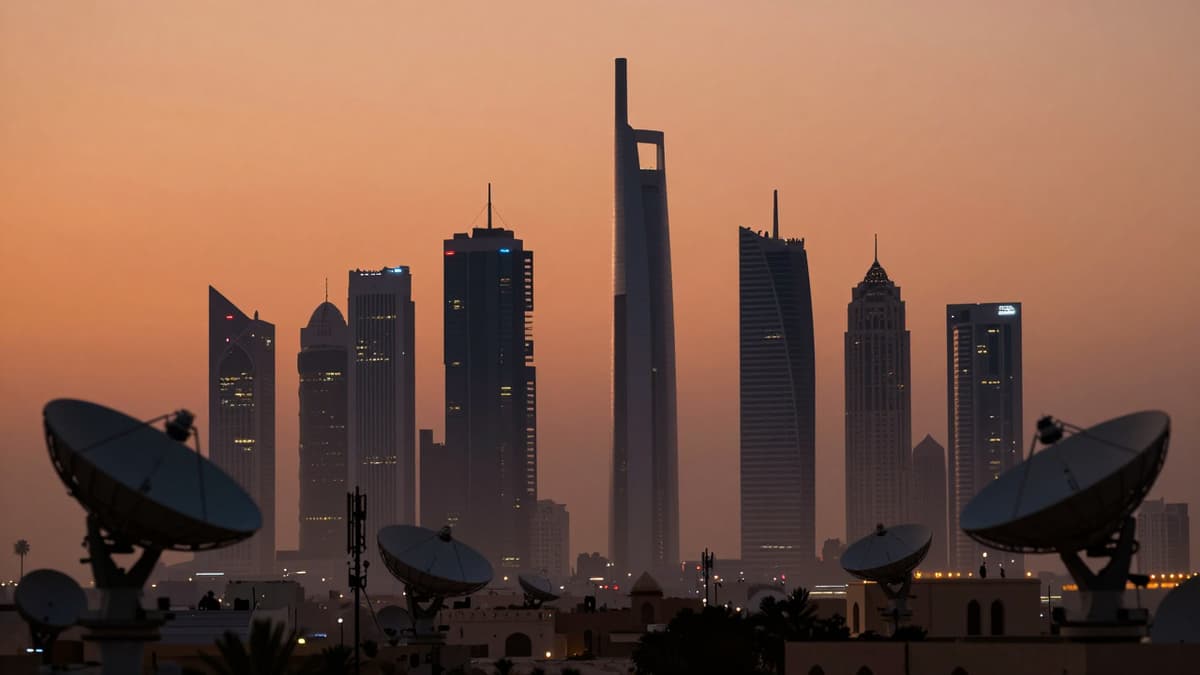
Escalating tensions see Iran's Revolutionary Guard Corp issue a stark ultimatum against Silicon Valley giants, linking their operations to the death of Iranian leadership.
Tensions in the Middle East have surged to a critical level as the Islamic Revolutionary Guard Corps (IRGC) has issued a severe warning against major American technology corporations. On Tuesday, March 31, the IRGC declared that prominent US tech companies including Meta, Google, and Apple are now considered legitimate targets for attack due to their alleged role in high-tech warfare. The military force specifically urged employees and residents near these corporate facilities to evacuate their locations immediately.
This aggressive shift in strategy marks a departure from targeting traditional military infrastructure, as the IRGC focuses on Silicon Valley firms it claims are responsible for enabling lethal operations. The threat was detailed in a statement released via Iran's state-aligned Tasnim news agency and reported by Al-Jazeera. The military wing warned that strikes against these entities will commence at 8:00 pm local time on Wednesday, April 1. This decision is directly tied to ongoing attacks led by Israel and supported by US intelligence, which Iran states involve the use of artificial intelligence for pinpointing targets and executing targeted assassinations.
According to the statement, the core grievance involves the use of technology in designing and tracking terrorist targets. The IRGC explicitly stated that since American and Information and Communications Technology (ICT) companies, particularly those involved in AI, are the main elements in tracking these targets, they are now legitimate targets. The list of targeted entities, numbering over 18 high-profile companies according to AFP, includes Meta (parent to Facebook and Instagram), Google, Apple, Boeing, and Tesla. Defense and AI firms such as Intel, Microsoft, Oracle, Palantir, and chip giant Nvidia are also flagged for potential retaliation.
The justification for these lethal threats is rooted in the reported death of over 250 senior Iranian officials, including the supreme leader, in attacks attributed to Israeli forces using advanced AI platforms. The Washington Post, citing a count maintained by the Israeli military, reported these figures following weeks of intense conflict. Iran's warning emphasized that companies actively participating in what it terms "terrorist designs" will face reciprocal action for every targeted assassination. The IRGC noted that the US government and tech giants had ignored repeated warnings regarding the necessity of halting operations targeting top Iranian officials.
While the warning did not specify the exact locations where the action would be taken, it provided a clear instruction for public safety. Residents living around these corporate facilities in all countries of the region are advised to leave their locations within a one-kilometre radius and move to a safe place. This directive underscores the immediacy of the threat posed by the military wing of the IRGC.
The implications of this threat extend beyond the corporate entities themselves to the broader infrastructure of the region. The conflict has already caused tangible disruptions, with Amazon AWS operations being hit twice earlier this month. The company confirmed disruptions in its cloud infrastructure in Bahrain and the United Arab Emirates due to drone activity, highlighting the vulnerability of digital assets in the region during this escalation of hostilities.
The narrative of the conflict frames the technology sector as a primary battleground. By labeling US tech companies as targets, the IRGC is effectively expanding the war zone from physical military installations to digital corporate headquarters and their operational staff. This strategy aims to penalize the technological support structures that Iran claims are enabling the high-tech warfare causing the loss of its leadership. The threat serves as a direct response to the perceived lack of diplomatic engagement from Washington and the continued reliance on AI and ICT for military targeting.
The situation remains volatile as the deadline for the potential attacks approaches. With the IRGC citing the termination of leadership and the utilization of AI in tracking these targets as the primary catalyst, the stakes have never been higher for the international technology sector operating in the Middle East. The call for evacuation indicates that the IRGC views the proximity of civilians to these facilities as a secondary concern to the strategic objective of disrupting or destroying these technological enablers.
The situation represents a pivotal moment where the distinction between civilian tech infrastructure and military assets is being deliberately blurred by Iran's military leadership. Based on the source material, the future trajectory suggests a prolonged period of heightened risk for US-based technology firms operating in the region. If the warning of April 1 is acted upon, the immediate consequence will be the physical destruction of facilities or cyber-incidents targeting cloud infrastructure, potentially halting operations for firms like Amazon, Google, and Meta. Furthermore, the repeated mention of "reciprocal action" implies a cycle of retaliation where any future targeted assassinations will trigger further escalation against the tech sector, creating an unstable operational environment that could lead to a complete withdrawal of US tech companies from the region if the conflict intensifies.
Jun 8, 2026 00:51 UTC
Trump Claims Iran Nuclear Deal Imminent Despite Diplomatic Fractures
Jun 8, 2026 00:47 UTC
Iran Fires Missiles at Israel After Beirut Strike
Jun 7, 2026 22:00 UTC
US, Iran Peace Hops Fade 100 Days Into War
Jun 7, 2026 20:57 UTC
Iran Strikes Israel: IRGC Promises Week of Continuous Offensive
Jun 8, 2026 02:28 UTC
Trump Walks Out of Meet the Press After Rejecting Evidence Demands


