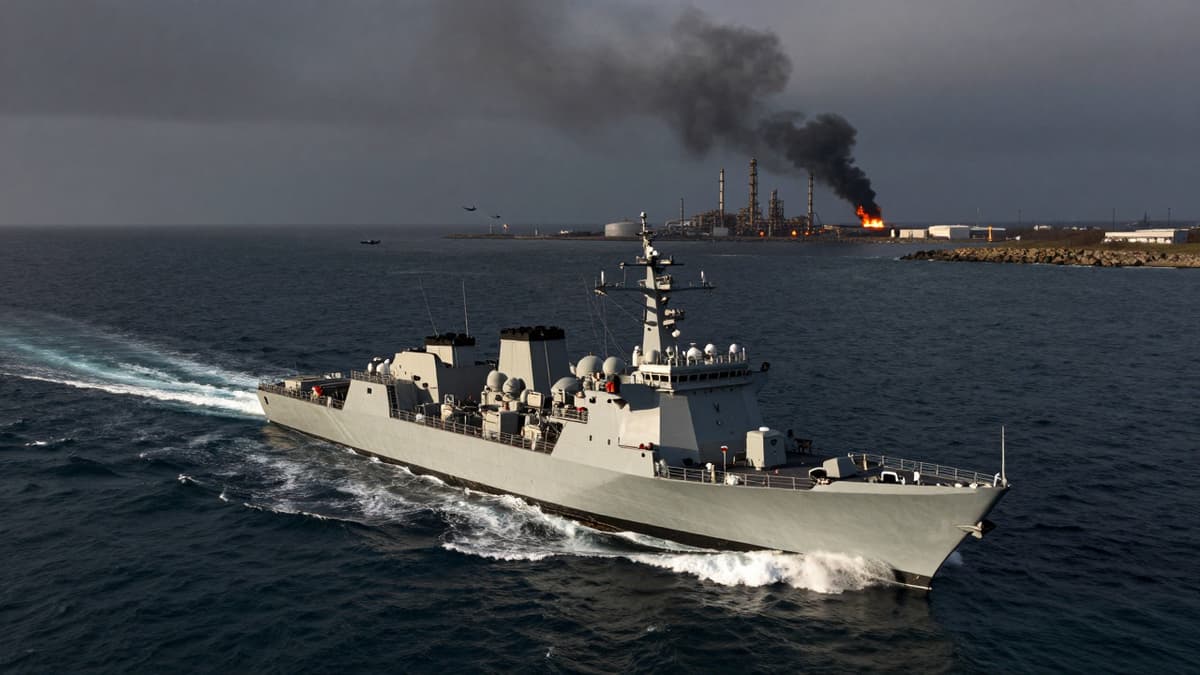
The Iran war expands as Houthis attack Israel and U.S. Marines arrive in West Asia, while global LNG supplies face further disruption from Australian storms and regional strikes.
The Iran war has intensified significantly as Iran-aligned Houthi rebels in Yemen launched their first attacks on Israel, while U.S. Marines began arriving in the region. This escalation coincides with a worsening global LNG supply crunch triggered by both the Narelle storm system and ongoing regional hostilities. On Saturday, March 28, 2026, intercepts of drones and missiles were heard for hours across Irbil, where Iran-aligned militias targeted U.S. bases and the consulate. The Pentagon is simultaneously preparing for potential weeks of ground operations, including raids on Kharg Island, though President Donald Trump has not yet approved a deployment.
Interceptions and drone activity were heard for hours overnight on Saturday (March 28, 2026) across Irbil, the capital of the semi-autonomous Kurdish region in northern Iraq. AP journalists in the area reported non-stop loud explosions and witnessed at least one drone heading toward American facilities, marking one of the most intense days of attacks since the war began. Iran-aligned militias have stepped up repeated drone and missile attacks on U.S. bases, including in Irbil, adding to the volatile security situation in West Asia.
The Pentagon is reportedly preparing plans for weeks of ground operations in Iran, potentially including raids on Kharg Island and coastal sites near the Strait of Hormuz. According to the Washington Post, President Donald Trump has not yet approved any deployment, though the plans involve raids by special operations forces and conventional infantry rather than a full-scale invasion. This strategic preparation signals a potential shift toward more aggressive direct engagement as the conflict widens.
Israel's military confirmed on Sunday (March 29, 2026) that it was intercepting a missile fired from Yemen, a day after the Iran-backed Houthi rebels entered the war. The military statement noted that aerial defense systems were operating to intercept the threat and requested the public follow Home Front Command's defensive guidelines. This marks a significant escalation, as the Houthis declared they would continue their operations until the aggression on all fronts ended.
Aluminium Bahrain (Alba) confirmed that its facilities were targeted in an Iranian attack on Saturday. The company reported that two people were mildly injured, and it is currently assessing damage to its smelting lines. This attack occurred after the IRGC stated they targeted Alba and Emirates Global Aluminium in response to attacks on Iranian steel plants, claiming these companies had ties to U.S. military and aeronautics firms. Alba had already initiated a shutdown of three smelting lines earlier in March to preserve business continuity amid disruptions in the Strait of Hormuz.
The risk of an expanded Iran war grew as Yemen's Iran-aligned Houthis launched their first attacks on Israel while additional U.S. forces reached West Asia. Secretary of State Marco Rubio stated the United States expected to conclude military operations within weeks, even as a new deployment of U.S. Marines started arriving. The amphibious assault ship USS Tripoli arrived in West Asia on Friday, serving as the flagship for a contingent of about 3,500 Marines and sailors. The vessel, usually based in Japan, brings transport and strike fighter aircraft, as well as amphibious assault and tactical assets to the region.
Amidst the rising military tension, domestic dissent has also surged. Hundreds gathered in Tel Aviv and other Israeli cities on Saturday to protest the war, leading to unauthorized demonstrations that security forces sought to disperse. While weekly protests against the war launched on February 28 initially drew only a few dozen participants, numbers have risen. Similarly, crowds protested Saturday against the war in Iran and President Donald Trump's actions in "No Kings" rallies across the U.S. and in Europe. Minnesota took center stage, with thousands of people standing on the Capitol lawn in St. Paul, some holding upside-down U.S. flags as a sign of distress.
The LNG supply crunch facing the world has deepened due to a confluence of natural disasters and geopolitical conflict. Australia's liquefied natural gas production remained disrupted, leaving thousands without power in the remote northwest more than a week after the Narelle storm system hit the country. The impact of Narelle, which was downgraded from a tropical cyclone on Saturday, on LNG plants run by Chevron and Woodside has exacerbated the global supply crunch caused by the month-old Iran war.
Australia became the world's second-largest LNG exporter when Qatar halted production following damage from Iranian strikes. The disruption in Australia and the potential for further regional instability have created a precarious situation for global energy markets. The combination of the storm's physical damage and the strategic attacks on energy infrastructure suggests that supply chains will remain fragile in the coming weeks.
The ongoing conflict has also seen significant diplomatic and military maneuvering. With the USS Tripoli now in the region, the presence of U.S. naval power signals a preparedness for sustained operations. The Pentagon's planning for raids, combined with the Houthis' entry into the war, indicates that the Iran war is broadening beyond direct state-to-state confrontations to include proxy actors and expanded frontlines. As the Houthis vowed to continue attacks until the aggression ends, the cycle of retaliation appears set to continue, potentially deepening the crisis for both regional stability and global energy security.
The convergence of domestic protests, military escalations, and infrastructure attacks suggests a prolonged period of instability. With the No Kings rallies drawing significant crowds across the U.S. and Europe, public sentiment appears increasingly opposed to the war. The deployment of 3,500 Marines and the Pentagon's preparation for ground raids indicate that the U.S. is positioning for a prolonged engagement, possibly involving targeted strikes rather than a full invasion. As the Houthis continue their campaign and the U.S. solidifies its military footprint in West Asia, the region faces a high probability of continued attacks on critical energy infrastructure, further destabilizing the global LNG supply crunch. The coming weeks will likely see a test of whether diplomatic channels can de-escalate the situation or if the conflict will spiral into a broader regional war.
Jun 8, 2026 00:51 UTC
Trump Claims Iran Nuclear Deal Imminent Despite Diplomatic Fractures
Jun 8, 2026 00:47 UTC
Iran Fires Missiles at Israel After Beirut Strike
Jun 7, 2026 22:00 UTC
US, Iran Peace Hops Fade 100 Days Into War
Jun 7, 2026 20:57 UTC
Iran Strikes Israel: IRGC Promises Week of Continuous Offensive
Jun 8, 2026 02:28 UTC
Trump Walks Out of Meet the Press After Rejecting Evidence Demands


