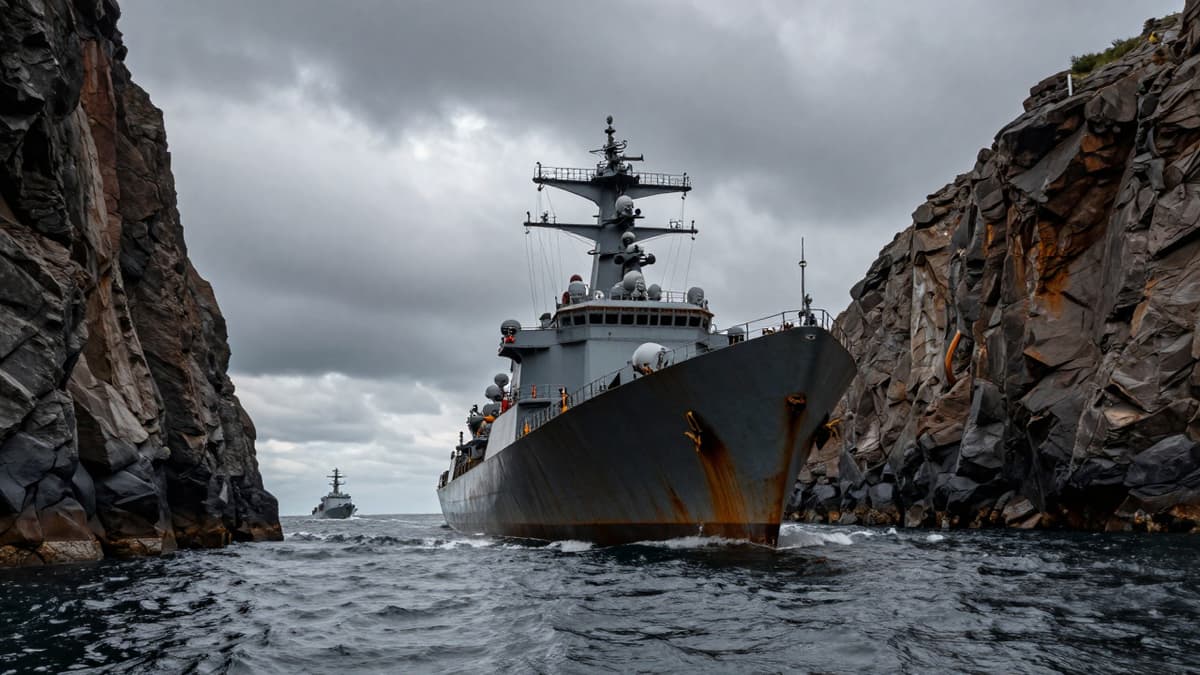
As Iran's Parliament prepares tolls for the Strait of Hormuz and markets rally on oil spikes, Moscow rejects drone shipment claims, deepening global uncertainty.
The geopolitical landscape has shifted sharply as Iran's Parliament begins drafting a bill to impose fees on ships navigating the Strait of Hormuz. This legislative move comes amidst rising tensions, with the Kremlin explicitly denying reports of a completed Russia Iran drone deal just days before. The combination of these developments has sent shockwaves through global markets, causing oil prices to climb sharply while Asian shares face steep declines on Thursday, March 26.
German Defense Minister Boris Pistorius has labeled the Iran war an economic catastrophe, warning against the conflict engulfing Europe. Meanwhile, Iranian officials have indicated that while friendly nations like India and Russia may transit the waterway, adversaries will be barred from passage. The situation remains volatile as debris from intercepted missiles causes casualties in the UAE, and Israeli medics report updated casualty numbers from recent attacks in Kafr Qasim.
The central flashpoint of the current crisis is the control of the Strait of Hormuz, a critical artery for global energy transport. Lloyd's List Intelligence, a leading shipping intelligence firm, reported on Thursday that Iran is operating a "de facto 'toll booth' regime." According to the firm, vessels must now provide manifests, crew details, and destination information to the Iranian paramilitary Revolutionary Guard. This data undergoes rigorous screening for sanctions, cargo alignment, and "geopolitical vetting," effectively prioritizing the Guard's control over maritime safety.
Iranian Foreign Minister Seyed Abbas Araghchi confirmed this selective approach, stating on Thursday that the country has allowed specific "friendly nations" including India, China, Russia, Iraq, and Pakistan to use the waterway. However, he made it clear that ships linked to Iran's adversaries will not be permitted to transit. "We are in a state of war. The region is a war zone," Araghchi stated, noting that there is no reason to allow enemy ships passage. This restriction, combined with damage to Qatar's export infrastructure, threatens to upend the global LNG outlook.
The economic repercussions are immediate and severe. Brent crude rose 1.5% to $98.72 per barrel, while benchmark U.S. crude climbed 2% to $92.16. In contrast, Asian shares suffered losses; Tokyo's Nikkei 225 fell 0.8%, South Korea's Kospi dropped 3.3%, and Hong Kong's Hang Seng declined 1.9%. Analysts at S&P Global Energy and other consultancies have cut global supply outlooks by up to 35 million tons, a figure equivalent to half of Japan's annual LNG imports or five years of Bangladesh's supply.
On the diplomatic front, Moscow has vigorously rejected narratives regarding military support for Tehran. Kremlin spokesman Dmitry Peskov addressed reports in the Financial Times claiming Russia was close to completing a drone shipment. "There are so many lies being spread by the media... Do not pay attention to them," Peskov told reporters. The Financial Times had cited Western intelligence officials stating the shipments would finish by the end of March, but the Russian government categorically dismissed this as false.
The physical toll of the Iran war continues to mount across the region. In Israel, a paramedic described the scene in Kfar Qasim as "chaos" after an initial missile barrage. Tomer Gussman, an Israeli paramedic, recounted finding destruction in the center of a home where five people were injured by a blast. While initial reports indicated two casualties, Magen David Adom later updated the toll to six people lightly wounded by blast effects. Mayor Haitham Taha of Kfar Qassem attributed the damage to cluster munitions.
Tensions also flared in the Middle East's airspace. Abu Dhabi authorities confirmed that debris from an intercepted ballistic missile fell on Sweihan street, killing two people and injuring three others while damaging several vehicles. The media office advised the public to rely only on official sources, highlighting the confusion surrounding the incident. Additionally, Israel warned of a potential third barrage of missiles from Iran on Thursday.
In the Black Sea, the conflict's reach extended further. Turkish Transport Minister Abdulkadir Uraloglu reported that a Turkish-operated oil tanker loaded with Russian crude was attacked by an unmanned surface vehicle rather than a drone. The vessel reported an explosion in its engine room after midnight, suggesting a targeted strike that avoided aerial detection methods.
Iran's Parliament Speaker Mohammad Bagher Ghalibaf has warned of a potential invasion of an Iranian island, citing intelligence reports that enemies are preparing to occupy a site with support from a regional state. Conversely, diplomatic maneuvering continues, with Israel reportedly removing Iranian Foreign Minister Abbas Araghchi and Speaker Qalibaf from its target list after Pakistan requested Washington to intervene. Germany, seeking to avoid entanglement, has expressed readiness to help secure any peace agreement once a ceasefire is achieved, with Minister Pistorius emphasizing that "it's not our war" but that the nation is ready to secure freedom of navigation in the Hormuz Strait. The convergence of these military, economic, and diplomatic threads suggests a prolonged period of instability where the Strait of Hormuz remains the primary lever for geopolitical influence.
As Iran solidifies its control over the Strait of Hormuz and denies Russia Iran drone deal allegations, the global economic trajectory faces a critical juncture. The current market volatility, driven by fears of supply disruptions from Qatar and US exports, indicates a potential long-term contraction in LNG availability. If the "toll booth" regime becomes permanent, the cost of energy will likely remain elevated, forcing price-sensitive Asian buyers to reconsider consumption rates. The conflict's expansion into the Black Sea and the ongoing threat of missile barrages in Israel and the Gulf suggests that without a definitive diplomatic resolution, the global supply outlook will remain depressed, potentially stalling post-war economic recovery for the next several years.
May 10, 2026 13:00 UTC
Iran Delays Response to US War-Ending Proposal
Join 50,000+ readers getting the global briefing every morning.
No spam. Unsubscribe anytime.
May 10, 2026 13:00 UTC
Iran Delays Response to US War-Ending Proposal
May 10, 2026 11:57 UTC
Suvendu Adhikari Sworn In As First BJP West Bengal Chief Minister
May 10, 2026 11:15 UTC
Sean Duffy Reality TV Series Ignites Ethics Debate
May 10, 2026 09:36 UTC
TVK's Vijay Sworn In as Tamil Nadu Chief Minister


